Why Choose Dalal Vibro Finishing Machine?

Choosing the right finishing equipment affects surface quality, production speed, and long-term operating costs. The dalal vibro finishing machine is designed for manufacturers seeking consistent deburring, polishing, and edge-rounding results. Its vibratory action moves components through abrasive media, reaching edges that manual tools often miss. Small steel parts emerge smoother. Delicate components require greater care.

According to Rakesh Dalal, a finishing-process consultant with more than twenty years of workshop experience, “A reliable vibratory machine should make finishing predictable, not merely faster.” This practical observation reflects the concerns of production managers. They need repeatable results, manageable noise, sensible media consumption, and straightforward maintenance. The dalal vibro finishing machine can support these goals through controlled vibration, durable construction, and adaptable process settings. However, no machine removes the need for testing. Part geometry, material hardness, media shape, compound concentration, and cycle time all influence the final surface.

That detail matters.

A supplier may promise mirror-like results, yet every component behaves differently. Operators should inspect trial batches under proper lighting and measure critical edges where possible. Experienced users also check machine balance, drainage, and media separation before full production. These steps may seem ordinary, but they prevent costly rework. The equipment is not a magic solution. Its value appears when engineering judgment, documented settings, and routine maintenance work together. This guide examines why many manufacturers consider Dalal a practical option for dependable vibratory finishing.
Why Choose Dalal Vibro Finishing Machine?

Dalal Vibro Finishing Machine: Definition and Operating Principle

Why Choose Dalal Vibro Finishing Machine?

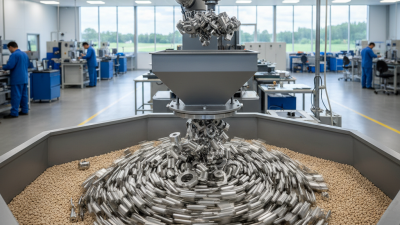
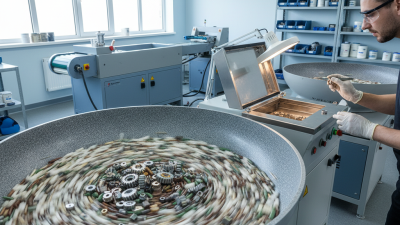
A vibro finishing machine is a mass-finishing system for deburring, edge radiusing, cleaning, and polishing metal parts. Its working bowl vibrates at a controlled frequency and amplitude. Parts, abrasive media, water, and compound move together. Continuous contact creates friction and light impact on exposed surfaces. This action removes sharp edges without requiring an operator to polish every part manually.

The operating principle is simple, but process control is not. Media shape affects access to holes and narrow channels. Compound concentration influences cleaning and surface brightness. Cycle time, load ratio, and vibration intensity determine the final result.

In a workshop trial, operators often inspect parts after 10, 20, and 30 minutes. This practical comparison prevents over-processing. Complex parts may still hide burrs. The machine is not magic.

Industry data supports the wider demand for controlled finishing. Grand View Research valued the global metal finishing market at approximately USD 106 billion in 2023. Its report also projects continued growth through 2030.

85 dBA
over an eight-hour shift

Safety remains important during operation. The U.S. National Institute for Occupational Safety and Health recommends limiting occupational noise exposure to 85 dBA over an eight-hour shift. Enclosed equipment, hearing protection, and regular checks are therefore sensible controls.

A well-selected vibro finishing machine can improve consistency, reduce repetitive handwork, and produce a smoother surface across large batches. Yet results depend on testing, maintenance, and honest process records.

Key Components and Vibratory Finishing Process

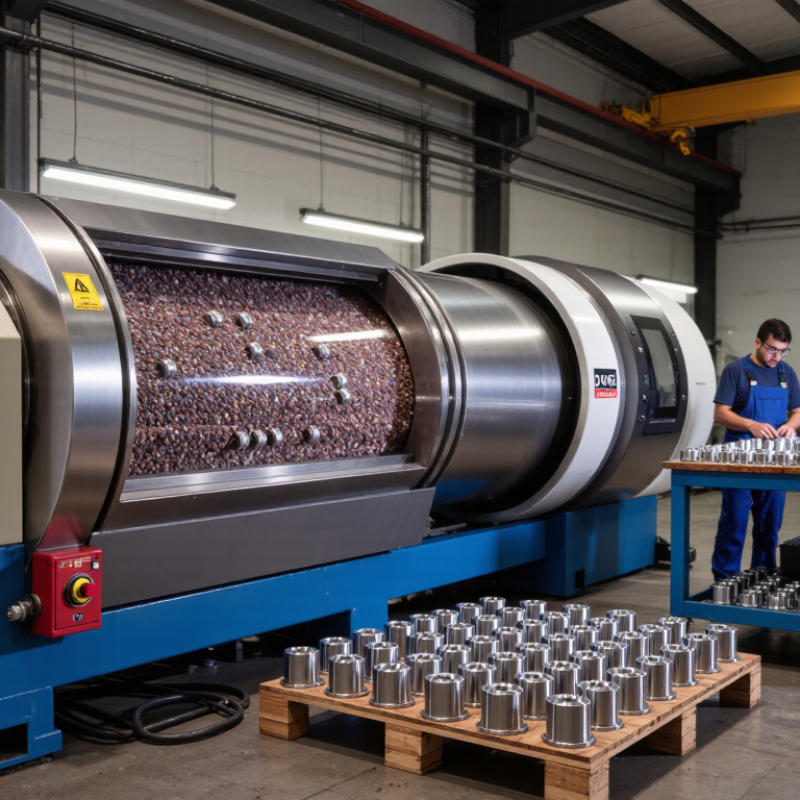
A vibratory finishing machine combines a bowl, motor, springs, wear lining, media, water, and compound. Each component affects the final surface. The motor creates controlled vibration, while springs transfer energy without rigid impact. The lining protects the bowl and reduces noise. The process uses friction between parts and abrasive media to remove burrs, soften edges, and improve surface consistency.

ASM Handbook, Volume 18, describes vibratory finishing as a mass-finishing method controlled by media shape, load size, chemical action, and cycle time. Typical media-to-part ratios range from 3:1 to 5:1, although delicate parts may need less media pressure. A cycle can last from 30 minutes to several hours. The correct time depends on alloy, geometry, and the required finish. More time is not always better. Sharp edges can become rounded, and cosmetic surfaces may lose definition. The U.S. Department of Energy reports that motor systems use about 23% of manufacturing electricity, making motor efficiency and load balancing practical concerns.

Tips: Keep the machine between 70% and 90% full for stable movement. Separate steel parts from aluminum parts. Check compound concentration during production, not only at startup. I have seen operators blame the machine when dirty solution caused uneven results. That mistake is easy to repeat. Record media wear, water clarity, noise, and cycle time. Small details often reveal process drift before the surface quality fails.

Performance Advantages of Dalal Vibro Finishing Machines

Performance Advantages of Vibro Finishing Machines

Vibro finishing machines improve consistency across large batches of metal components. Their rotating media reaches edges, recesses, and drilled holes with steady contact. Operators can adjust time, compound concentration, vibration intensity, and media size. This control supports deburring, edge softening, burnishing, and surface cleaning in one process. Small parts matter. A 2024 Grand View Research report valued the global metal finishing market at approximately USD 107 billion in 2023. It also forecasts about 4.9% annual growth through 2030, reflecting stronger demand for repeatable surface quality.

In practical workshops, the main advantage is reduced manual variation. A loaded bowl can process hundreds of components while operators monitor settings and inspect samples. The result is visible. Uniform edges reduce sharp handling points and improve assembly fit. MarketsandMarkets identifies automation, batch consistency, and lower finishing labor as important drivers in the mass finishing equipment sector. However, cycle time is not universal. Softer media may protect delicate surfaces, but it can require longer processing. Aggressive media acts faster, yet it may change corners or fine details.

Reliable production still requires measurement. Inspectors should record surface roughness, dimensional changes, media wear, and defect rates. ISO 21920-2 provides terminology for assessing surface texture, helping teams communicate results more precisely. From shop-floor experience, clean separation after processing is often underestimated. Trapped media can create rework. Water quality can also influence staining and compound performance. These machines offer strong repeatability, but poor loading, unsuitable media, or rushed trials can weaken the advantage.

Industrial Applications and Suitable Workpieces

Why Choose a Vibro Finishing Machine?

Industrial applications often require consistent edge smoothing, deburring, and surface polishing. A vibratory finishing machine handles these tasks through controlled movement, media, water, and compound. It can process many parts together, reducing manual labor and improving repeatability. In daily production, operators often notice cleaner edges after one carefully adjusted cycle. The result depends on practical settings, not machinery alone.

This equipment suits stamped metal parts, cast components, CNC-machined pieces, and small forged products. Typical workpieces include brackets, gears, hinges, fittings, fasteners, and aluminum housings. Stainless steel parts may receive a brighter finish, while zinc or aluminum pieces need gentler media. Sharp edges can be softened without removing important profiles. Small batches fit well, although fragile components may require separators or shorter cycles.

In automotive production, finishing supports safer handling and better coating preparation. In aerospace-related manufacturing, it can help remove light burrs from precisely machined parts. Medical equipment components may also need smooth surfaces and controlled cleanliness. Operators should inspect parts before and after processing. A cycle that works for steel may damage thin aluminum. That mistake is easy to make. Media size, loading ratio, speed, and compound concentration all affect the outcome. Real production tests remain necessary because identical parts can respond differently after heat treatment or machining changes. Surface inspection, dimensional checks, and sample records make the process more reliable.

Why Choose a Vibratory Finishing Machine?

Vibratory finishing is commonly used for batch deburring, edge radiusing, surface cleaning and burnishing. The chart shows an indicative process-fit rating for common industrial workpieces on a scale of 1 to 5. Actual results depend on part geometry, material hardness, media type, compound, loading and cycle time.

Typical applications include stamped steel parts, machined components, die-cast aluminum parts, brass fittings and molded plastic components. Vibratory finishing is generally most effective for durable parts that can withstand controlled contact with abrasive media.

Selection, Installation, and Maintenance Considerations

Why Choose a Vibro Finishing Machine?

Selection should begin with the part, not the machine catalogue. Record material, batch weight, surface defects, and required roughness. A large bowl may increase capacity, but it can damage delicate edges through excessive contact. Choose media size carefully; smaller media reaches narrow holes, while larger media removes burrs faster. The Metal Finishing Association reports that process consistency depends strongly on media condition, compound concentration, and loading control. That detail is easy to underestimate.

Installation needs a level foundation, safe drainage, and enough clearance for inspection. Confirm electrical requirements before delivery. U.S. Department of Energy guidance notes that compressed-air systems can lose 20–30% of output through leaks, so avoid unnecessary air consumption during drying.

Operators should also verify guarding, emergency stops, and noise exposure against ISO 12100 principles and local workplace rules. Measure vibration after installation. A machine that looks stable may still transmit harmful movement to the floor.

Maintenance is mostly disciplined observation. Check springs, liners, screens, and bearings at scheduled intervals. Keep compound concentration within the supplier’s tested range. Replace contaminated media instead of extending its life blindly.

ISO 20816 vibration guidance supports trend monitoring, but one reading is not enough. Record noise, temperature, cycle time, and finish quality. I have seen teams chase poor finishing results by changing media, when an overloaded bowl caused the real problem. Small process logs prevent expensive guesses.