Choosing the right vibratory finishing machine can shape surface quality, production speed, and operating costs. A suitable unit removes burrs, rounds sharp edges, and improves consistency across repeated batches. The wrong choice may leave media trapped in small cavities or damage delicate components. That difference often appears only after hours of production.
This guide examines ten machine types worth considering before purchase. It compares bowl, tub, continuous, rotary, and specialized systems. Each option serves different workpieces, volumes, media, and finishing targets. Practical factors include capacity, vibration control, noise, energy use, discharge design, and maintenance access. A compact bowl machine may suit a small workshop with mixed parts. A continuous system can better support stable, high-volume production. Ceramic media, plastic media, and steel media also produce different results.
The discussion draws on common manufacturing practices and equipment-selection principles. It focuses on measurable details, not impressive product claims. Check the motor rating. Inspect the lining thickness. Ask how easily operators can change media. Small design choices matter.
No single machine fits every factory. That is the difficult part. A supplier’s catalogue may not reveal how a machine behaves with your actual parts. Testing sample workpieces remains valuable, even when specifications look convincing. I may overlook a niche application, and operating conditions vary between workshops. Therefore, treat the rankings as a practical starting point, not a final purchasing decision. Careful trials, documented results, and clear supplier support can reduce costly surprises after installation.
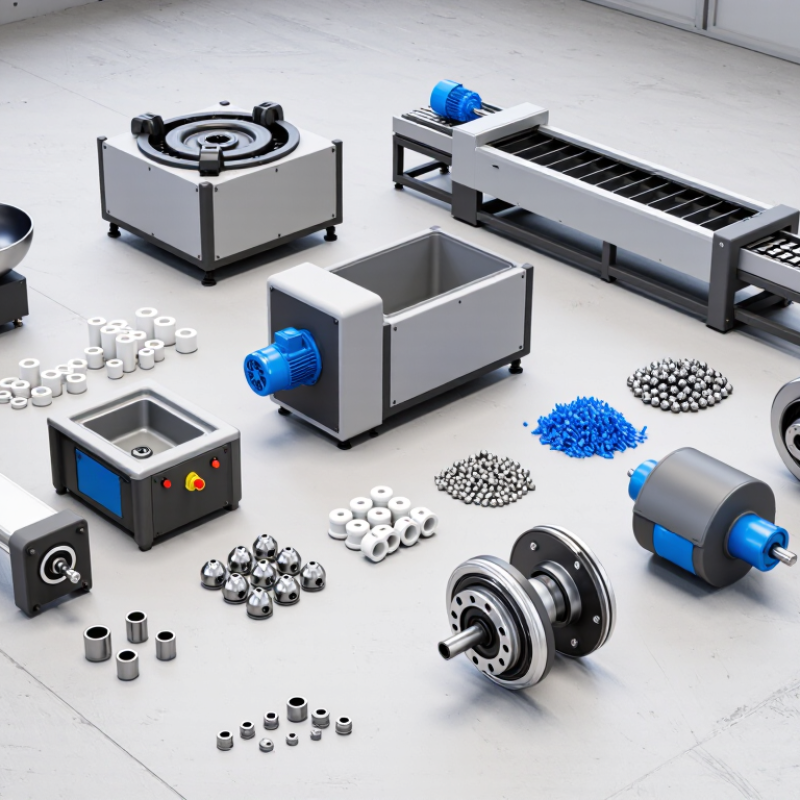
A vibratory finishing machine is a tub or bowl that gently shakes parts, media, water, and compound together. The motion creates repeated contact. It removes burrs, softens sharp edges, cleans surfaces, and improves appearance. Unlike manual polishing, the machine processes many components at once. Its action depends on vibration speed, amplitude, media shape, load size, and cycle time. Small ceramic triangles can reach narrow edges. Larger plastic shapes usually protect softer surfaces. Steel media can burnish durable metals, but it may add weight and noise.
Common choices include vibratory bowls, vibratory tubs, continuous-flow units, drying machines, and combined wash-dry systems. Buyers also compare batch and through-feed designs. Grand View Research valued the global metal finishing market at approximately USD 111 billion in 2023, showing the scale of demand for controlled surface treatment. Report estimates vary, however. That difference deserves attention before budgeting. A larger machine is not automatically better. An overloaded tub can reduce movement and leave shadowed areas untouched. I have seen sample parts look polished, yet retain burrs inside holes. Testing matters.
The U.S. Environmental Protection Agency’s metal-finishing guidance identifies wastewater, chemical use, and air emissions as important process considerations. Noise also requires practical control. Operators should record media wear, compound concentration, cycle duration, and part damage. These records support repeatable results and safer purchasing decisions. The process is not perfectly predictable. Part geometry often changes the outcome. A realistic trial remains more reliable than a catalog specification.
Top 10 Vibratory Finishing Machine Types to Buy
How Vibratory Finishing Machines Work
Vibratory finishing machines use controlled vibration, media, water, and compound to improve metal surfaces. Parts move inside a lined bowl or tub, while abrasive media repeatedly contacts their edges. This creates gradual deburring, radiusing, cleaning, and polishing without removing excessive material.
The machine type changes the finishing action. Rotary bowl systems suit batch work. Tub machines handle long or delicate parts. Continuous-flow units support higher production volumes. Centrifugal disc machines deliver faster cutting through stronger pressure. Barrel systems, dry vibratory units, and vibratory dryers serve different moisture and surface requirements. Automated loading options can reduce handling, but they also increase setup complexity.
According to Grand View Research’s 2024 metal finishing report, the global market was valued at more than 100 billion dollars in 2023, with continued growth expected through 2030. MarketsandMarkets also identifies automation and tighter surface-quality requirements as major industry drivers. These figures support investment, but they do not guarantee a suitable process.
Watch the media-to-part ratio.
A practical trial remains essential. Operators should measure cycle time, noise, water use, edge coverage, and dimensional change. A small aluminum component may need gentle ceramic media, while hardened steel parts can tolerate more aggressive cutting. I have found that “polished” can hide uneven results. Inspect the holes, corners, and underside. The first recipe is rarely perfect.
| No. | Machine Type | How It Works | Best-Suited Parts | Typical Working Capacity | Common Media | Typical Results | Key Buying Consideration |
|---|---|---|---|---|---|---|---|
| 1 | Vibratory Bowl Finisher | An eccentric motor creates circular vibration, causing parts and media to rotate and rub against one another inside a lined bowl. | Small and medium-sized parts with relatively simple shapes. | Approximately 10–500 L bowl volume; batch processing is common. | Ceramic, plastic, stainless-steel, or organic media. | Deburring, edge radiusing, cleaning, smoothing, and light polishing. | Select bowl size, separator design, sound enclosure, and drain or compound-handling options. |
| 2 | Vibratory Tub Finisher | A long rectangular chamber vibrates in a controlled pattern so that parts travel gradually through the media bed while receiving consistent contact. | Long, large, delicate, or awkwardly shaped components. | Commonly about 100–2,000 L or more, depending on the chamber length. | Plastic and ceramic shapes selected for the required cutting or polishing action. | Uniform deburring and finishing over broad surfaces and difficult profiles. | Check usable chamber length, part loading method, and the ability to process long workpieces without bridging. |
| 3 | Continuous-Flow Vibratory Finisher | Parts enter one end of a vibrating trough and move through the media bed toward the discharge end as vibration, friction, and controlled inclination provide continuous transport. | High-volume production parts with repeatable finishing requirements. | Usually sized for a continuous feed rate rather than a single batch; throughput depends on part geometry and residence time. | Ceramic or plastic media, with compound dosing and water circulation when required. | Consistent deburring, edge finishing, and cleaning with reduced manual handling. | Prioritize residence-time control, feed and discharge systems, and integration with separation equipment. |
| 4 | Linear Vibratory Finisher | Linear vibration moves the media and parts along a straight or elongated chamber, providing controlled forward travel and surface contact. | Long bars, tubes, rails, extrusions, and parts requiring directional processing. | Often configured with chambers from roughly 1–6 m in length. | Long-format ceramic or plastic media selected to reach channels and edges. | Deburring, blending, descaling, and smoothing of elongated surfaces. | Confirm chamber dimensions, part support, vibration isolation, and loading accessibility. |
| 5 | Vibratory Dryer | Vibration circulates warm air and drying media around wet parts, removing moisture after washing or aqueous finishing. | Metal parts that must be dried without manually wiping each piece. | Typically selected by batch weight, part size, and required drying time. | Corncob, walnut-shell, wood-pellet, or engineered drying media. | Reduced water spotting, corrosion risk, and labor after wet processing. | Compare heater type, airflow, temperature control, dust extraction, and media life. |
| 6 | Vibratory Burnishing Machine | Fine media and compound circulate around the workpieces, producing repeated low-cut contact that improves brightness and surface uniformity. | Previously deburred metal parts requiring a brighter or more uniform appearance. | Available in batch or continuous configurations; capacity is determined by part-to-media ratio. | Fine plastic, porcelain, stainless-steel, or organic polishing media. | Brightening, light polishing, stain reduction, and improved cosmetic consistency. | Look for adjustable amplitude, compound control, and process recipes for repeatable gloss. |
| 7 | Vibratory Deburring Machine | Abrasive media repeatedly impacts and rubs machined edges, removing burrs while rounding sharp corners in a controlled mass-finishing process. | Machined, stamped, cast, forged, and additively manufactured parts. | From small benchtop batches to several-hundred-liter industrial systems. | Aggressive ceramic shapes, plastic cones, pyramids, or specialty abrasive media. | Burr removal, edge softening, flash reduction, and improved handling safety. | Match media aggressiveness and machine amplitude to the burr size and dimensional tolerances. |
| 8 | Vibratory Polishing Machine | Low-abrasion media, liquid compound, vibration, and extended cycle time progressively reduce fine surface irregularities. | Stainless steel, aluminum, nonferrous alloys, and selected plastic components. | Capacity ranges from small batch bowls to large production tubs. | Fine ceramic, porcelain, plastic, or specialized polishing media. | Improved surface smoothness, reduced tool marks, and enhanced visual finish. | Verify achievable roughness, part-to-media ratio, cycle time, and protection against part-on-part contact. |
| 9 | Wet Vibratory Finishing System | Water and chemical compound flush loosened material from the chamber while vibration and media perform deburring, cleaning, or polishing. | Parts needing simultaneous finishing, washing, and contaminant removal. | Batch or continuous systems, commonly from tens to hundreds of liters. | Ceramic or plastic media combined with alkaline, neutral, or specialty compounds. | Clean, deburred surfaces with better control of residue and process heat. | Consider water usage, filtration, wastewater handling, corrosion protection, and automatic compound dosing. |
| 10 | Vibratory Separation and Screening Unit | Vibration moves the finished load across a perforated or slotted screen, allowing smaller media to separate from larger parts. | Mixed loads requiring rapid separation after finishing or drying. | Sized according to part dimensions, media size, loading rate, and desired separation speed. | Usually used with the same media employed in the finishing process. | Faster unloading, reduced sorting labor, and lower risk of media remaining inside parts. | Check screen opening, part retention, adjustable vibration, dust control, and compatibility with delicate surfaces. |
Top 10 Vibratory Finishing Machine Types to Buy
Choosing among vibratory finishing machines starts with understanding their working shapes and operating methods. In production trials, the machine’s geometry often matters more than its advertised capacity.
A standard vibratory bowl handles deburring, edge rounding, and polishing for mixed small parts. A high-energy bowl finishes harder materials faster, but may increase media wear. Vibratory tubs suit long, delicate, or oversized components that cannot move comfortably in a bowl. Rectangular tubs also provide easier loading and unloading. Continuous-flow machines support steady production lines and reduce repeated batch handling. Batch machines offer better control when parts require different cycle times. Through-feed systems work well for uniform components with predictable finishing needs. Vibratory dryers remove moisture after wet processing and help prevent staining. Separate drying units protect finished surfaces from unnecessary contact with wet media. Dual-motor machines can improve movement balance, although setup errors may create uneven results.
Centrifugal disc systems are sometimes grouped with vibratory equipment because they serve similar finishing goals. They deliver aggressive action in a compact footprint. However, they may be unsuitable for fragile edges or tightly nested parts. I have seen operators choose capacity too quickly, then discover poor separation and damaged corners. That mistake is easy to overlook. Check part size, material hardness, media shape, noise limits, and drainage needs before buying. Request a sample trial with your actual parts. Supplier claims matter less than measurable cycle results.
Typical working-volume ranges help compare the scale and application flexibility of major vibratory finishing machine types. Actual capacity depends on part geometry, media loading, water level, and process requirements.
The ranges shown are indicative engineering values in liters. Smaller systems are generally used for precision or laboratory-scale batches, while tubs and automated systems are suited to larger or heavier workpieces.
Choosing among ten vibratory finishing machine types requires more than comparing motor size. Examine part geometry, batch volume, surface goals, and available floor space. Round bowls suit mixed batches and general deburring. Rectangular tubs handle long or delicate parts with less tangling. Continuous-flow units support steady production, while centrifugal disc machines deliver faster cutting in compact spaces. Linear systems work well with long components. Rotary barrels offer controlled tumbling. Wet and dry configurations change media choice, cleaning needs, and drying time. Separation bowls and drying units may reduce manual handling. Custom systems can fit unusual workflows, but they often cost more.
In production trials, I compare cycle time, sound level, media consumption, and unloading effort. Place identical parts in each candidate machine. Check sharp edges under consistent lighting. Measure the finished surface, not only the machine’s advertised capacity. A larger model is not always better. I once selected extra capacity and lost efficiency because small batches moved poorly inside the chamber. That mistake changed my buying checklist. Ask about liner durability, access to controls, drain design, and replacement components. Reliable technical support also matters when vibration patterns change.
Choosing among the top ten vibratory finishing machine types starts with the part, not the catalogue. Bowl machines suit mixed batches and general deburring. Tub machines handle long or fragile components with better separation. Continuous systems support higher throughput. Centrifugal disc machines remove burrs quickly, but they can mark thin edges. Drag finishing protects delicate surfaces while delivering controlled polishing. Rotary systems remain useful for simpler, lower-volume work.
Measure the part length, material hardness, burr thickness, target roughness, and daily load. A 25-kilogram batch may fit a standard bowl, while a 300-kilogram line needs a tub or continuous unit.
Trial different media sizes in a wet cycle. Watch for trapped parts, foam, noise, and uneven contact. Small details matter. An impressive sample can still hide poor production economics.
Grand View Research estimated the global metal finishing market above 100 billion dollars in 2023, showing strong demand for repeatable surface quality. Energy deserves equal attention. The U.S. Department of Energy reports that compressed-air leaks can waste 20% to 30% of compressor output, relevant to air-assisted separation and drying systems.
Check motor power, water consumption, cycle time, and maintenance access before buying. I would also challenge the first trial result. Different loads may behave very differently. A machine that finishes one test basket perfectly may struggle with sharp corners, hollow parts, or mixed geometries.