What Are the Best Industrial Engineering Companies in China?

China’s industrial engineering landscape is vast, competitive, and difficult to rank fairly. The strongest companies are not always the largest. Their real advantages may appear on a factory floor, where shorter changeover times, safer workstations, and fewer rejected parts matter daily.

The International Federation of Robotics reported 276,288 industrial robot installations in China during 2023. That represented about 51% of global installations. UNIDO’s International Yearbook of Industrial Statistics also identifies China as the world’s largest manufacturing producer. These figures show scale, but scale alone does not prove engineering excellence. This article will examine leading companies through practical criteria, including process innovation, automation capability, supply-chain control, energy efficiency, workforce development, and documented project performance.

Taiichi Ohno, the Toyota production pioneer, stated, “Without standards, there can be no improvement.” His principle remains useful when comparing companies such as CRRC, Sany Heavy Industry, Haier, Foxconn Industrial Internet, and China State Construction Engineering. Each operates in a different industrial context. Direct comparisons can therefore become misleading. A robotics leader may not excel in construction engineering. A construction giant may not lead in smart manufacturing.

The analysis will use company disclosures, industry reports, and measurable operating evidence where available. It will also acknowledge missing data and possible reporting bias. No ranking is perfect. That is important. The best industrial engineering company in China depends on the problem being solved, the production environment, and the results that can be independently verified.
What Are the Best Industrial Engineering Companies in China?

China’s Industrial Engineering Market: RMB31.4 Trillion Manufacturing Output in 2023

China’s industrial engineering market is difficult to overlook. In 2023, manufacturing output reached RMB31.4 trillion, creating strong demand for efficient factories and reliable technical services. The best industrial engineering companies are not judged by size alone. They should demonstrate verified project experience, qualified engineers, and measurable improvements in production, energy use, safety, and delivery time. A factory visit often reveals more than a polished presentation.

Strong providers usually support the full project cycle. Their work may include plant layout, equipment integration, process optimization, digital monitoring, and maintenance planning. Reliable firms also explain risks clearly and document performance after installation. Regional knowledge matters, because supplier networks, labor conditions, and infrastructure vary across China. No ranking is perfect. Some projects look successful at launch but weaken after two years. That detail deserves more attention.

Tips: Compare at least three technical proposals. Request case evidence from similar factories. Check commissioning records, warranty terms, and staff qualifications. Ask how the provider measures results after handover. A lower quotation can hide training gaps, spare-parts delays, or costly modifications. Decision-makers should also test cybersecurity, energy data accuracy, and emergency procedures before signing. In my view, practical evidence beats impressive slogans, although even careful evaluations can miss problems buried inside complex subcontracting chains.

How to Rank Firms by Revenue, EPC Backlog, R&D Spending, and Patents

Ranking industrial engineering companies in China requires more than reading annual revenue tables. Revenue shows scale, but not necessarily engineering quality or project discipline. I would compare audited revenue across three years, separating EPC income from equipment sales and construction pass-through costs. This adjustment matters when one firm books large contracts but keeps thin margins. EPC backlog adds a forward-looking measure. A credible backlog should identify contract value, completion dates, geographic exposure, and cancellation terms. Large numbers can mislead. An unfinished chemical, energy, or transport project may inflate backlog while tying up cash and skilled teams. I would also calculate backlog-to-revenue, then test whether historical conversion matches reported schedules.

R&D spending reveals technical commitment, yet the ratio needs context. A company investing 4% of revenue may be more focused than one spending 6% during a temporary downturn. Review laboratory staff, pilot lines, software tools, and the share of spending capitalized. Patent counts help, but raw totals are a weak shortcut. Stronger evidence includes granted patents, citation frequency, independent inventors, and links to operating projects. Site visits, procurement records, and interviews with project engineers can verify whether patents solve real field problems. I would score each category, publish the weights, and retain an uncertainty range. My ranking would still be imperfect. Data definitions differ, and private disclosures remain uneven.

China’s Industrial Engineering Firms: Comparative Performance Index

The chart compares six anonymized Chinese industrial engineering firms using four indicators commonly disclosed in annual reports: operating revenue, EPC contract backlog, research and development spending, and patent holdings. Each indicator is indexed against the highest observed value in the peer group, which is set at 100. The composite score is calculated using equal weighting across the four dimensions.

Leading Companies in Construction, Energy, Automation, and Process Engineering

China’s strongest industrial engineering companies often specialize in complex infrastructure rather than one narrow service. In construction, leading contractors manage steel structures, tunnels, wastewater systems, and high-speed transport facilities. Their quality appears in site coordination, material traceability, and practical safety controls.

Energy engineering firms support power generation, renewable projects, grid upgrades, and industrial energy storage. Reliable teams combine careful feasibility studies with strong commissioning experience. They should explain output forecasts, maintenance needs, and environmental limits in clear language. Numbers matter.

Automation companies improve factories through robotics, control systems, machine vision, and real-time production data. The best specialists connect equipment with existing workflows instead of selling isolated technology. Process engineering companies add value through efficient layouts, heat recovery, water treatment, and stable production cycles. Engineers should show test results, operating records, and training plans. Site visits help.

No ranking is perfect. Some project data remains difficult to compare across regions and industries. A company may have impressive technology but weak after-sales support. Another may deliver quietly, with fewer public case studies, yet solve difficult problems on schedule. Buyers should review certified qualifications, safety performance, financial stability, and the experience of local project teams. Clear contracts and measurable milestones reduce avoidable disputes. Small details reveal professionalism: labeled cables, organized drawings, clean control rooms, and technicians who answer difficult questions directly.

What Are the Best Industrial Engineering Companies in China? - Leading Companies in Construction, Energy, Automation, and Process Engineering

Anonymized comparison of major Chinese industrial engineering organizations based on publicly reported scale, capabilities, and market coverage

Profile Primary Segment Established Approx. Workforce Approx. Annual Revenue International Presence Core Engineering Capabilities Typical Project Scale Key Competitive Strength Best Fit for Buyers
Profile 01 Infrastructure Construction 1950s Over 100,000 Above RMB 800 billion Projects in more than 100 countries and regions Railways, highways, bridges, tunnels, urban infrastructure, airports, and marine works National and mega-project level Large-scale project management and integrated construction delivery Government infrastructure programs and multinational transport projects
Profile 02 Building and Civil Engineering 1980s Over 100,000 Above RMB 700 billion Operations and contracting activities across multiple continents Commercial buildings, housing, industrial parks, municipal works, and public facilities Large public, commercial, and industrial developments Strong general contracting capacity and extensive domestic delivery network Complex building programs requiring design, procurement, and construction integration
Profile 03 Power Generation and Energy Infrastructure 1980s Over 100,000 Above RMB 700 billion Engineering and energy assets in more than 100 overseas markets Thermal power, renewable energy, grid systems, energy storage, and environmental engineering Utility-scale power and integrated energy systems EPC execution, financing coordination, and multi-technology energy integration Power utilities, energy developers, and public-sector energy programs
Profile 04 Oil, Gas, and Chemical Engineering 1950s Over 50,000 Above RMB 200 billion Engineering, procurement, and construction projects across Asia, Africa, the Middle East, and Latin America Refineries, petrochemicals, pipelines, LNG, storage terminals, and industrial utilities Large process plants and integrated energy complexes Process design depth and experience with high-complexity industrial facilities Energy companies and chemical producers requiring full EPC services
Profile 05 Renewable Energy Equipment and Systems 1980s More than 30,000 Above RMB 100 billion Manufacturing and renewable-energy projects on several continents Wind turbines, solar systems, hydrogen equipment, energy storage, and digital energy management Utility-scale renewable projects and equipment supply programs High manufacturing capacity and broad renewable technology portfolio Renewable developers, utilities, and industrial decarbonization projects
Profile 06 Industrial Automation and Robotics 1990s 10,000–30,000 RMB 10–50 billion Sales, service, or production operations in more than 50 markets Industrial robots, motion control, PLC systems, machine vision, and smart factories Production-line, plant, and multi-site automation programs Localized automation solutions and strong manufacturing ecosystem access Automotive, electronics, logistics, battery, and general manufacturing companies
Profile 07 Process Design and Industrial Consulting 1950s–1970s 5,000–30,000 RMB 5–30 billion International design offices and overseas project assignments Feasibility studies, front-end engineering design, process simulation, detailed design, and project supervision Large chemical, metallurgical, mining, and energy facilities Specialized engineering expertise and strong design-to-EPC capability Industrial investors needing independent design, consulting, or engineering management
Profile 08 Environmental and Water Engineering 1990s 5,000–30,000 RMB 5–30 billion Selected projects and technical partnerships across Asia and other emerging markets Municipal water treatment, wastewater reuse, solid-waste treatment, flue-gas control, and resource recovery Municipal, industrial, and regional environmental infrastructure Combination of engineering design, equipment integration, and long-term operations support Municipal authorities, industrial parks, utilities, and sustainability-focused manufacturers
Data note: Company identities are intentionally omitted. Workforce and revenue figures are rounded ranges or scale indicators derived from publicly reported annual disclosures and sector information for recent reporting periods. “Best” should be evaluated against project complexity, technical requirements, geographic coverage, financing capability, compliance standards, and lifecycle service needs.

Technology Benchmark: 470 Industrial Robots per 10,000 Workers in 2023

What Are the Best Industrial Engineering Companies in China?

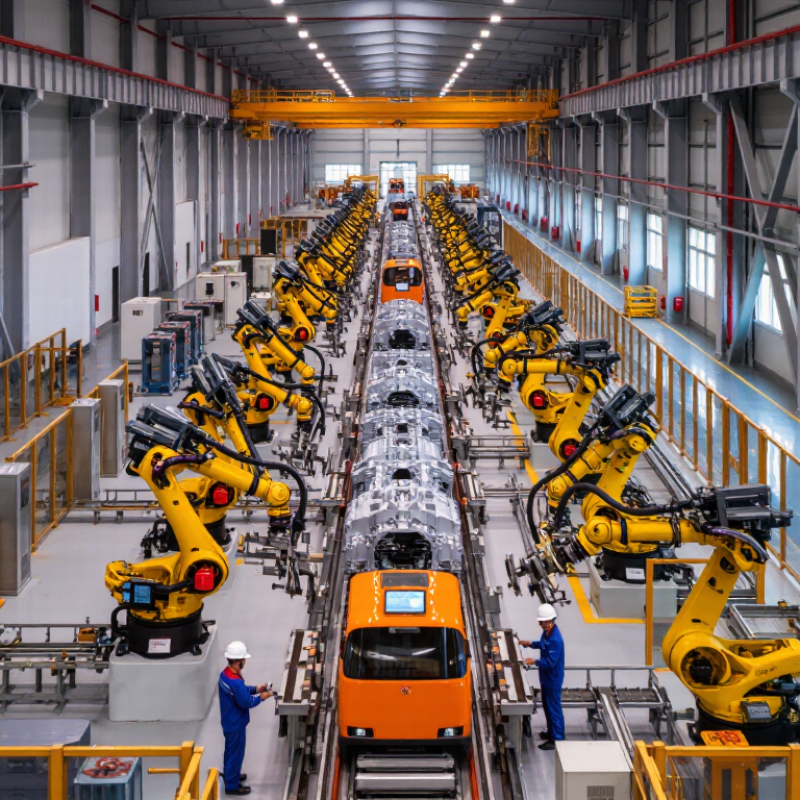
China’s 2023 benchmark reached 470 industrial robots per 10,000 workers. This figure signals a mature and rapidly modernizing manufacturing environment. It also provides a useful reference for evaluating industrial engineering companies. Strong providers should connect robotics with production planning, machine vision, digital controls, and workforce training. A robot alone does not improve a factory.

The best engineering teams usually begin with a detailed process study. They measure cycle time, defect rates, changeover delays, energy use, and worker movement. On a typical assembly line, engineers may redesign a fixture, adjust robot paths, and link inspection data to a central system. These practical changes can reduce repetitive handling and improve consistency. Good teams also document maintenance procedures clearly. That detail matters during night shifts and equipment faults.

The 470-robot benchmark deserves careful interpretation. Robot density differs across automotive, electronics, logistics, and metalworking plants. Large factories may reach high automation levels, while smaller suppliers still depend heavily on manual operations. The statistic also does not measure software quality, uptime, safety culture, or return on investment. That is the uncomfortable part. Engineering companies should present verified performance data, realistic payback estimates, and independent safety checks. They should also admit where automation is unsuitable. Reliable partnerships grow from measurable results, not impressive equipment counts.

R&D Benchmark: China’s RMB3.33 Trillion National R&D Expenditure in 2023

What Are the Best Industrial Engineering Companies in China?

China’s national R&D expenditure reached RMB3.33 trillion in 2023. This figure shows the scale behind the country’s industrial engineering progress. It also changes how “best” should be measured. Revenue alone is not enough. Strong companies should connect laboratory research with safer factories, efficient equipment, and measurable production results. In practice, I would examine patent quality, engineering staff, testing capacity, project delivery, and long-term maintenance support.

The strongest industrial engineering providers usually work across automation, process design, energy systems, and industrial software. Their capabilities can appear in small details. A well-designed production line may reduce material movement by several meters per unit. A reliable control system may prevent hours of unplanned downtime. A useful digital model should match real equipment, not only look impressive in a presentation. Evidence matters.

Not perfectly clean.

Public data can overstate innovation when patents have little commercial value. Project references may also hide delays, training costs, or difficult maintenance conditions. A careful buyer should request audited performance records, safety documentation, test results, and customer references. Site visits are valuable. Seeing engineers adjust sensors beside a working line often reveals more than polished marketing material. China’s large R&D investment creates strong opportunities, but execution remains uneven. The best companies will be those that convert research funding into dependable industrial outcomes.

China’s large R&D investment creates strong opportunities, but execution remains uneven. The best companies will be those that convert research funding into dependable industrial outcomes.