How to Master Automation Engineering for Global Procurement Success?
Mastering automation engineering is crucial for success in global procurement. In today’s fast-paced market, companies face challenges like inefficiency and rising costs. Automation can streamline processes, reduce errors, and enhance productivity. Effective automation engineering integrates advanced technologies with procurement strategies to create seamless workflows.
Focusing on automation engineering allows businesses to harness data effectively. This data helps businesses make informed decisions. However, some organizations struggle with implementation. They may lack training or resources. These challenges can hinder potential gains. Understanding these pitfalls is essential for improvement.
To truly succeed, procurement teams must adapt their skills. Continuous learning and staying updated on trends is vital. Automation engineering is not a one-time effort; it requires ongoing commitment. Embracing a proactive approach helps teams refine their strategies and drive success.

Understanding Automation Engineering in the Context of Procurement
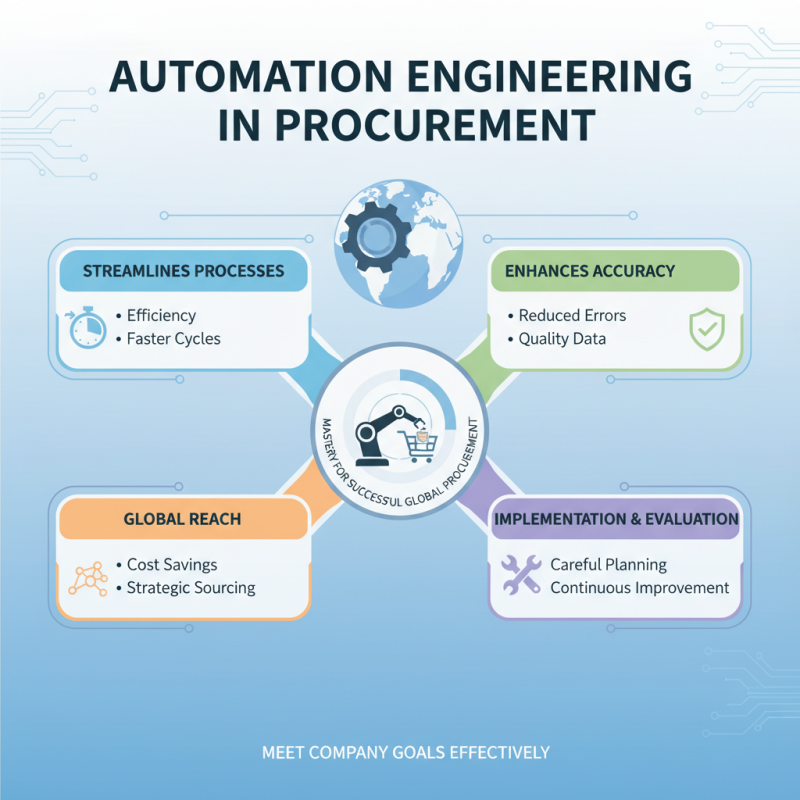
Mastering automation engineering is crucial for successful global procurement. It streamlines processes and enhances efficiency. Understanding automation in procurement helps companies meet their goals effectively. Automation can reduce errors and save time in repetitive tasks. However, it requires careful implementation and ongoing evaluation.
Tips for effective automation include careful analysis of current workflows. Identify pain points that automation can solve. Additionally, involve key stakeholders in the decision-making process. This ensures that automation aligns with business objectives. Regular training sessions can enhance employee engagement. Be aware that not all tasks may benefit from automation, so prioritize wisely.
Moreover, monitoring is key. Track performance metrics to measure success. Reflect on what works and what doesn’t. Adjust automation strategies based on real-time data and feedback. This adaptability is essential in a dynamic global market. Embracing these strategies can lead to improved procurement outcomes.
Key Automation Technologies Transforming Global Procurement Practices
Automation technologies are evolving rapidly, reshaping global procurement practices. According to a report by McKinsey, companies that digitize procurement can achieve savings of up to 30% in operational costs. This transformation is largely driven by advanced technologies such as Artificial Intelligence (AI), Robotic Process Automation (RPA), and cloud-based solutions.
AI enhances decision-making in procurement. It analyzes vast amounts of data to identify trends and predict future needs. For instance, businesses can use predictive analytics to forecast demand more accurately. Meanwhile, RPA automates routine tasks, freeing up human resources for strategic activities. A survey by Gartner revealed that 75% of organizations plan to adopt RPA by 2025.
Despite the potential, challenges exist. Many organizations face integration issues with legacy systems. Successful automation often requires a cultural shift and staff retraining. According to Deloitte, 70% of companies struggle with change management during digitization. These obstacles can hinder the realization of automation's full benefits in procurement, emphasizing the need for careful planning and execution.
Implementing Automation Solutions for Streamlined Procurement Processes
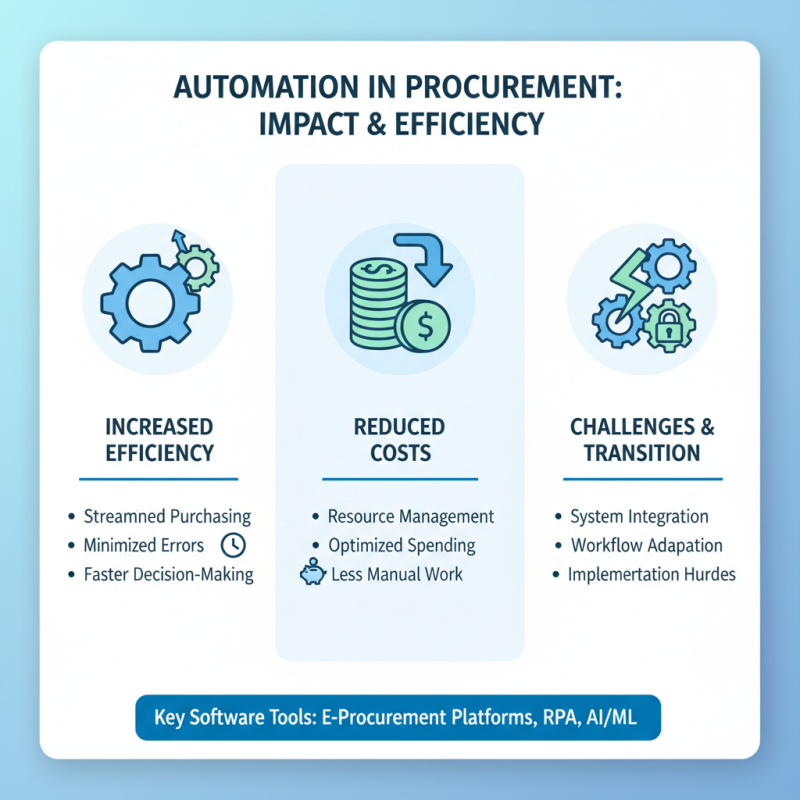
In the realm of procurement, automation solutions are transforming processes at an unprecedented pace. According to a report by McKinsey, companies implementing automation in procurement can experience cost reductions of up to 30%. This is largely due to streamlined workflows and enhanced data accuracy. Automation minimizes manual tasks, allowing teams to focus on strategic decision-making rather than repetitive processes.
Integrating technologies like machine learning and artificial intelligence can further enhance efficiency. For example, predictive analytics can help anticipate demand trends, enabling better inventory management. Research from Deloitte emphasizes that organizations using these technologies report a significant improvement in supplier collaboration. However, challenges remain. Many firms struggle with data integration across platforms, leading to gaps in operational visibility.
Moreover, the human aspect of automation cannot be overlooked. While technology simplifies tasks, it can also lead to resistance among staff. Training and change management are critical components. Without proper support, teams may feel overwhelmed by new systems. Striking the right balance between technology and human expertise is vital for success in global procurement automation.
Future Trends in Automation Engineering for Procurement Strategies
The landscape of automation engineering in procurement is rapidly evolving. Companies are increasingly adopting automation to enhance efficiency.
According to a recent McKinsey report, organizations that integrate automation into procurement can expect cost reductions of up to 30%. This shift is not just about technology; it’s about transforming strategies.
Emerging trends include the use of artificial intelligence (AI) for data analysis. AI tools analyze supplier performance and market trends. This allows procurement teams to make informed decisions.
Additionally, the rise of robotic process automation (RPA) is streamlining routine tasks. A study by Deloitte states that 40% of procurement tasks can be automated, freeing teams to focus on strategic activities.
Tips: Stay informed about industry advancements. Regularly update your skills through online courses.
Engage with automation communities to share best practices. Embrace small failures as learning opportunities; the journey is as crucial as the destination.
As automation tools become sophisticated, businesses must adapt their strategies accordingly. The lack of skilled talent in automation could hinder progress.
Companies should invest in training programs for their teams. Addressing this gap will be essential for future success.