
What Is Stainless Steel Manufacturing?
Stainless steel manufacturing turns carefully measured ingredients into a material built to resist corrosion, heat, and daily wear. It begins with alloy selection, often involving iron, chromium, and other elements such as nickel or molybdenum. Producers melt and refine the charge, cast it into slabs or billets, then roll, anneal, pickle, and finish it. Each stage leaves clues: a furnace’s temperature record, a slab’s surface, or the finish on a sheet. Details matter.
The scale is substantial. The World Stainless Association reported 58.4 million metric tons of stainless crude steel production worldwide in 2023, up 4.6% from 2022. That figure describes crude steel, not finished products, so it should not be mistaken for the volume of sheet, pipe, or equipment reaching customers. In its production statistics, the association provides a useful industry benchmark, while individual mill records reveal how specific grades and processes perform.
Welding metallurgy expert John C. Lippold’s published research highlights a practical point: stainless steel’s weld behavior depends on its composition and thermal history. That is a paraphrase of his technical work, not a verbatim quotation. A polished surface can look convincing, yet appearance alone cannot confirm grade, corrosion performance, or manufacturing quality. The process is precise, but not magical. A closer look at stainless steel manufacturing means examining the material, the processing route, and the evidence behind the final specification.
What Stainless Steel Manufacturing Involves
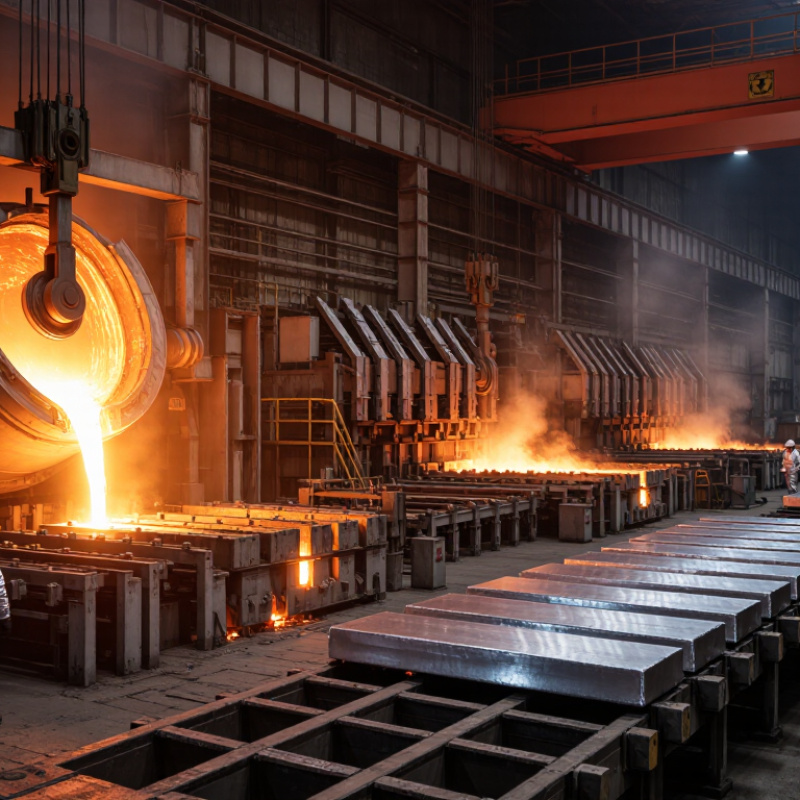
Stainless steel manufacturing begins with selecting and measuring the raw materials. The charge may include recycled steel, chromium, nickel, and other alloying elements, depending on the required grade. In an electric arc furnace, intense heat melts the materials; operators then adjust the alloy chemistry. Chromium helps form a thin protective surface layer that resists corrosion. Small changes matter. Carbon levels and other elements affect strength, formability, and performance in service.
After melting, the steel is refined to remove unwanted gases and control its composition. It is then cast into slabs, billets, or other shapes. These solid forms are reheated and rolled to reduce their thickness or change their profile. Hot rolling shapes the material at high temperatures, while cold rolling can produce thinner sheet with a smoother finish. The choice depends on the product’s intended use.
Heat treatment can restore properties altered during rolling. Pickling removes surface scale, and finishing steps may include polishing or cutting coils to size. Quality checks can measure dimensions, surface condition, and mechanical properties; some applications also require corrosion testing. These steps are easy to underestimate. A clean-looking surface alone does not prove that the steel meets its specification, and production routes vary by grade, mill equipment, and customer requirements.
What Is Stainless Steel Manufacturing? - What Stainless Steel Manufacturing Involves
| Manufacturing Stage | What Happens | Purpose | Typical Checks or Outputs |
|---|---|---|---|
| 1. Material Selection | Manufacturers select iron, chromium, and other alloying elements according to the required stainless steel grade and product application. | To achieve the required combination of corrosion resistance, strength, formability, and heat resistance. | Grade requirements and chemical composition are checked against applicable material specifications. |
| 2. Melting and Refining | Raw materials and recycled stainless steel are melted in a furnace. Refining processes adjust the composition and reduce unwanted impurities. | To produce molten steel with controlled chemistry and suitable cleanliness. | Chemical analysis, temperature monitoring, and checks for composition consistency. |
| 3. Casting | Molten steel is solidified into a semi-finished form, commonly a slab, billet, or bloom. | To create a solid starting shape for subsequent forming operations. | Cast products are inspected for dimensions and visible surface or internal defects. |
| 4. Hot Working | The semi-finished steel is reheated and rolled or otherwise formed at elevated temperatures. | To reduce thickness or cross-section and produce intermediate forms such as plate, coil, bar, or rod. | Thickness, width, shape, and surface condition are monitored during processing. |
| 5. Heat Treatment | Depending on the grade and product, steel may be heated and rapidly cooled in a controlled process such as solution annealing. | To obtain required metallurgical properties and, for many grades, improve corrosion performance by restoring a suitable microstructure. | Time and temperature records, hardness, and mechanical properties may be checked. |
| 6. Descaling and Pickling | Oxide scale formed during hot processing or heat treatment is removed. Pickling uses an appropriate acid solution to clean the surface. | To remove heat scale and leave a clean surface for further processing or finishing. | Surface cleanliness, appearance, and dimensional condition are inspected. |
| 7. Cold Working | Some products are rolled, drawn, or formed at or near room temperature to achieve tighter dimensions or a specific surface and strength. | To produce thinner or more precisely sized products and tailor mechanical properties. | Thickness, flatness, dimensions, surface finish, and hardness are checked as required. |
| 8. Final Finishing | Products may be polished, brushed, ground, or given another specified finish. Edges can also be trimmed or prepared. | To meet appearance, surface, and end-use requirements. | Finish is assessed against the order specification; surface roughness may be measured when specified. |
| 9. Inspection and Testing | Finished material is examined and tested according to its product form, grade, and applicable requirements. | To verify that the material conforms to specified chemistry, dimensions, properties, and quality criteria. | Checks can include chemical analysis, tensile testing, hardness testing, dimensional inspection, and non-destructive examination. |
| 10. Cutting and Dispatch | Coils, plates, bars, or other products are cut to order, identified, protected, and prepared for shipment. | To supply material in usable sizes while protecting it from handling damage and contamination. | Product identification, quantity, dimensions, packaging, and accompanying inspection documents are verified. |
Related Posts
-
Why Choose a Stainless Steel Factory for Your Business?
-
10 Best Stainless Steel Manufacturing Companies Worldwide
-
Which Is the Best Stainless Steel Factory in China?
-
How to Choose a Stainless Steel Factory in 2026?
-
Who Are the Top Stainless Steel Manufacturers in China?
-

Top Stainless Steel Factory Innovations and Their Impact on the Industry?