Who Are the Top Stainless Steel Manufacturers in China?

China’s stainless steel industry includes large integrated mills, specialist producers, and companies focused on processing or export. Their products may include coils, sheets, pipes, bars, and precision-finished components. The right supplier depends on the grade, dimensions, surface finish, order volume, and delivery requirements. There is no single “top” manufacturer for every project.

This guide explores how to assess leading names in Chinese stainless steel manufacturing without treating a marketing claim as proof. It considers production capacity, product range, quality controls, technical support, and export experience. Details matter: a buyer may need 304 sheet with a brushed finish, while another needs 316L pipe and traceable heat numbers. Small differences can affect fabrication and long-term performance.

Look beyond polished websites. Request current specifications, sample material, and mill test certificates, then confirm that documents match the products offered. Where possible, review audit findings and recent customer references. A high-volume mill may not suit a small custom order. Nor does a broad catalogue guarantee consistent quality. These checks take time. They can still miss things. The sections ahead provide a practical framework for comparing manufacturers, understanding common supplier types, and asking clearer questions before requesting a quotation. Manufacturer rankings can change, so verify current capabilities and claims directly before making a decision.
Who Are the Top Stainless Steel Manufacturers in China?

China’s Stainless Steel Industry and Its Major Production Hubs

China’s stainless-steel industry is a network of production and processing hubs, not one concentrated zone. The International Stainless Steel Forum’s 2023 melt-shop report recorded 58.4 million tonnes of global output. China produced 36.7 million tonnes, about 63% of the total. That scale shapes regional supply chains.

Jiangsu and Fujian host substantial melting and rolling capacity, while Guangdong—especially Foshan—is a major processing and distribution center. Industry summaries from the China Special Steel Enterprises Association’s stainless-steel branch help track domestic production and demand. These hubs benefit from dense supplier networks, skilled workers, and access to ports or large customer markets. Still, output figures do not tell the whole story. I’d treat them as a starting point, not proof of quality; regional data can also be hard to compare directly.

Tips: When comparing suppliers, check the producing site, product standards, and recent mill-test documents. A nearby warehouse is not necessarily a production hub.

China’s Stainless Steel Industry and Its Major Production Hubs

China’s stainless steel melt shop production, 2020–2023 (million tonnes)

Production increased from 30.1 million tonnes in 2020 to 36.7 million tonnes in 2023. These national figures show the scale of China’s stainless steel industry; they do not break production down by company or production hub. Source: World Stainless (formerly ISSF), stainless steel melt shop production statistics.

Criteria for Identifying Leading Stainless Steel Manufacturers

Who Are the Top Stainless Steel Manufacturers in China?

A leading manufacturer should prove more than a large production capacity. Buyers can examine mill test certificates, heat-number traceability, and independent inspection records. These documents connect a delivered coil to its chemistry, dimensions, and production batch. Check whether the supplier can consistently meet the required grade and thickness, not merely offer a broad catalogue.

Market scale provides context, but it does not prove stainless-steel expertise. The World Steel Association reported 1,019.1 million tonnes of Chinese crude steel production in 2023, out of 1,892.2 million tonnes worldwide. The International Stainless Steel Forum reported global stainless-steel melt-shop production of about 58.4 million tonnes that year. These figures describe different product categories. They should not be treated as evidence of any individual mill’s stainless output.

Look for clear testing procedures, documented quality systems, and reliable delivery records. Ask how the mill handles surface defects, dimensional tolerances, and rejected batches. Strong answers include measurable checks, not polished assurances. Environmental disclosures and energy-use data can add useful context, though reporting methods may differ. One caution: a supplier’s certificates still need verification. A neat document is not the same as a consistent coil.

Major Producers: TISCO, Tsingshan, Baosteel, and Hongwang

China’s stainless steel sector includes large integrated mills and specialized processors. Four major producer profiles show how capacity and product mix can differ. One type combines broad steelmaking operations with finished-coil production. Another emphasizes high-volume stainless output and downstream processing. A diversified steel group may balance stainless grades with other steel products. A finishing-oriented producer may offer cold-rolled sheet and varied surface options. These differences matter. Buyers should compare grade, thickness, finish, and delivery records rather than assume every large mill suits the same job.

When reviewing a supplier, request mill test certificates, stated tolerances, and traceable batch details. Inspect sample edges, surface consistency, and packaging before placing repeat orders. A coil can look flawless under warehouse lights, then reveal scratches after fabrication. Small details count. Confirm that specifications cover the final condition, including annealing, pickling, or polishing where relevant. Production capacity is useful, but responsiveness matters too. I would not treat market recognition as proof of suitability; that judgment can be wrong.

Product Ranges and Manufacturing Capabilities

Chinese stainless steel manufacturers serve buyers with a broad mix of flat and long products. Common offerings include coils, sheets, plates, strips, bars, pipes, and welded tubes. Some facilities also supply cut-to-size blanks or formed components. Grade availability varies, but 304, 316, and 201 are frequently requested. The right choice depends on the environment, forming method, and required finish.

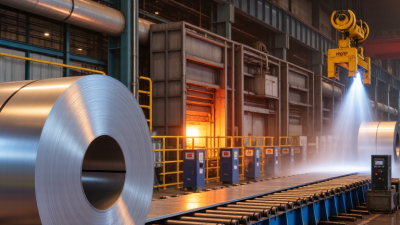
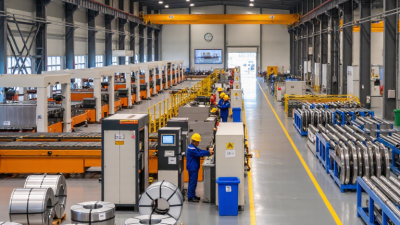
Manufacturing capabilities can range from melting and casting to hot rolling, cold rolling, annealing, and pickling. Downstream services may include slitting, polishing, laser cutting, bending, and welding. A coil line can produce narrow strips with consistent edges; a plate shop may handle thicker stock and custom dimensions. Details matter. Ask about thickness tolerances, surface options, and minimum order quantities, not just listed equipment.

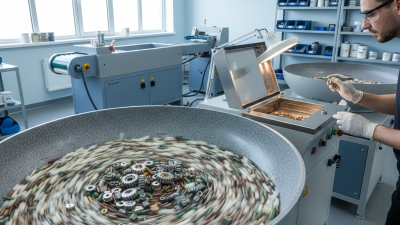
Reliable evaluation needs evidence. Request material test certificates, inspection records, and samples from a comparable production batch. Check whether the supplier can trace heat numbers through processing and packing. A factory visit can reveal storage conditions and calibration practices, though one tour cannot prove every claim. Even a polished brochure can leave gaps. I would verify capacity against the actual product specification, since broad catalogs sometimes describe services handled by outside partners.

How to Compare Chinese Stainless Steel Manufacturers

Comparing Chinese stainless steel manufacturers starts with a clear product specification. State the grade, thickness, width, surface finish, and required tolerances. A quote based on vague requirements is difficult to compare. Ask whether the supplier produces the material or sources it from another mill. Request recent inspection records and confirm that heat numbers can be traced to the shipment. Details matter.

Next, compare how each company controls quality and delivery. Ask for mill test certificates, sample results, and the inspection steps used before dispatch. For critical applications, have an independent laboratory test a sample against your specification. Check production capacity and lead times against your order size, not a sales estimate alone. Clarify packaging, edge protection, and how claims are handled if dimensions fall outside tolerance. Price is only one factor. A spreadsheet can still mislead: low-cost offers may exclude testing, secure packaging, or consistent batch control. Response quality also counts. Clear answers to technical questions are more useful than quick promises. Recheck assumptions before committing.