10 Best Stainless Steel Manufacturing Companies Worldwide

Choosing the world’s leading stainless steel manufacturing companies requires more than comparing production volume. Quality depends on alloy design, furnace control, rolling accuracy, surface finishing, and responsible resource management. A reliable producer must also deliver consistent grades, traceable certificates, and dependable service across demanding markets.

Metallurgist Harold M. Cobb explained, “Stainless steel is not a single material, but a family of corrosion-resistant alloys.” That distinction matters. Austenitic, ferritic, and duplex grades behave differently under heat, pressure, salt, and chemical exposure. A polished kitchen sheet and a duplex offshore component may share a metallic appearance, yet their performance requirements differ greatly.

This guide examines ten influential companies across Asia, Europe, and the Americas. It considers capacity, innovation, product range, recycling practices, and customer reach. Factory scale matters. It is not everything.

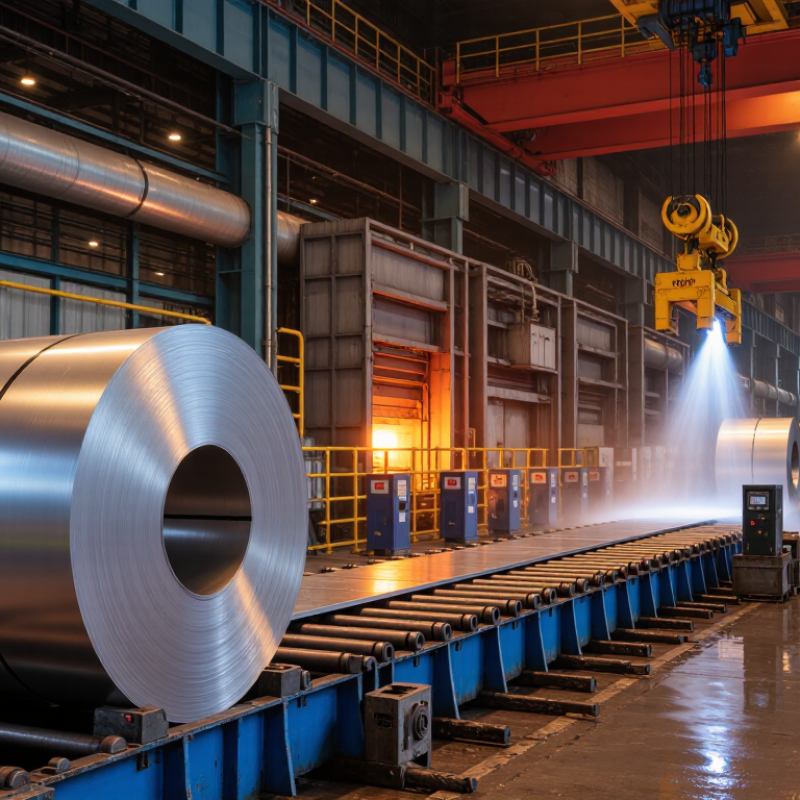
Walk through a modern mill, and the details become visible. Electric-arc furnaces glow behind safety barriers. Slabs move beneath water sprays. Automated gauges check thickness within tight tolerances. Later, technicians inspect coils for scratches, pits, and uneven finishes.

The ranking is not absolute. Market conditions change. Energy prices shift. Company disclosures may also present an incomplete picture. That deserves reflection. Still, manufacturers with strong certifications, transparent reporting, and long operating records offer more dependable evidence.

Readers should compare grades, standards, lead times, and lifecycle costs before making decisions. The lowest quoted price may hide higher maintenance expenses. In stainless steel manufacturing, durable performance often begins with an informed supplier choice.
10 Best Stainless Steel Manufacturing Companies Worldwide

Industry Scope and Criteria for Comparing Stainless Steel Manufacturers

Comparing the world’s leading stainless steel manufacturers requires more than checking production volume. The industry includes mills, precision processors, service centers, and integrated producers. Each serves different needs, from architectural sheets to food-grade tubing and high-strength industrial plate. A fair review must define the product scope before judging performance.

Quality consistency remains a core measure. Reviewers should examine alloy accuracy, surface finish, dimensional tolerance, and heat-treatment control. Independent certifications can support these claims, but documents alone are not enough. Factory audits, sample testing, and traceability records provide stronger evidence. Can the supplier identify the furnace, batch, and inspection result behind one delivered coil?

Operational depth also matters. Analysts should compare melting capacity, forming equipment, recycling practices, energy use, and delivery coverage. A manufacturer with modern furnaces may still struggle with small custom orders. Another may offer excellent service but lack capacity during demand spikes. Pricing deserves attention, yet low cost can hide longer lead times or inconsistent finishing. No ranking is flawless. Data may be incomplete, and regional reporting standards differ. Customer feedback, complaint handling, workforce safety, and investment in research add useful context. The best comparison combines measurable results with cautious judgment, not impressive claims alone.

Global Overview of the Stainless Steel Production Market

A credible review of the world’s ten leading stainless steel manufacturers should examine the wider production market, not only annual output. Demand comes from construction, food processing, energy, transport, and medical equipment. Production remains concentrated in Asia, while Europe and the Americas support specialized grades and regional supply.

Large mills increasingly use electric furnaces, continuous casting, and automated inspection. These systems improve consistency, but technology alone cannot guarantee dependable quality. Raw material chemistry, furnace control, and maintenance discipline remain decisive. Buyers now compare corrosion resistance, surface finish, delivery stability, recycled content, and certification records. Austenitic grades serve many applications, while ferritic and duplex grades offer lower nickel use or higher strength.

Market comparisons also require caution. No ranking is perfect. Reported capacity may not equal reliable production, and announced projects can face delays. Nickel, chromium, and energy prices can quickly change manufacturing costs. In practical audits, heat numbers, test results, and dimensional records help engineers investigate failures. Independent testing matters more than polished marketing language. A stronger assessment reviews shipment history, environmental data, worker safety systems, and customer application evidence. Even experienced analysts can misjudge regional risks when ports, policies, or scrap supplies change unexpectedly.

Profiles of Ten Leading Stainless Steel Manufacturing Companies

10 Best Stainless Steel Manufacturing Companies Worldwide

Profiles of Ten Leading Stainless Steel Manufacturing Companies

A European integrated mill combines ironmaking, melting, casting, and finishing on one site. Its strength is traceability, supported by heat numbers and mill certificates. A Japanese precision producer focuses on thin strip for medical instruments and electronics. Its laboratories measure surface roughness in microns. A South Korean manufacturer supplies wide coils for shipbuilding and construction, using automated flatness controls. The process is efficient, though energy consumption remains a concern.

A North American producer serves food-processing and pharmaceutical facilities. It emphasizes clean welds, corrosion testing, and documented sanitation grades. An Indian manufacturer offers large production capacity and custom coil sizes. Buyers should inspect delivery consistency, not only quoted prices. A German specialist produces high-performance alloys for chemical equipment. Its engineers often work directly with plant designers. A Finnish mill is recognized for low-temperature performance in demanding climates. Yet, recycled-content claims require careful verification.

A Chinese producer supplies competitive volumes across appliance and infrastructure markets. Independent testing can clarify grade accuracy and surface quality. An Italian manufacturer concentrates on decorative sheet, with finishes resembling brushed silk or polished stone. A Brazilian producer supports regional construction projects and develops locally available grades. A Turkish manufacturer combines coil processing with made-to-order cutting services. These ten profiles reveal different strengths in scale, precision, sustainability, and technical support. Performance data still matters more than impressive brochures.

10 Best Stainless Steel Manufacturing Companies Worldwide

Global stainless steel industry context for profiles of ten leading manufacturers

Global crude stainless steel production increased from approximately 41.71 million tonnes in 2014 to 58.44 million tonnes in 2023. This long-term growth highlights the expanding market in which leading stainless steel manufacturers operate. Data source: International Stainless Steel Forum (ISSF).

Production Methods, Product Ranges, and Quality Standards

10 Best Stainless Steel Manufacturing Companies Worldwide

Leading stainless steel manufacturers differ in equipment, process control, product range, and quality discipline. Most begin with electric arc melting, followed by argon oxygen decarburization. Continuous casting then forms slabs, billets, or blooms for further processing. Some facilities still lose efficiency during changeovers. That matters when buyers need stable delivery and identical surface finishes.

Their product ranges usually include coils, sheets, plates, bars, tubes, wires, and precision components. Cold rolling can produce a bright, tight surface for appliances and clean-room equipment. Hot rolling supports thicker plates used in pressure vessels, bridges, and chemical plants. Tube production may involve welding, drawing, annealing, and ultrasonic inspection. Small details matter. Edge cracks can appear after forming.

Reliable suppliers publish chemical compositions and mechanical properties for each grade. Quality teams commonly use ISO 9001 systems, while product verification may reference ASTM or EN requirements. Mill test certificates should show heat numbers, dimensions, yield strength, tensile strength, and elongation. Positive material identification can confirm nickel, chromium, and molybdenum content. Corrosion testing is also useful, but it cannot represent every service environment. A polished sample may look excellent and still fail in chloride exposure. Careful buyers should review traceability, inspection frequency, surface condition, and actual application data instead of trusting appearance alone.

Geographic Reach, Sustainability, and Industry Applications

Geographic Reach, Sustainability, and Industry Applications

The strongest stainless steel manufacturers operate across several production regions, not one low-cost center. The International Stainless Steel Forum reported 58.4 million tonnes of global crude stainless production in 2023. Asia supplied most of this volume, while Europe and the Americas remained important for specialized grades and local delivery. Markets remain uneven. Regional mills can shorten transport distances, improve technical support, and respond faster to infrastructure or food-processing demand.

Sustainability must be measured beyond attractive claims. The World Steel Association estimates that steel produces roughly 7–9% of global energy-related carbon dioxide emissions. Stainless manufacturing therefore faces real pressure to reduce furnace energy, use renewable electricity, and increase scrap input. ISSF lifecycle research highlights durability, corrosion resistance, and recyclability as major environmental advantages. However, recycled-content percentages can mislead without clear boundaries, product grades, and verification. That evidence needs scrutiny.

Industry applications reveal practical expertise. Stainless grades support hygienic surfaces in food plants, corrosion control in chemical facilities, and long service lives in buildings. Medical equipment requires controlled chemistry and reliable surface finishing. Energy projects demand resistance to heat, pressure, and aggressive fluids. According to the International Energy Agency, industrial decarbonization depends on efficiency, electrification, material circularity, and cleaner fuels. Manufacturers serving these sectors should publish test methods, lifecycle assumptions, and regional certifications. Production scale matters, but application knowledge matters more.

10 Best Stainless Steel Manufacturing Companies Worldwide - Geographic Reach, Sustainability, and Industry Applications
Rank Anonymized Manufacturer Primary Operating Region International Market Reach Main Product Forms Common Stainless Grades Sustainability Focus Environmental Management Key Industry Applications Typical Production Scale
1 Manufacturer 01 Western Europe Global; sales and service across 5 continents Flat products, precision strip, heavy plate 304/304L, 316/316L, 430, duplex grades High recycled-metal input, energy efficiency, low-carbon steelmaking ISO 14001-aligned systems Food processing, chemical equipment, architecture, transport Multi-million tonnes annually
2 Manufacturer 02 East Asia Asia-Pacific, Europe, North America Cold-rolled coil, sheet, foil, welded tube 201, 304, 316L, 409, 410, 430 Water recycling, process-gas recovery, renewable-power procurement ISO 14001-certified facilities Automotive exhaust systems, appliances, construction, consumer goods Large integrated production network
3 Manufacturer 03 North America North America, Latin America, selected export markets Sheet, coil, bar, wire, tube 304/304L, 316/316L, 321, 347, 410, 17-4 PH Electric-arc-furnace production, scrap recycling, emissions reduction ISO 14001 or equivalent site systems Aerospace, energy, medical devices, industrial machinery High-volume specialty and commodity output
4 Manufacturer 04 Northern Europe Europe, Middle East, Asia, and North America Plate, bar, wire rod, seamless tube 304L, 316L, 2205 duplex, 2507 super duplex Renewable electricity, hydrogen research, circular alloy recovery ISO 14001-certified operations Offshore energy, marine engineering, desalination, oil and gas Medium-to-large specialty capacity
5 Manufacturer 05 South Asia South Asia, Africa, Middle East, and Southeast Asia Hot-rolled coil, cold-rolled sheet, bars, pipes 304, 316L, 409, 430, 904L, duplex grades Scrap utilization, wastewater treatment, solar-power deployment ISO 14001-aligned environmental controls Railways, infrastructure, process equipment, kitchenware Large regional production base
6 Manufacturer 06 Southeast Asia Asia-Pacific with growing global exports Coil, sheet, welded tube, decorative products 201, 304, 316, 430, 409 Material efficiency, closed-loop water systems, waste minimization Environmental monitoring and ISO-based systems Building façades, elevators, food equipment, household appliances Medium-to-large integrated capacity
7 Manufacturer 07 Southern Europe Europe, North Africa, the Middle East, and the Americas Flat-rolled products, plate, long products 304/304L, 316L, 430, 441, duplex grades Electric-arc-furnace recycling, energy recovery, carbon accounting ISO 14001-certified facilities Automotive, architecture, catering equipment, renewable energy Large European production platform
8 Manufacturer 08 East Asia Asia-Pacific and international project markets Sheet, coil, precision strip, pipe 304, 316L, 321, 410, 430, precipitation-hardening grades Low-emission process upgrades, by-product recovery, water reuse ISO 14001 or comparable systems Electronics, transportation, medical equipment, industrial fabrication High-volume specialized production
9 Manufacturer 09 Central Europe European Union, United Kingdom, and selected global markets Bar, rod, wire, tube, engineered components 304, 316L, 1.4006, 1.4021, duplex and martensitic grades Scrap-based melting, renewable electricity, responsible sourcing ISO 14001-certified production sites Fasteners, machinery, automotive components, chemical processing Medium-scale high-value production
10 Manufacturer 10 South America South America with export activity in North America and Europe Flat products, bars, wire, welded pipe 304/304L, 316L, 409, 430, duplex grades Recycled feedstock, energy optimization, water conservation ISO 14001-aligned environmental programs Mining equipment, food and beverage, construction, pulp and paper Regional integrated capacity