10 Essential Tips for Mastering Industrial Engineering Techniques?
In the fast-paced world of industrial engineering, mastering essential techniques is crucial. Industrial engineering focuses on optimizing complex systems. It integrates knowledge from engineering, management, and technology. Professionals in this field face unique challenges daily. Effective problem-solving can drastically improve productivity.
Identifying key methodologies is vital. Each technique offers distinct benefits and potential drawbacks. For example, Lean manufacturing enhances efficiency but may overlook certain quality aspects. Understanding these nuances is essential for success. Many practitioners struggle with this balance. Continuous learning is necessary to adapt to evolving industry standards.
Investing time in learning can yield significant returns. Collaboration with experts helps refine skills. Real-world experiences contribute greatly to an engineer's knowledge base. By applying these ten essential tips, engineers can navigate challenges better. They can build a more productive and effective future in industrial engineering.

Understanding the Fundamentals of Industrial Engineering Techniques
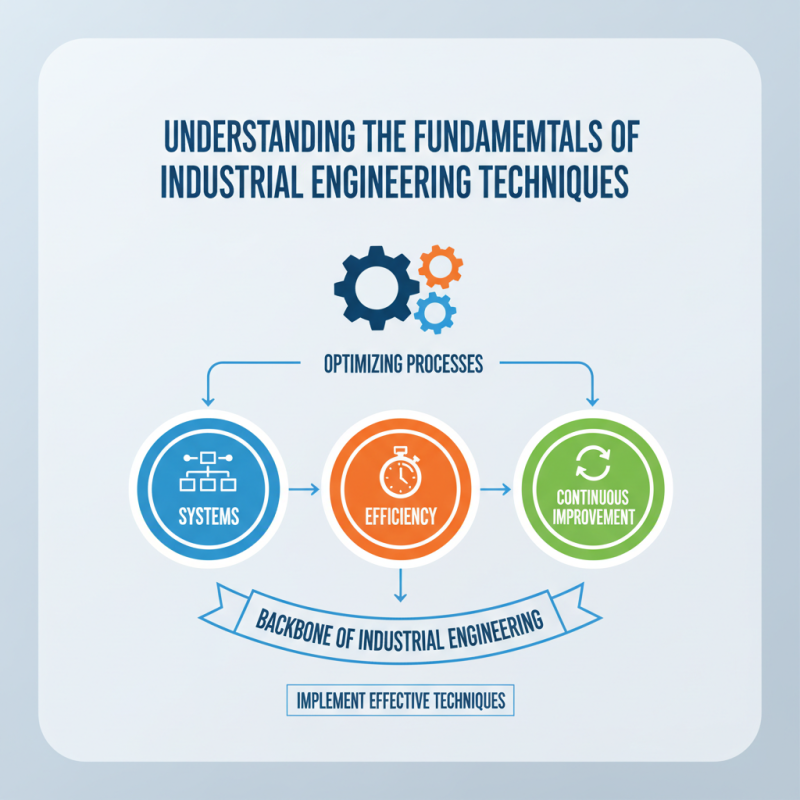
Industrial engineering is essential in optimizing processes. By understanding its fundamentals, you can implement effective techniques. Focus on systems, efficiency, and continuous improvement. These elements are the backbone of industrial engineering.
Adopting a systems approach is crucial. This means seeing the big picture. Analyze each component’s interaction. Understanding these relationships can improve overall performance. Additionally, learn to embrace failure. Mistakes often lead to the best insights. Reflecting on errors is part of mastering techniques.
Efficiency can be enhanced in many ways. For instance, streamline workflows through careful mapping. Identify bottlenecks and eliminate waste. Use data to drive decisions. Implementing metrics helps track success. Always seek feedback and adapt your processes accordingly. Embrace a mindset of constant learning. This will elevate your industrial engineering skills over time.
Key Tools and Software for Industrial Engineering Mastery
Mastering industrial engineering techniques requires proficiency in essential tools and software. Various applications aid engineers in streamlining processes, improving efficiency, and analyzing data effectively. Familiarizing yourself with simulation software is critical. These tools allow for testing different scenarios in a virtual environment. This adjustment can highlight potential issues before implementation.
Data analysis software plays a vital role in industrial engineering. It helps in interpreting complex data sets and trends. Leveraging algorithms can uncover insights that enhance decision-making. Engineers often face challenges in data interpretation. Mastering these tools can reduce errors and improve outcomes. Visualization tools can also be beneficial. They simplify data representation, making patterns easier to grasp.
Collaboration tools facilitate teamwork and communication among engineering teams. Using project management apps can improve workflow and deliver satisfactory results. However, it’s crucial to remain aware of the learning curve associated with new software. Regular training sessions can alleviate confusion and ensure everyone is on the same page.
Even experienced professionals encounter difficulties when adapting to new technology. Seeking support and sharing knowledge within teams fosters growth and enhances mastery.
Applying Lean Manufacturing Principles in Industrial Engineering
Applying Lean Manufacturing Principles in Industrial Engineering can dramatically improve efficiency and productivity. Lean focuses on minimizing waste while maximizing value. This fundamental principle is vital for any industrial engineer aiming to boost performance.
One essential tip is to conduct regular value stream mapping. This helps visualize workflows, identifying steps that add value and those that don’t. It provides clarity and fosters continuous improvement. Another important aspect is engaging team members in problem-solving. Their insights can lead to innovative solutions that an outside perspective might miss.
Remember, applying Lean principles isn't about achieving perfection. It's about making small, incremental changes and testing their effectiveness. Sometimes, what seems like an effective strategy may not yield the expected results. Learn from those missteps; they are valuable lessons. Embrace a culture of experimentation and reflection.
10 Essential Tips for Mastering Industrial Engineering Techniques: Applying Lean Manufacturing Principles in Industrial Engineering
| Tip Number |
Tip Description |
Application Area |
Expected Outcome |
| 1 |
Implement 5S Principles |
Workplace Organization |
Increased Productivity |
| 2 |
Use Value Stream Mapping |
Process Improvement |
Reduced Waste |
| 3 |
Adopt Continuous Flow |
Production Line |
Faster Turnaround Time |
| 4 |
Establish Standardized Work |
Operations |
Consistency in Quality |
| 5 |
Encourage Team Collaboration |
Project Management |
Enhanced Problem Solving |
| 6 |
Utilize Kanban Systems |
Inventory Management |
Optimized Inventory Levels |
| 7 |
Focus on Root Cause Analysis |
Quality Control |
Reduced Defects |
| 8 |
Emphasize Employee Training |
Skill Development |
Improved Performance |
| 9 |
Analyze Cycle Time |
Process Efficiency |
Increased Throughput |
| 10 |
Implement Just-In-Time |
Production |
Minimized Holding Costs |
Effective Problem-Solving Strategies for Industrial Engineers
Industrial engineering often requires innovative problem-solving strategies. These strategies are not always straightforward. A successful engineer must analyze situations deeply. One effective approach is utilizing root cause analysis. This helps identify underlying issues rather than symptoms.
Collaboration is another essential element. Engaging with cross-functional teams can foster diverse perspectives. This diversity leads to unique solutions. However, communication challenges may arise. Engineers must navigate these challenges, learning to articulate problems clearly. Testing solutions is crucial, but it should include iterations based on real-world outcomes.
Consider the role of data analytics. Analyzing relevant data can unveil hidden patterns. Yet, data can sometimes be misleading. Engineers need to apply critical thinking to interpret results accurately. This balancing act between intuition and analysis can be daunting. Continuous learning and adaptation are necessary. Reflecting on past mistakes often leads to better future strategies. Embracing failure as a learning opportunity may unlock new pathways for innovation.
Continuous Improvement Practices for Sustainable Industrial Efficiency
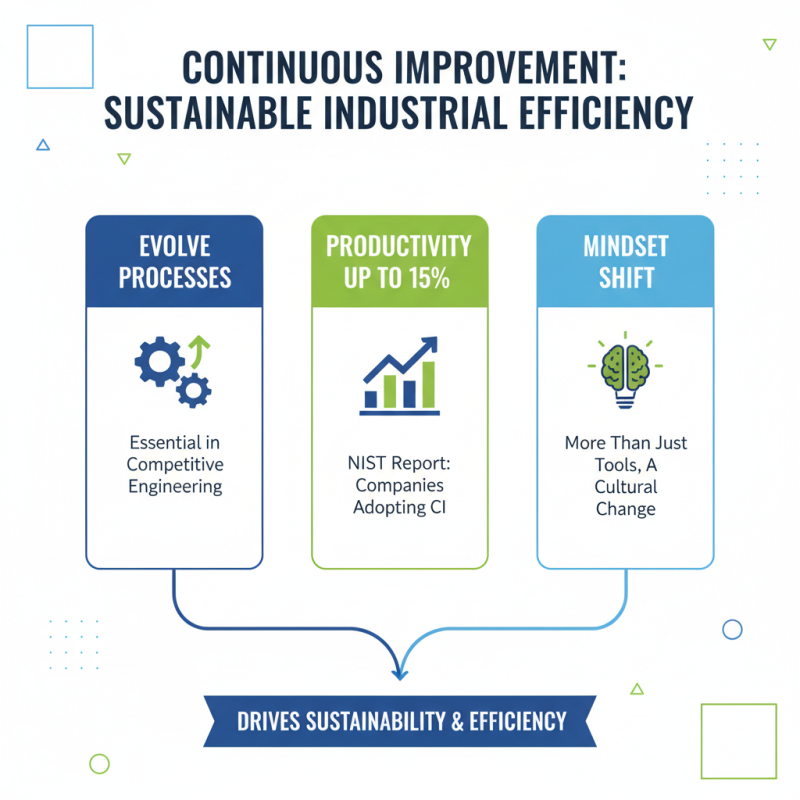
Continuous improvement is essential for achieving sustainable industrial efficiency. In the competitive landscape of industrial engineering, processes must evolve. A report from the National Institute of Standards and Technology shows that companies that adopt continuous improvement practices see productivity increases of up to 15%. This transformation requires not just tools, but a mindset shift.
Data-driven analysis is crucial. Identifying waste and streamlining operations can lead to significant cost savings. For instance, adopting Lean methodologies can reduce manufacturing time by as much as 30%. However, implementing these changes is not always straightforward. Employee resistance is common. Team members may fear job loss or disruption. Engaging staff during the transition is vital. Communication can help alleviate fears and build trust.
Another important aspect is measuring success. Key Performance Indicators (KPIs) help track progress. Regularly reviewing KPIs ensures alignment with business goals. A study by the American Society for Quality found that companies effectively using KPIs improve their operational efficiency by nearly 20%. Yet, organizations may struggle with defining relevant KPIs. Choosing the wrong metrics can lead to misguided efforts. Continuous evaluation and adjustment are essential in this journey.