
Why Choose a PLC Control Panel?
A plc control panel is more than a metal enclosure filled with wires. It connects sensors, actuators, operator interfaces, and control logic into one working system. When designed well, it helps machines respond consistently, gives technicians useful fault information, and makes changes easier to manage. Clear labels matter. So does sound wiring.
Dick Morley, widely recognized as a pioneer of programmable logic controllers, helped shape the practical thinking behind modern PLC automation. A concise paraphrase of his contribution is: “Control technology is valuable when it makes machines dependable and manageable.” This is a paraphrase, not a verified verbatim quotation. The distinction matters when technical claims need to be trusted.
Choosing a plc control panel can support reliable operation, but the panel alone cannot guarantee it. Component selection, heat management, electrical noise protection, documentation, and maintenance access all influence performance. Imagine a technician opening the cabinet during a production stoppage: readable terminal labels and a clear wiring diagram can save valuable troubleshooting time. Small details count.
A panel should fit the machine, operating environment, and future service needs—not just the initial specification. There are trade-offs. More features can add complexity, and even a well-built panel needs inspection and competent maintenance. This guide explores the practical reasons to choose a PLC-based control panel, the features worth evaluating, and the questions buyers should ask before installation. It also considers where PLC control may not be the simplest answer.
What Is a PLC Control Panel?
Why Choose a PLC Control Panel?
What Is a PLC Control Panel?
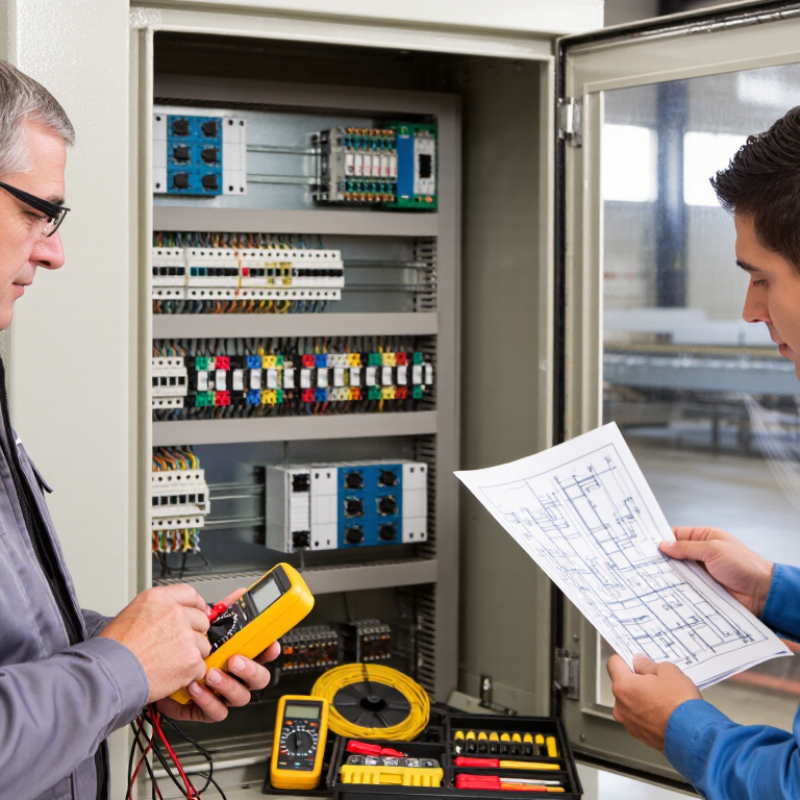
A PLC control panel is an enclosure that houses a programmable logic controller and the electrical components needed to operate a machine or process. The PLC receives signals from field devices, such as temperature sensors, push buttons, and limit switches. It processes those inputs using programmed logic, then sends commands to outputs like valves, indicator lights, and motor starters. In simple terms, it connects control logic with equipment on the plant floor.
Inside the panel, you may find a PLC, power supply, circuit protection, terminal blocks, relays, and communication modules. A human-machine interface may also let an operator view alarms or adjust approved settings. Small details matter. Clear wire labels and orderly terminals can make troubleshooting faster when a sensor signal disappears or a motor fails to start. Yet a neat panel alone does not guarantee reliable operation.
Panel design depends on the equipment, environment, and control requirements. A dusty workshop, for example, may call for different enclosure protection than a clean indoor room. Engineers also need to consider heat, electrical loads, access for maintenance, and separation between power and signal wiring. Standard PLCs are not automatically safety controllers; required safety functions need suitable, properly designed components. Even a well-planned panel can need revision after commissioning, when real operating conditions reveal what drawings did not.
| Why Choose a PLC Control Panel? - What Is a PLC Control Panel? | |||
|---|---|---|---|
| Panel Element | What It Does | Why It Matters | Practical Consideration |
| Programmable logic controller (PLC) | Reads input signals, executes a programmed logic sequence, and updates outputs. | Provides a configurable way to automate machines and processes. | Select the processor and I/O capacity to suit the application, including expected expansion. |
| Digital input modules | Receive on/off signals from devices such as push buttons, limit switches, and proximity sensors. | Allow the control program to respond to machine states and operator commands. | Check signal voltage, input type, isolation requirements, and the number of points needed. |
| Digital output modules | Switch control signals to devices such as relays, indicator lights, and solenoid valves. | Enable the PLC to operate equipment based on programmed conditions. | Verify output type and load ratings; use suitable interposing devices when required. |
| Analog I/O modules | Read or generate variable signals used for measurements and control, such as temperature or pressure signals. | Support processes that require more than simple on/off control. | Match the module to the instrument signal range and required resolution. |
| Power supply | Provides the specified DC power for the PLC and compatible control devices. | Helps maintain stable operation of the control electronics. | Size it for the connected load and follow the equipment and panel design specifications. |
| Protective devices | Provide overcurrent protection for appropriate power and control circuits. | Help limit damage from certain electrical faults and support safe maintenance practices. | Protection must be selected and coordinated for the circuit; it does not replace proper grounding or safe work procedures. |
| Terminal blocks and wiring | Connect field devices and panel components to the control system. | Organized terminations make installation, testing, and troubleshooting clearer. | Use clear identification and wiring practices that comply with applicable electrical requirements. |
| Human-machine interface (HMI) | Displays process information and may provide operator controls or alarms. | Can make machine status and permitted operator actions easier to understand. | Define access levels and operator functions carefully; an HMI is not a substitute for safety-rated controls. |
| Enclosure | Houses and protects panel components from the environment and accidental contact. | Helps safeguard equipment when correctly selected for the installation conditions. | Choose enclosure protection, ventilation, and materials based on location, heat, dust, and moisture conditions. |
| PLC control panel as a whole | Combines control, power distribution, signal connections, and operator interfaces in an organized assembly. | Can centralize machine control and make changes easier than hardwiring every sequence with individual control devices. | Design, construction, installation, and maintenance should be carried out by qualified personnel in accordance with applicable standards. |
Related Posts
-
Top PLC Control Panel Manufacturers for Global Buyers
-
2026 Best PLC Control Panel Features and Innovations to Watch For?
-
Unlocking the Potential of Vibratory Polishing Machines: Tips for Optimal Performance and Maintenance
-

China Top 10 Home Engineering Companies for Global Buyers
-
What Is UK Manufacturing and Why Buy From UK Suppliers?
-
What is a Vibro Machine and How Does It Work?