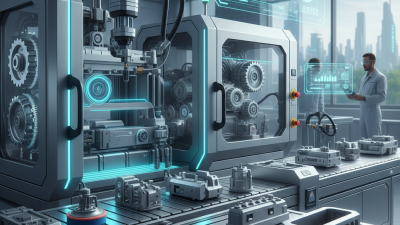
Choosing the right finishing equipment can determine whether a production line feels controlled or constantly rushed. The decision affects surface quality, output speed, labor demands, maintenance, and long-term operating costs. A polished sample may look impressive, yet it can hide problems during continuous production.
The best choice begins with the material, product dimensions, finish requirements, and expected volume. A small workshop may need flexible equipment for varied orders. A high-volume facility may prioritize automation, repeatability, and reliable changeover times. Consider sanding, polishing, deburring, coating, drying, or cutting needs separately. Each process creates different pressure on tools, operators, and quality checks.
Look closely at real working conditions. Measure available floor space, power access, dust control, noise levels, and operator movement. Ask suppliers for trial results using your actual materials. Check service records, spare-part availability, training, and warranty terms. These details often matter more than a glossy brochure. Experience shows that the fastest machine is not always the most practical one. It may require expensive maintenance or highly skilled operators.
There is no perfect checklist.
A reliable selection process also includes safety and compliance reviews. Equipment should support guarded operation, clear instructions, and suitable protective systems. Consult qualified technicians and follow applicable local standards. Keep performance records after installation, including cycle time, defect rates, energy use, and maintenance frequency. Review those results honestly. An early estimate may be wrong. That is useful information, not failure. With careful testing and realistic expectations, the right finishing equipment can improve quality without creating unnecessary complexity.
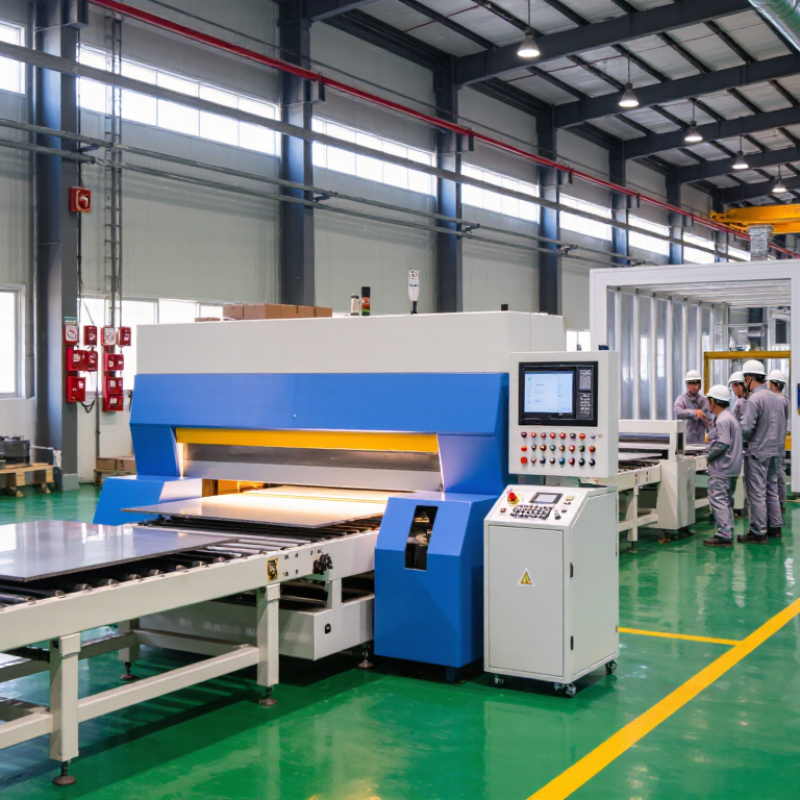
Choosing finishing equipment starts with a measurable definition of the product finish.
“Premium appearance” is too vague for production decisions. Specify surface roughness, gloss level, color difference, coating thickness, adhesion, and scratch resistance. For example, a specification might require Ra 0.8 μm, gloss between 60 and 70 GU, and a color difference below ΔE 2.0. ISO 21920 supports surface-texture control, while ISO 2813 helps measure gloss consistently. ASTM D3359 can support coating-adhesion checks.
The required quality level should match how customers handle the product.
A visible metal panel may need uniform gloss under bright warehouse lighting. A precision component may need low friction instead. Define inspection points, lighting conditions, sampling frequency, and acceptable defect limits before selecting equipment. Deloitte’s 2023 Smart Manufacturing Survey found that 86% of manufacturing leaders expect smart factory investment to strengthen competitiveness within five years. That pressure makes digital inspection and process records increasingly practical, not decorative.
Trial finishing remains essential.
A sample can look excellent on Friday and fail after humidity exposure, repeated cleaning, or transport vibration. In shop-floor evaluations, operators should test real materials, edge areas, corners, and the fastest planned line speed. Small defects often appear there. I would also challenge the first specification; it may be more precise than the customer needs, or not precise enough for actual use. Poorly defined requirements can force expensive equipment changes later.
Finishing equipment gives printed or manufactured materials their final shape, surface, and usability. Before choosing a machine, identify the work it must complete. The main types include cutters, folders, creasers, binders, laminators, coating systems, and die-cutters. Cutting equipment uses blades or programmed tools to create accurate edges. Folding and creasing machines prepare sheets for brochures, cartons, covers, and other folded products. Small details matter.
Binding equipment joins pages through methods such as stitching, gluing, or wire binding. The best option depends on page count, spine thickness, durability, and expected handling. Laminators add a protective film, helping resist moisture, fingerprints, and surface scratches. Coating systems apply a liquid layer for gloss, softness, or added protection. Die-cutting equipment creates repeated shapes, windows, tabs, or special edges with a dedicated cutting form.
A practical selection should consider material thickness, production volume, available floor space, operator skill, and cleaning requirements. Check adjustment ranges, waste levels, noise, and replacement-part access before buying. A fast machine may perform poorly with delicate stock. A compact machine may limit future growth. It is easy to overbuy. In real workshops, simple equipment often delivers better consistency than complex equipment that operators rarely understand. Test representative samples, record defects, and question claims that lack measurable results. My judgment can still be wrong when humidity, paper grain, or adhesive behavior changes.
Identify the main finishing equipment types by comparing their typical throughput and best-fit applications. Actual capacity depends on part geometry, material, abrasive media, and process settings.
Selection guide: Barrel and vibratory systems are suitable for batch deburring and surface finishing. Centrifugal disc machines provide faster, more intensive processing for smaller parts. Abrasive belt systems are commonly used for controlled edge finishing, while shot blasting is suited to rapid cleaning, scale removal, and surface preparation.
Choosing finishing equipment starts with the material, not the machine’s appearance. Metal, wood, plastic, and composite surfaces respond differently to pressure, heat, and abrasives. A hard steel part may need controlled grinding, while soft aluminum can scratch or deform quickly. Wood often requires adjustable sanding pressure and reliable dust extraction. Plastic may need low heat to prevent melting. Not every smooth surface needs polishing. In shop trials, I have learned that a small test piece reveals more than a brochure. Check the finish, edge quality, surface temperature, and residue after each pass.
Tips: Match the abrasive to the material. Confirm the equipment supports your required grit range. Test several speeds before production. Record the settings that produce consistent results. Leave room for adjustment.
Production needs matter just as much as material behavior. For small batches, flexible equipment with quick tool changes can reduce setup delays. High-volume work may require automatic feeding, steady pressure, and simple maintenance access. Consider dust control, noise, operator visibility, and floor space before purchasing. A fast machine is not always the best choice. I once favored higher throughput, but frequent changeovers erased the expected savings. That mistake changed how I evaluate equipment. I now compare cycle time, cleaning time, inspection time, and rejected parts. A reliable finishing process should protect the surface and fit the daily workflow.
| Equipment Type | Best-Suited Materials | Typical Finishing Result | Typical Throughput | Key Features to Evaluate | Suitable Production Needs | Important Limitations |
|---|---|---|---|---|---|---|
| Wide-Belt Sander | Solid wood, plywood, MDF, particleboard, veneer panels | Uniform thickness, surface smoothing, calibrated panels | Approximately 5–30 m/min, depending on material and sanding width | Working width, sanding belt grit, feed speed, dust extraction, thickness control | Medium- to high-volume panel production requiring consistent thickness | Not ideal for highly profiled parts, very small components, or irregular shapes |
| Edge Bander | MDF, particleboard, plywood, laminated panels | Covered, sealed, and trimmed panel edges | Approximately 8–30 m/min for automatic systems | Adhesive control, pre-milling, pressure rollers, end trimming, scraping, polishing | Continuous cabinet, furniture, and interior-panel production | Requires accurate panel sizing and compatible edge-band thickness |
| Wide-Belt Brushing Machine | Softwood, hardwood, reclaimed wood, coated wood panels | Textured, distressed, grain-enhanced, or brushed surfaces | Approximately 3–15 m/min, depending on brush type and desired texture | Brush diameter, bristle material, rotational speed, pressure adjustment, dust removal | Decorative wood production and repeatable rustic or textured finishes | Results vary with wood density, grain direction, moisture, and coating condition |
| Rotary Vibratory Finishing System | Steel, stainless steel, aluminum, brass, zinc die castings | Deburring, edge rounding, cleaning, burnishing, light polishing | Batch loads commonly range from approximately 20–500 kg | Bowl capacity, media selection, compound dosing, noise control, separation system | Batch processing of small and medium-sized metal components | May cause part-to-part contact marks and is unsuitable for delicate flat surfaces |
| Automatic Parts Tumbler | Small metal parts, stamped components, fasteners, molded components | Deburring, drying, burnishing, and general surface cleaning | Batch cycles commonly range from 15 minutes to several hours | Cycle timer, variable speed, media separation, lining material, wet or dry operation | High-mix production with repeatable batch finishing requirements | Cycle time depends strongly on burr size, part geometry, media, and load ratio |
| Shot Blasting Machine | Carbon steel, cast iron, forged parts, fabricated metal structures | Rust removal, scale removal, surface preparation, controlled texturing | Approximately 100–2,000 kg/h, depending on machine configuration | Abrasive recovery, blast-wheel capacity, cabinet size, dust filtration, part handling | Heavy-duty preparation before painting, coating, welding, or inspection | Can deform thin parts or damage sensitive surfaces without proper abrasive control |
| Parts Washer | Machined metals, fabricated parts, automotive components, industrial assemblies | Removal of oil, chips, coolant, grease, and process residues | Approximately 0.5–10 m/min conveyor speed for continuous systems | Washing temperature, spray pressure, chemical compatibility, filtration, drying capacity | Pre-paint cleaning and continuous production lines with defined part geometries | Blind holes, complex cavities, and water-sensitive materials may require additional drying |
| Industrial Parts Dryer | Washed metal parts, plastic components, coated products, small assemblies | Removal of surface moisture before storage, coating, or assembly | Approximately 5–30 m/min for conveyor-based systems | Air temperature, airflow, dwell time, filtration, heat recovery, part orientation | Continuous lines requiring consistent moisture control and corrosion prevention | Excessive heat can discolor plastics, affect coatings, or alter dimensional stability |
| Industrial Polishing Machine | Stainless steel, aluminum, brass, copper, engineered solid surfaces | Brushed, satin, semi-polished, or mirror-like surfaces | Approximately 2–20 m/min for continuous belt or wheel systems | Abrasive sequence, contact pressure, wheel or belt speed, compound delivery, cooling | Appearance-critical components requiring controlled and repeatable surface quality | Requires careful process control to prevent overheating, distortion, or uneven gloss |
| Automatic Spray Finishing Line | Wood panels, metal parts, plastics, composite components | Primer, paint, stain, clear coat, or protective coating | Approximately 3–20 m/min, depending on coating and curing requirements | Spray pattern, transfer efficiency, booth ventilation, filtration, flash-off, curing method | Medium- to high-volume finishing with consistent coating thickness and color | Needs suitable ventilation, coating handling, fire protection, and environmental controls |
Choosing finishing equipment starts with usable capacity, not brochure speed. Record hourly demand, product mix, changeover time, scrap, and curing constraints. A line rated at 1,000 pieces per hour may deliver 650 after cleaning and setup. Ask for sustained output at your actual quality standard. Include peak weeks, but do not buy for a rare peak without a capacity plan.
The 2024 World Robotics report recorded 541,302 industrial robot installations worldwide in 2023. That figure shows broad automation adoption, not automatic payback.
Automation should remove repetitive work, stabilize quality, and provide useful production data. Compare manual loading, recipe control, inspection, alarms, and changeover assistance separately. A semi-automatic cell may outperform a fully automated line when products change frequently. It may also be easier for operators to understand.
Build a short trial with real parts, not samples. Demos hide friction. If training takes several weeks, that delay belongs in the investment calculation.
Maintenance and operating costs often decide the result. Request mean time between failures, but examine how vendors calculate it. Track filters, nozzles, lubrication, calibration, spare-part lead times, and technician hours.
U.S. Department of Energy guidance notes that compressed-air leaks can waste 20–30% of compressor output.
Measure electricity, air, labor, rework, and downtime during a pilot. Include consumables and disposal costs in total ownership cost. The cheapest quote can become expensive.
Treat early results as provisional; startup conditions may flatter efficiency. Choose equipment your team can maintain on a Tuesday night.
How to Choose the Right Finishing Equipment for Your Needs
Evaluate Safety, Compatibility, and Long-Term Support
Safety should guide every equipment decision, not just the final inspection. In practical trials, operators notice risks that brochures often miss. Check emergency stops, protective guards, noise levels, dust control, and access for cleaning. Ask whether controls remain clear when workers wear gloves. Test the machine with normal materials, not only ideal samples. Small details matter. A difficult service panel may encourage unsafe shortcuts later.
Compatibility requires more than matching voltage and floor space. Confirm material thickness, production speed, finishing method, and available ventilation. Review connection points with existing conveyors, extraction systems, and control panels. A machine may perform well alone but create bottlenecks beside older equipment. Measure the workspace carefully. We once underestimated maintenance clearance, which caused avoidable delays. That mistake changed our installation checklist.
Tips: Request a documented safety demonstration and a realistic sample test. Ask for manuals, training records, spare-part availability, and typical response times. Clarify who handles installation support and remote troubleshooting. Long-term support should include practical instruction, not just a warranty document. Speak with current users when possible, but question overly perfect feedback. Real equipment has weaknesses. Reliable suppliers explain them clearly and show how they manage them. Review service terms annually, because staffing and production demands can change.