Choosing an automation machine in 2026 is less about chasing the fastest robot and more about matching equipment to real production needs. The International Federation of Robotics reported 541,302 industrial robot installations worldwide in 2023, with 4.28 million robots operating across factories. Those figures show a mature, expanding market—not proof that every plant needs the same solution. A packaging line, a machine-tending cell, and a small-batch workshop face different constraints.
AI researcher Andrew Ng’s familiar observation, “AI is the new electricity,” offers a useful lens on smarter automation. It is not a machine-selection rule. Treat it as a reminder that software, sensors, and connectivity can shape a machine’s value. Before comparing vendors, define the task, cycle time, payload, workspace, changeover frequency, and required precision. Check how the equipment fits existing controls and safety procedures. Ask for measured performance under conditions like yours, not only a polished demonstration. Small details matter. A gripper that struggles with a slightly oily part can erase the gains promised in a sales presentation.
A sound choice also accounts for integration, operator training, maintenance access, spare parts, and total cost over the machine’s working life. Request realistic uptime and service assumptions, then test them against your own shifts and product mix. A spreadsheet helps, but it can miss awkward handoffs and crowded aisles. That is worth admitting. Run a pilot where practical, record the results, and revisit the decision with operators and technicians. The right automation machine should solve a defined bottleneck while leaving room for change.
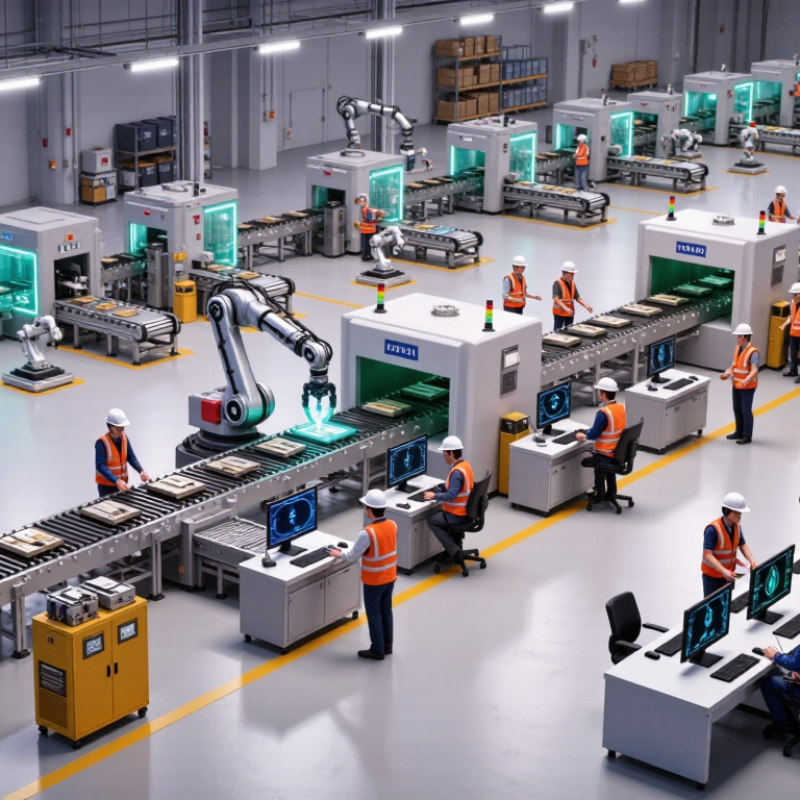
Before comparing machines, define the exact production task: what enters the cell, what operation happens, and what acceptable output looks like. Specify the part’s dimensions, weight, material, and variation. Include a concrete example, such as placing a 1.2-kilogram component into a fixture within a stated tolerance. Small details matter. A gripper that handles one sample may fail when surfaces are oily or parts arrive misaligned.
Set measurable performance requirements: cycle time, shifts per day, changeover frequency, uptime target, and acceptable defect rate. The International Federation of Robotics reported 541,302 industrial robot installations worldwide in 2023, in its World Robotics 2024 report. That figure signals broad adoption, not that every task needs a robot. Match the equipment to the bottleneck. If loading takes six seconds but inspection takes twenty, faster loading alone may not raise total output.
Also record the working environment, operator interaction, available floor space, and maintenance skills. Ask suppliers to demonstrate the task using representative parts, including awkward variations—not only ideal samples. Define how success will be measured during the test. A common planning mistake is to prioritize peak speed over repeatable performance. It is tempting. Yet a machine that misses tolerances or needs frequent resets can disrupt the entire line. Recheck assumptions with production and maintenance staff before finalizing the specification.
Map the workflow before shopping for a machine. Follow one product from arrival to packing, and record each handoff, wait, inspection, and repeated movement. A simple floor sketch can reveal where queues form. Note cycle times across several shifts, not just during a smooth hour.
Then match the bottleneck to an automation type. Repetitive transfers between fixed points may suit a conveyor or pick-and-place system. Variable parts may need machine vision and a flexible robotic arm. For frequent changeovers, programmable equipment can be more suitable than a dedicated line. Small delays matter. Also record exceptions: misaligned parts, missing labels, and rework often expose steps that an average cycle-time figure hides.
Check the task’s real conditions before choosing. Measure part weight, reach, access space, surface variation, and required output. Ask operators where jams occur and how they clear them; their observations can challenge the process map. A machine that meets a quoted speed may still create a new queue downstream. Pilot the proposed setup on representative products, including awkward cases. The map will not be perfect at first. Update it after the trial, especially where manual judgment remains necessary.
Choose a machine around the task, not a dramatic cycle-time claim. McKinsey Global Institute’s 2017 report found that about 60% of occupations have at least 30% of their activities that could be automated, while fewer than 5% could be fully automated. That distinction matters: a system may handle repetitive loading well but struggle with variable parts or frequent changeovers. The International Federation of Robotics reported 541,302 industrial robot installations worldwide in 2023. That signals broad adoption, not guaranteed savings. Test the awkward case.
Compare usable capacity, not just the advertised maximum. Check payload with the actual tool attached, reach around nearby fixtures, cycle time under real production conditions, and compatibility with existing controls. Then estimate total cost: installation, tooling, integration, operator training, maintenance, energy, spare parts, and downtime. Use your own shift pattern and reject rates when calculating payback. A spreadsheet can still mislead if it assumes full utilization from day one.
Safety deserves the same scrutiny as output. Review guarding, interlocks, emergency stops, safe-stop behavior, and access for cleaning or jam removal. Use a documented risk assessment and applicable ISO 10218 requirements for industrial robot systems. Collaborative operation does not remove hazards; the tool, workpiece, and surrounding equipment still matter. Ask for safety validation on your actual layout, not only a demonstration cell. One uncomfortable truth: the cheapest machine may cost more when changeovers are slow or maintenance access is poor.
How to Choose the Right Automation Machine in 2026?
Compatibility with existing equipment should be checked before comparing speed or capacity. Map the full workflow, from material loading to finished-part handling. Record connection types, control signals, available floor space, and cycle times. A machine that performs well alone may slow the whole line if its output does not match the next station. Small mismatches matter.
Ask suppliers for interface specifications and a layout drawing. Then compare them with your current system documents and verify critical measurements on site. Check whether the machine can communicate with existing controllers, sensors, and safety interlocks. Confirm power, air, and network requirements, too. A short trial using representative materials can reveal jams, timing gaps, or awkward operator access that a brochure will not show.
Tips: Assign one engineer and one operator to review the proposed setup. Test the handoff between machines, not just the new unit. Leave room for maintenance access. Compatibility checks can feel tedious, and I would not assume an old drawing is accurate; verify it before ordering.
| Compatibility Dimension | What to Check | Practical Verification | Potential Mismatch |
|---|---|---|---|
| Production task and process | Confirm the machine supports the required operation, product dimensions, materials, cycle sequence, and target throughput. | Document current cycle times, changeover steps, product variations, and quality tolerances; run representative samples where possible. | A machine may meet its rated speed but fail to match the actual product mix or upstream and downstream cycle times. |
| Mechanical interface | Check conveyor height and direction, mounting points, part-transfer method, guarding, access, and available floor space. | Compare equipment drawings and site measurements; verify clearances for installation, operation, cleaning, and maintenance. | Misaligned transfer heights, insufficient clearance, or incompatible fixtures can require unplanned mechanical modifications. |
| Electrical supply | Match supply voltage, phase, frequency, current capacity, grounding, and protective-device requirements to the site supply. | Review the machine nameplate and electrical schematics with a qualified electrician; check available circuit capacity and local electrical requirements. | A supply mismatch can require electrical conversion, new circuits, or changes to the facility distribution system. |
| Controls and communications | Confirm supported industrial protocols, network topology, data points, addressing, and controller-to-controller communication needs. | Compare interface specifications with the existing control system. Confirm protocol and version support, signal lists, and network-security requirements. | Different protocols or data formats can require gateways, custom programming, or additional commissioning. |
| Inputs and outputs | Check the number and type of digital and analog I/O, signal voltage, sensor interfaces, and spare capacity in existing panels. | Build an I/O list for sensors, actuators, interlocks, and status signals; verify electrical characteristics against both systems’ schematics. | Insufficient I/O or incompatible signal levels may require extra modules, wiring, or interface hardware. |
| Safety integration | Review emergency stops, guarding, access gates, light curtains, safe zones, and the required safety functions for the complete line. | Assess the integrated cell using applicable local regulations and relevant standards, such as ISO 12100 and ISO 13849-1 or IEC 62061. | A standalone machine’s safety design may not cover hazards created by connecting it to adjacent equipment. |
| Materials and utilities | Verify compressed-air pressure and flow, vacuum, cooling, extraction, process media, and environmental conditions where applicable. | Compare utility requirements with measured site capacity and quality; check connection sizes, air quality, and peak demand. | Low capacity, contamination, or unstable supply can cause faults, inconsistent operation, or reduced performance. |
| Data and production systems | Determine whether production data must connect to supervisory, manufacturing, quality, or maintenance systems. | Define required records, timestamps, identifiers, alarm data, and data ownership; validate the proposed data exchange before installation. | Unclear data requirements can lead to incomplete traceability or costly integration work after commissioning. |
| Maintenance and lifecycle | Check access to service points, spare-parts availability, diagnostic tools, documentation, training, and support arrangements. | Review maintenance schedules and parts lists; confirm staff can access fault history, backup files, and recovery procedures. | Limited service access or unavailable parts can increase downtime even when the machine initially integrates successfully. |
| Installation and commissioning | Account for shutdown windows, delivery route, lifting requirements, installation sequence, acceptance criteria, and operator training. | Create an integration plan with responsibilities, test cases, rollback steps, and sign-off criteria for each connected system. | Uncoordinated installation can extend downtime or leave interfaces and safety functions insufficiently tested. |
Choosing an automation machine in 2026 means evaluating more than cycle speed. Vendor support can determine whether a sensor fault becomes a brief pause or a lost shift. Ask who answers after installation, how quickly, and whether technicians can reach your site. Get service hours, response targets, training scope, and spare-part lead times in writing. That matters.
Check that documentation matches your intended use and operating location, including electrical details, risk assessments, and maintenance instructions. Ask for traceable test records and clear change notifications when software or components are updated. Do not rely on a polished presentation alone. Have your engineering, safety, and procurement teams review the evidence against applicable requirements. Requirements change.
Compare total cost over the planned service life, not just purchase price. Include commissioning, operator training, energy use, consumables, downtime assumptions, upgrades, and eventual decommissioning. A short pilot with your actual parts can expose awkward loading, cleaning, or changeover steps. Track results using agreed measures, such as cycle consistency and recovery time after faults. A spreadsheet still misses things. That is worth admitting.