2026 Best Automation Machine Types for Global Buyers

Choosing the right automation machine in 2026 requires more than comparing speed, price, or software features. Global buyers must examine production volume, product variation, floor space, labor skills, energy use, and service availability. A packaging line may need high-speed repeatability, while an electronics factory may need gentle handling and precise vision inspection. The best machine depends on the process.

Joseph Engelberger, widely regarded as the father of industrial robotics, said, “I can’t define a robot, but I know one when I see one.” His observation remains useful today. Modern automation includes robotic arms, collaborative robots, CNC systems, automated guided vehicles, vision inspection units, and integrated assembly cells. Each type solves a different operational problem. Some improve consistency. Others reduce lifting risks or support traceability.

This guide examines the 2026 best automation machine types for global buyers. It focuses on practical selection, not attractive specifications alone. Buyers should study cycle times, maintenance access, control-system compatibility, training requirements, and local technical support. A machine that performs well in a demonstration may struggle with dust, temperature changes, or frequent product switching. That matters.

There is no universal winner. A smaller cobot may outperform a large robot in a flexible workshop. A fully automated line may also create unnecessary complexity for a low-volume manufacturer. Buyers should question optimistic payback estimates and request realistic factory references. Some recommendations will remain imperfect, because every production environment is different. Careful testing, documented requirements, and honest risk assessment provide a stronger foundation than technology enthusiasm.
2026 Best Automation Machine Types for Global Buyers

What Automation Machines Are and Why Global Buyers Need Them

2026 Best Automation Machine Types for Global Buyers

Automation machines are equipment that performs repeatable production tasks with limited human intervention. They include robotic arms, CNC systems, packaging machines, vision inspection units, conveyors, and automated storage equipment. Each machine combines sensors, software, motion control, and safety systems. The best choice depends on product variation, floor space, labor skills, and required output.

Demand is measurable. The International Federation of Robotics reported 541,302 industrial robot installations worldwide in 2023. Its World Robotics 2024 report also recorded about 4.28 million robots operating globally. These figures show why buyers increasingly need machines that improve consistency, traceability, and production speed. A packaging line can count products accurately, while a vision system can detect a missing label under stable lighting. Small gains become significant across thousands of cycles.

Still, automation is not a universal shortcut. A low-cost machine may create expensive downtime if local technicians cannot service it. Buyers should check spare-part access, training, integration protocols, energy use, and documented safety compliance. The World Economic Forum’s Future of Jobs Report 2025 identifies robots and automation as major business transformation drivers through 2030. That forecast is useful, but forecasts can miss regional realities. A semi-automatic cell may outperform a fully automated line when orders change weekly. It sounds less impressive. It may be the more reliable investment.

How to Classify Automation Machines by Function and Application

2026 Best Automation Machine Types for Global Buyers

How to Classify Automation Machines by Function and Application

Automation machines should be classified by what they do, not only by their appearance. Common functional groups include material handling, assembly, machining, inspection, packaging, and palletizing. A vision inspection machine checks surface defects, while a pick-and-place system moves components between trays and production stations. Start with the task.

Application creates a second layer. Discrete manufacturing often uses assembly cells, CNC loading systems, and testing equipment. Food, chemical, and pharmaceutical production may require filling, mixing, dosing, or continuous process-control machines. Warehousing needs conveyors, sorters, storage systems, and mobile handling equipment. The boundary is not clean. One machine may serve several functions.

Market demand supports this broader view. The International Federation of Robotics reported 541,302 industrial robot installations worldwide in 2023 in its World Robotics 2024 report. Asia represented about 70% of new installations, showing strong demand for flexible production systems. However, robot figures do not describe every automation machine. Buyers should also examine cycle time, payload, accuracy, cleanability, energy use, and local service capability.

A practical classification matrix can compare function, application, product material, and operating environment. For example, a packaging machine for dry goods differs greatly from one handling fragile medical containers. Specifications can look impressive. Real factory conditions may disagree. Pilot testing, spare-part planning, and operator training remain essential, especially when standards and electrical requirements vary between countries.

Which Automation Machine Types Lead the 2026 Global Market

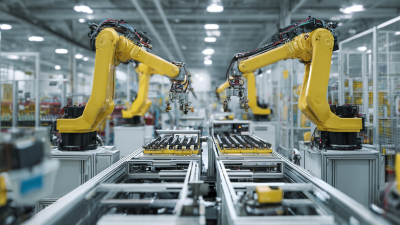
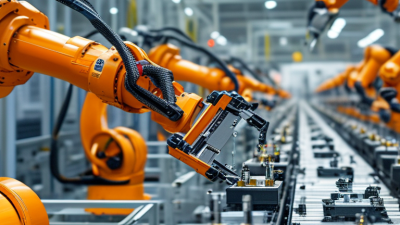
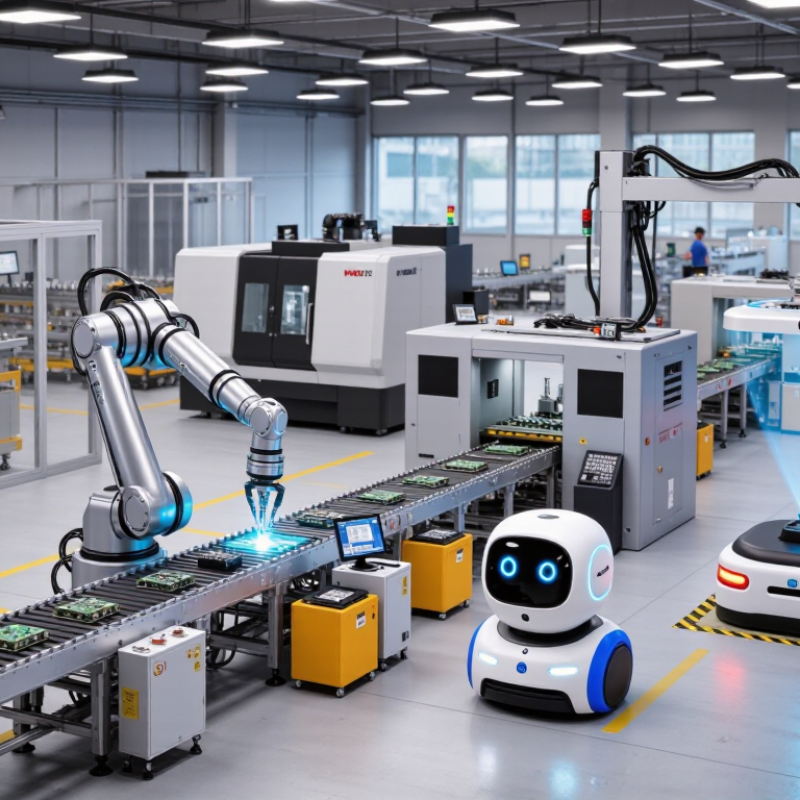
In 2026, robotic arms remain among the leading automation machine types for global buyers. They handle welding, palletizing, loading, and repetitive assembly with consistent motion. Collaborative robots are also gaining attention in factories with limited floor space. They can work beside trained operators when safety systems are properly configured. Speed matters. Yet, labor savings alone do not prove value.

Machine vision inspection systems are leading quality-driven projects. A camera can detect scratches, missing parts, uneven seals, or incorrect labels within milliseconds. Packaging automation is expanding too, especially for food, medical supplies, and consumer products. Buyers often connect vision units with conveyors, robotic pickers, and digital production records. This combination reduces manual checks and creates clearer traceability.

Automated guided vehicles and autonomous mobile robots are changing internal logistics. They move bins between storage, machining, and assembly areas without installing extensive fixed conveyors. CNC loading systems remain practical for metalworking plants facing labor shortages. However, integration can be harder than the sales brochure suggests. Floor conditions, network stability, spare parts, and operator training can affect performance. A machine may perform perfectly during a demonstration but struggle with dusty floors or irregular product sizes. Global buyers should request factory acceptance tests, documented cycle times, maintenance access, and local technical support. Payback calculations also need realistic downtime assumptions, not optimistic production figures.

How to Compare Performance, Cost, Integration, and Safety

2026 Best Automation Machine Types for Global Buyers

Comparing automation machines requires more than reading cycle-speed figures. In factory audits, I check stable output over several hours, not just the fastest recorded cycle. Ask for actual throughput, changeover time, rejection rates, and energy use. A machine producing 60 units per minute may lose its advantage during frequent product changes. Test materials that match your real parts, including surface variation, weight, and temperature.

Cost includes more than the purchase price. Calculate tooling, spare parts, operator training, maintenance, software updates, and installation travel. A lower-priced machine can become expensive when local technicians cannot support it. Request a five-year ownership estimate with clear assumptions. Leave room for uncertainty. Production forecasts are often too optimistic.

Integration deserves a physical review. Confirm electrical standards, communication protocols, floor space, guarding, and data access before signing. Safety must cover normal operation, cleaning, jams, and maintenance. Check emergency stops, interlocks, light curtains, and safe access points with qualified personnel. Ask for risk assessments and local compliance documents. Do not accept vague promises. A small integration gap can stop an entire line. I have seen teams focus heavily on speed and overlook manual loading risks. That mistake is easy to repeat. Pilot testing may reveal slower performance, but it also exposes weak interfaces before full deployment.

2026 Best Automation Machine Types for Global Buyers

Comparison of performance, cost efficiency, integration readiness, and safety using a 0–100 industry benchmark index.

Higher scores indicate stronger overall capability. Performance reflects throughput and repeatability, cost efficiency considers purchase and operating costs, integration measures compatibility with digital production systems, and safety reflects built-in safeguards and risk-control potential. Actual results vary by application, configuration, and operating environment.

What Global Buyers Should Check Before Selecting a Machine

2026 Best Automation Machine Types for Global Buyers

Choosing an automation machine is not only about speed, output, or purchase price. Global buyers should check whether the equipment fits their actual production environment. A robotic assembly machine may need stable air pressure, precise tooling, and trained operators. A packaging machine may require different film sizes, product dimensions, and cleaning procedures. Ask for verified cycle-time data, not only sales estimates. Request sample testing with your own materials.

Tips: Inspect the machine through live video or an on-site visit. Check electrical standards, safety guarding, software language, spare-part availability, and remote support. Confirm installation requirements, including floor space, voltage, compressed air, and temperature. Read the warranty terms carefully. Small exclusions can create large costs later.

Total ownership cost matters more than the first quotation. Include freight, installation, training, maintenance, energy use, and planned downtime. Ask how quickly common sensors, belts, or controllers can be replaced. Reliable suppliers should provide manuals, risk assessments, test records, and clear acceptance criteria. A machine that runs well for one product may perform poorly after a minor size change. This is often overlooked. No checklist is perfect. Buyers should leave room for trial results and honest technical doubts. A slower machine with stable quality may serve a global factory better than a faster system that frequently stops. Decision teams should compare measurable evidence, not impressive demonstrations.

2026 Best Automation Machine Types for Global Buyers - What Global Buyers Should Check Before Selecting a Machine

Practical comparison of common industrial automation machine types for production, assembly, packaging, inspection, and material handling.

Machine Type Typical Applications Typical Throughput* Typical Repeatability* Typical Payload / Working Range Main Buyer Advantages Critical Checks Before Purchase Best Fit
Cartesian Gantry System Pick-and-place, dispensing, palletizing, CNC loading, large-format assembly Approximately 10–60 picks/min, depending on travel distance and payload Typically ±0.02–0.10 mm About 5–1,000 kg; working envelopes from less than 1 m to more than 20 m Scalable for large work areas; rigid structure; straightforward programming and maintenance Floor loading, axis travel, deflection, guarding, installation alignment, and access for maintenance Large components, long travel distances, and repetitive linear movements
SCARA Robot Cell High-speed assembly, screwdriving, insertion, dispensing, small-part handling Approximately 30–120 cycles/min for short, light-duty operations Typically ±0.01–0.03 mm About 1–20 kg; typical reach of approximately 400–1,000 mm Fast horizontal motion; compact footprint; effective for precision assembly Part presentation, insertion forces, tooling inertia, cycle-time validation, and cable routing Small parts, high-volume assembly, and repeatable planar operations
Six-Axis Articulated Robot Cell Welding, machine tending, assembly, dispensing, surface treatment, handling Approximately 8–40 cycles/min, highly dependent on path length and process Typically ±0.02–0.08 mm About 3–500 kg; reach commonly 0.6–3.0 m High flexibility; reaches multiple orientations; supports many end-effectors Payload at full reach, wrist inertia, safety zoning, process tooling, programming support, and spare parts Complex paths, multi-purpose cells, welding, and variable product formats
Delta Robot Picking System Food, pharmaceutical, and consumer-goods picking; sorting; tray loading Approximately 60–200 picks/min under short-distance conditions Typically ±0.1–0.5 mm About 0.1–3 kg; working diameter commonly 800–1,600 mm Very high speed; low moving mass; suitable for hygienic and vision-guided picking Product orientation, conveyor synchronization, vision latency, washdown requirements, and allowable acceleration Lightweight products requiring fast sorting and frequent pick-and-place actions
Automated Guided Vehicle (AGV) Raw-material delivery, line-side replenishment, pallet and tote transport Travel speeds commonly 0.8–2.0 m/s; capacity varies by vehicle design Positioning commonly ±10–30 mm without final docking correction About 0.5–5,000 kg; route length depends on facility layout Flexible material flow; reduced forklift traffic; route changes can be managed through software Floor condition, traffic rules, docking accuracy, battery charging, fire protection, and fleet-management integration Predictable routes and repeated transport between defined production areas
Autonomous Mobile Robot (AMR) Dynamic warehouse transport, kitting, order fulfillment, and flexible line supply Travel speeds commonly 0.8–2.0 m/s; practical output depends on traffic and route distance Docking commonly ±10–25 mm, depending on navigation and station design About 100–2,000 kg for common intralogistics platforms Adapts to changing layouts; supports fleet coordination and safer human interaction Map accuracy, pedestrian interaction, network coverage, fleet software interfaces, charging strategy, and cybersecurity Facilities with changing routes, mixed traffic, and frequent material-flow changes
Automated Packaging Line Forming, filling, sealing, labeling, cartoning, case packing, and palletizing Approximately 20–600 packages/min, depending on product and packaging format Fill and placement accuracy commonly ±0.5–3% Product and package sizes range from small sachets to heavy cases above 25 kg Combines multiple operations; improves consistency and supports traceability Changeover time, packaging-material compatibility, reject handling, cleanability, compressed air, and line balancing Stable products, repeatable packaging formats, and medium-to-high production volumes
Automated Inspection and Vision System Dimension checks, surface inspection, presence verification, code reading, and defect sorting Approximately 30–1,000 parts/min, depending on image count and processing requirements Measurement capability commonly 0.01–0.20 mm under controlled conditions Inspection area commonly 50–1,000 mm; payload depends on the handling system Non-contact inspection; consistent data collection; supports quality traceability Lighting, camera resolution, lens selection, product presentation, false-reject rate, and data-retention requirements High-volume inspection where manual visual checking is inconsistent or costly
CNC Machine-Tending Cell Loading and unloading machining centers, turning centers, presses, and measuring stations Approximately 10–60 machine cycles/hour, depending on machining time and handling sequence Robot repeatability commonly ±0.02–0.08 mm; machining tolerance depends on the machine process About 3–100 kg handling payload; reach commonly 0.8–2.5 m Improves machine utilization; supports lights-out operation and consistent loading Chip and coolant protection, door and chuck interfaces, part-location repeatability, probing, and safe recovery procedures Production with repeatable parts, long machine cycle times, and labor-intensive loading

Global Buyer Checklist

Confirm the required production rate, product range, payload, accuracy, footprint, electrical standards, compressed-air quality, environmental conditions, safety functions, software interfaces, spare-parts availability, operator training, installation support, warranty terms, and total cost of ownership. All performance figures above are indicative industry ranges for standard configurations; final values must be validated through an application test using the buyer’s actual parts, tooling, process, and working conditions.

*Throughput and repeatability vary with machine configuration, payload, tooling, product presentation, acceleration, process time, environmental conditions, and applicable safety requirements.