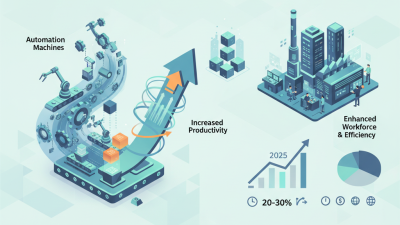
Choosing automation equipment in 2026 requires more than comparing purchase prices or counting installed robots. Factory leaders must connect equipment capabilities with production goals, workforce skills, safety requirements, and long-term operating costs. The International Federation of Robotics reported 541,302 industrial robots were installed worldwide in 2023, while the global operational stock reached approximately 4.28 million units. These figures show strong adoption, but they do not prove that every facility needs robots.
The right automation equipment should match the product, process, and workplace. Measure cycle time, payload, repeatability, changeover speed, floor space, maintenance access, and expected service life. A robotic arm may look impressive beside a conveyor, yet poor gripper design can create delays, rejected parts, and hidden labor costs. Energy use also deserves attention. The U.S. Department of Energy identifies motor-driven systems as a major share of industrial electricity consumption. Efficient drives, sensors, and compressed-air controls can therefore influence both budgets and emissions.
Cybersecurity and integration are equally important. Rockwell Automation’s 2024 State of Smart Manufacturing report found that 95% of manufacturers surveyed had invested, or planned to invest, in smart manufacturing within one to two years. However, vendor surveys can reflect commercial priorities. Treat them as useful signals, not final proof. Request site tests, maintenance records, total-cost models, and references from comparable factories. No forecast is perfect. A careful 2026 decision should leave room for uncertainty, human judgment, and future process changes.

Choosing automation equipment in 2026 should begin with a measurable goal, not a machine catalogue. Define the problem in one sentence: reduce changeover time, stabilize quality, or increase output. The International Federation of Robotics reported 4.28 million industrial robots operating worldwide in 2023. That growth shows strong adoption, but adoption alone does not prove value. Set a baseline using actual figures, such as 42 seconds per cycle, 6% scrap, and two hours of daily downtime.
Scope must cover the full workflow. Map material entry, operator actions, inspection, data collection, maintenance, and product changeovers. Then define expected outcomes with deadlines. For example, target a 20% cycle-time reduction within six months, while keeping defect rates below 1%. The World Economic Forum’s Future of Jobs Report 2025 found that 58% of employers expect robotics and automation to transform their businesses by 2030. Yet forecasts cannot replace site testing. A promising pilot may fail when dust, variable parts, or limited operator training appears.
Tips: Measure the current process for two weeks. Test the worst product variation. Include maintenance staff early. Ask who owns the equipment after installation. A perfect business case is rare. Leave room for correction. Review energy use, safety controls, software access, spare parts, and worker training before approving the final scope. Cite: International Federation of Robotics, World Robotics 2024; World Economic Forum, Future of Jobs Report 2025.
How to Choose Automation Equipment in 2026?
Classify equipment by function before comparing specifications. Pick-and-place systems need speed, reach, and repeatability. Inspection equipment needs stable lighting, cameras, and dependable data handling. Dispensing systems require controlled flow, pressure, and curing time. Palletizing equipment depends on payload, cycle time, and floor space. The International Federation of Robotics reported 541,302 industrial robots installed worldwide in 2023. That growth shows demand, but higher automation does not automatically mean better production.
Classify the process next. Record takt time, product variation, changeover frequency, and material behavior. A fixed assembly line may suit dedicated equipment. Frequent product changes may require modular tooling and simple programming. Measure the real cycle, not the supplier’s ideal cycle. Include loading, inspection, jams, and operator intervention. This is where many early plans become unrealistic. My practical rule is simple: observe the process for several shifts before selecting equipment.
Operating environment can eliminate unsuitable options quickly. Dusty areas may require sealed enclosures and protected sensors. Washdown zones need corrosion-resistant construction and suitable ingress protection. Cleanrooms demand controlled particles and compatible lubricants. Electronics handling may require electrostatic discharge protection. Temperature, vibration, noise, and available utilities also affect reliability. ISO 10218 and ISO 13849 provide important safety references for industrial robot systems and control functions. Review them with qualified safety personnel, because a checklist cannot replace an on-site risk assessment.
How to Choose Automation Equipment in 2026?
Choosing automation equipment in 2026 requires more than comparing speed figures. Performance should match the real workload, not an ideal laboratory cycle. Measure cycle time, repeatability, energy use, and downtime during representative shifts. A machine that runs quickly but overheats after four hours may create expensive delays. I once approved equipment after a short trial and underestimated cleaning time. That mistake changed how I evaluate productivity.
Compatibility deserves equal attention. Check electrical requirements, communication protocols, floor space, tooling, and existing control systems before purchase. Ask for documented interfaces and test data. Small connection problems can stop an entire production cell. Operators should also review the software, because unclear screens increase training time and operating errors. A practical trial with actual materials often reveals issues that brochures do not mention.
Safety must be verified through risk assessment, guarding, emergency stops, access controls, and required certifications. Do not treat safety as an optional upgrade. It protects people and supports stable operations. Scalability matters too. Look for modular layouts, spare capacity, maintainable components, and software that can support future changes. However, buying the largest system is not always wise. Extra capacity can increase cost and complexity. Review maintenance records, service response, and supplier documentation carefully. Reliable decisions come from measured evidence, operator feedback, and honest discussion of weak points.
How to Choose Automation Equipment in 2026?
Evaluate Total Cost, Maintenance, Training, and Supplier Support
A low purchase price can hide expensive downtime, software updates, and replacement parts. Calculate the total cost over five years, not only the invoice value. Include installation, energy use, safety checks, spare components, and operator training. Ask for realistic production figures under your working conditions. Marketing estimates often look cleaner than factory floors.
Look beyond price. During equipment trials, record setup time, fault frequency, recovery steps, and output consistency. A machine that needs specialist attention for minor faults may weaken your daily operation. Maintenance access matters too. Can technicians reach filters, sensors, and control panels without dismantling half the system? Keep records. These details often reveal more than a polished demonstration.
Training should match staff turnover and skill levels. Request practical lessons using common faults, not only normal operation. Supplier support also deserves a written service agreement. Check response times, remote assistance, onsite coverage, documentation, and spare-part availability. Ask who supports the equipment after the sales team leaves. That question can feel uncomfortable. It is still necessary.
Do not assume advanced automation always delivers better value. A simpler system may be easier to maintain and improve gradually. I have seen teams overlook training costs, then blame operators for avoidable errors. That approach is unfair and expensive. Review the plan with maintenance staff before approval. Their objections may expose weaknesses that management cannot see.
How to Choose Automation Equipment in 2026?
Validate the Choice Through Testing, Deployment, and Continuous Review
Automation equipment should earn its place on the factory floor. A polished brochure is not evidence. During a recent packaging pilot, our team measured cycle time, changeover minutes, noise, rejected units, and operator interventions. The results challenged our assumptions. The fastest machine created more stoppages during film changes.
Testing should mirror real work, not a showroom demonstration. Use production materials, uneven shifts, realistic temperatures, and trained operators with different skill levels. Run a short stress test, then inspect wear, data accuracy, guarding, and emergency controls. Record every failure. Small jams matter because they often become expensive habits after deployment.
Deploy in stages. Keep a manual fallback, define acceptance limits, and train maintainers beside operators. Review the first 30, 60, and 90 days using the same measures collected during testing. Check energy use, spare-part delays, software alerts, and unplanned downtime. Ask workers what the dashboard misses. It may miss plenty. One review may reveal that a promised labor saving depends on constant supervision. Recalculate the business case, adjust settings, or pause expansion when evidence changes. Good decisions remain open to correction.
A practical evaluation framework for comparing automation equipment before purchase, during deployment, and throughout its operating life.
| Evaluation Area | Typical Equipment Scope | Pre-Purchase Test | Key Performance Metric | Reference Acceptance Target | Deployment Checkpoint | Continuous Review | Decision Signal |
|---|---|---|---|---|---|---|---|
| Throughput Capacity | Conveyors, pick-and-place systems, packaging cells, and automated assembly stations | Run representative products at expected takt time with normal material variation | Good units per hour and cycle-time stability | Sustained output at or above required takt, with at least 10% practical capacity headroom | Confirm output over several consecutive shifts and verify bottleneck behavior | Weekly throughput review; monthly capacity trend analysis | Repeated shortfalls, rising cycle-time variation, or an operating point too close to maximum capacity |
| Quality and Repeatability | Robotic handling, dispensing, fastening, inspection, and process-control equipment | Use calibrated samples, edge cases, and repeated runs across multiple operators | First-pass yield, defect rate, positional accuracy, and measurement repeatability | Meets the process specification with no statistically significant drift during the trial | Complete capability study using production-intent tooling, materials, and inspection methods | Daily quality dashboard; formal capability review at least quarterly | Defects cluster around specific recipes, shifts, materials, or maintenance conditions |
| Availability and Reliability | Integrated production cells, automated storage systems, machine-vision stations, and robotic workcells | Conduct endurance testing with planned stops, recovery events, and fault-injection scenarios | Technical availability, mean time between failures, and mean time to restore | Availability target aligned with the production requirement; recovery procedures completed within the agreed limit | Verify alarms, spare parts, escalation paths, and restart performance under real operating conditions | Downtime review after every major event; reliability trend review monthly | Unplanned downtime exceeds the business case or recurring failures lack a permanent corrective action |
| Flexibility and Changeover | Multi-format packaging, collaborative workstations, modular tooling, and programmable inspection systems | Test product variants, recipe changes, tool changes, and abnormal but foreseeable inputs | Changeover time, number of supported formats, and programming effort | Changeover can be completed within the production schedule without specialist intervention for routine changes | Validate documented setup instructions and confirm first-piece approval after each changeover | Review changeover losses weekly; reassess configuration needs when product mix changes | Manual workarounds increase, setup knowledge becomes person-dependent, or new variants require major redesign |
| Safety and Compliance | Robotic cells, presses, guided vehicles, conveyors, and equipment with restricted access zones | Perform risk assessment, safeguarding validation, emergency-stop testing, and safe-restart testing | Number and severity of hazards, safety-function response, and audit findings | All identified risks controlled to the applicable legal, site, and equipment safety requirements before production release | Complete operator training, lockout procedures, safety validation records, and documented handover | Safety inspection monthly and after every modification, incident, or near miss | Any unresolved critical hazard, bypassed safeguard, overdue inspection, or repeated near miss |
| Energy and Operating Cost | Motors, compressors, thermal equipment, automated material handling, and high-duty-cycle machinery | Measure energy and consumables at representative loads, speeds, idle periods, and production rates | Energy per good unit, compressed-air use, consumables, labor, and maintenance cost | Total operating cost remains within the approved lifecycle-cost model, including realistic maintenance and downtime assumptions | Compare measured consumption with the investment case before final acceptance | Monthly cost-per-unit review; quarterly lifecycle-cost update | Actual cost per unit exceeds the approved model for two or more consecutive review periods |
| Data and Integration | Programmable controllers, sensors, inspection systems, production-monitoring platforms, and warehouse automation | Test data accuracy, timestamps, alarm handling, access control, network recovery, and system interoperability | Data completeness, latency, traceability, integration errors, and recovery after communication loss | Required production records are complete, traceable, protected, and recoverable within the agreed operating window | Run user-acceptance tests with production workflows and verify backup and restore procedures | Data-quality checks weekly; access and backup review at least quarterly | Missing records, inconsistent timestamps, unplanned manual data entry, or slow recovery from system faults |
| Workforce Readiness | Operator interfaces, maintenance systems, robotic cells, automated inspection, and digitally managed workstations | Observe operators and maintenance personnel completing normal tasks, fault recovery, cleaning, and setup | Training time, task completion accuracy, response to alarms, and dependency on specialists | Routine operation and first-line recovery completed safely using approved work instructions | Complete competency sign-off, visual work instructions, spare-parts orientation, and escalation training | Skills review every six months and after major software, tooling, or process changes | Frequent operator errors, excessive specialist callouts, or training requirements that delay production release |
Recommended review method: record baseline performance before automation, repeat the same measurements during acceptance testing, compare actual results after deployment, and review the business case whenever product mix, volume, staffing, safety requirements, or maintenance conditions change.