
China Best Dyeing Machine Manufacturer?
Choosing China’s best dyeing machine manufacturer is not a simple ranking exercise. Textile Exchange’s Materials Market Report 2024 estimates that global fiber production reached 124 million tonnes in 2023, with production potentially rising to 160 million tonnes by 2030. More fabric means greater pressure to improve dyeing capacity, consistency, and resource use. But that figure describes fiber production, not machine sales or factory performance. It should not be used as proof that any supplier is the best.
A reliable comparison starts with the actual process. Is the machine designed for cotton, polyester, blends, or another fabric? Can it hold temperature steadily across a full batch? Ask for test records, energy and water figures, and references from mills running similar materials. Look closely at the details: nozzle design, control-system logs, seals, and access to spare parts. Small differences matter. A machine that performs well in a showroom may behave differently under a full production load.
The European Commission’s textiles-industry reference document discusses water, energy, and emissions as important process considerations. These are useful criteria when assessing a dyeing machine, though they do not certify a particular Chinese manufacturer. I would also verify after-sales support and request a production trial before making a decision. It takes extra time. And no checklist removes every risk. The most credible supplier is the one that backs technical claims with traceable data, clear service commitments, and results you can independently check.
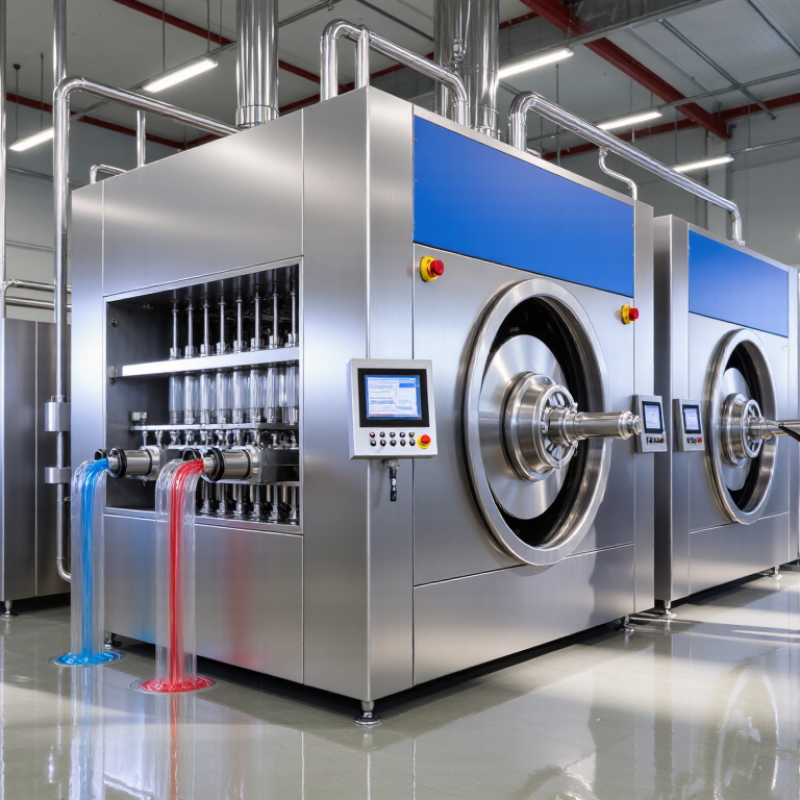
China’s Textile Dyeing Machine Manufacturing Industry
China’s textile dyeing machine manufacturing industry supports mills that process cotton, polyester, blends, and other fabrics. Its equipment ranges from batch dyeing machines for smaller lots to continuous systems for higher-volume production. Manufacturers work with different vessel sizes, fabric forms, and heating methods. The details matter. A machine designed for knitted fabric may not suit a mill handling delicate woven material.
Current designs often include programmable temperature control, adjustable liquor ratios, and automated dosing. These features can help operators maintain more consistent shades and reduce avoidable water or chemical use. They do not guarantee good results. Fabric preparation, dye selection, operator training, and maintenance all shape the finished color. A poorly calibrated sensor can still cause costly shade variation.
For buyers, comparing specifications is only part of the work. Ask about production trials, spare-part availability, service response, and cleaning access around pumps and filters. Request operating data for the fabrics and batch sizes you actually use. Some product information may look impressive but lack enough detail for a fair comparison. That is worth questioning. China’s manufacturing base is broad, yet quality and support can differ between suppliers. A careful factory visit or technical review may reveal more than a polished brochure.
| Machine Type | Dyeing Format | Typical Materials | Common Applications | Typical Process Conditions | Key Selection Considerations |
|---|---|---|---|---|---|
| Jet dyeing machine | Rope-form fabric circulated by a dye liquor jet | Knitted fabrics and selected lightweight woven fabrics | Piece dyeing where fabric movement and a relatively soft hand are important | Temperature and pressure depend on the fiber and dye class; high-temperature models are used for polyester dyeing | Check fabric sensitivity, loading, circulation stability, and the risk of creasing or rope marks |
| Soft-flow dyeing machine | Rope-form fabric transported with controlled liquor flow and low mechanical stress | Knits and other fabrics that benefit from gentler handling | Batch dyeing with attention to fabric appearance and handle | Set the recipe according to the substrate and colorant; operating conditions vary by machine design | Review fabric transport, liquor circulation, batch flexibility, and cleaning requirements |
| Jig dyeing machine | Open-width fabric passes repeatedly between two rollers through a dye bath | Woven fabrics that can be processed open-width | Piece dyeing where open-width handling and surface inspection are useful | Conditions depend on the fiber, dye system, and number of passes | Consider tension control, shade uniformity across the width, and suitability for delicate fabrics |
| Beam dyeing machine | Fabric wound on a perforated beam; liquor circulates through the fabric layers | Open-width woven or knitted fabrics suitable for beam winding | Uniform batch processing with controlled fabric arrangement | Temperature, pressure, and flow direction depend on the material and dye recipe | Assess winding quality, beam loading, liquor-flow uniformity, and fabric compatibility |
| Winch dyeing machine | Fabric runs in rope form over a winch and through a dye bath | Selected woven and knitted fabrics | Batch dyeing processes where relatively simple rope-form handling is appropriate | Usually selected and controlled according to the fiber and dye class | Check fabric strength, crease sensitivity, batch handling, and required shade consistency |
| Garment dyeing machine | Finished garments are tumbled or circulated in a dye bath | Garments made from dye-compatible fibers and components | Post-production color development and garment dyeing | Recipe conditions vary with fiber content, garment construction, and desired effect | Check shrinkage, seam and trim compatibility, load movement, and reproducibility between batches |
| Yarn package dyeing machine | Dye liquor is circulated through yarn wound on perforated packages or carriers | Yarn wound into dyeing packages | Producing colored yarn for knitting, weaving, and other textile processes | Fiber-specific; polyester package dyeing commonly uses pressurized high-temperature processing | Review package density, flow reversal, pressure rating, and dye penetration uniformity |
| High-temperature pressure dyeing machine | Enclosed vessel processes material under controlled temperature and pressure | Commonly used for synthetic fibers such as polyester, depending on machine configuration | High-temperature dyeing with suitable disperse-dye recipes | Polyester disperse dyeing often uses temperatures around 120–135 °C; actual settings depend on the recipe and equipment | Verify vessel ratings, temperature accuracy, safety systems, circulation, and energy use |
| Industry note: Textile dyeing machines manufactured in China serve a wide range of batch and continuous processing needs. The most suitable machine depends on fiber type, fabric construction, dye chemistry, production volume, required quality, utilities, and environmental controls. Temperature guidance shown here is indicative, not a substitute for a validated process recipe or equipment specification. | |||||
Related Posts
-
What Is a Dyeing Machine and How Does It Work?
-
Why Choose a Dyeing Machine for Textile Production?
-

Top 10 Best Finishing Machines for Quality Print Finishing in 2023
-
Why You Should Invest in a Vibratory Polishing Machine for Your Business
-
Top 10 Essential Manufacturing Machines Revolutionizing Production Efficiency
-
Top Vibro Machine Trends for 2026 What Buyers Need to Know?