China Top 10 Automation Engineering Companies

China’s automation engineering sector is changing how factories plan, build, and improve production. Across the country, companies design control systems, industrial robots, machine-vision tools, and integrated production lines. Their work can be seen in practical details: a sensor checking a bottle cap, a robotic arm moving a part, or software flagging an unexpected temperature rise. These systems help manufacturers pursue consistent output and clearer process data. They do not guarantee success on their own.

This overview of China’s top 10 automation engineering companies introduces firms with different strengths, project experience, and areas of focus. Some are known for industrial control and digital platforms. Others concentrate on robotics, electrical equipment, or complete manufacturing solutions. A company’s position on a list is only one starting point. Buyers should also examine technical support, integration experience, product compatibility, and performance under real operating conditions. A polished demonstration is not the same as a reliable production line.

Taiichi Ohno, the industrial engineer associated with the Toyota Production System, wrote, “Where there is no standard, there can be no improvement.” That principle matters in automation engineering: systems need measurable processes before teams can judge whether a change has helped. Still, standards alone are not enough. Machines can expose weak workflows as easily as they can improve them. This list offers a useful map, not a final verdict; company capabilities and project results can vary.
China Top 10 Automation Engineering Companies

What Automation Engineering Companies Do in China

What Automation Engineering Companies Do in China

Automation engineering companies in China design, integrate, and maintain systems that help factories produce goods with greater consistency. Their work can include selecting industrial robots, connecting sensors and controllers, programming machine sequences, and building production-line safety checks. They also adapt equipment to existing workshops, where floor space, older machines, and changing product designs can complicate installation. The work is practical. A sensor must detect a misaligned part; a controller must stop the line before a jam spreads.

Demand is substantial. The International Federation of Robotics reported 276,288 industrial robots installed in China in 2023, representing 51 percent of global installations that year. That figure reflects robot deployment, not the full automation-engineering market. Engineering teams also handle testing, worker training, data collection, and ongoing maintenance. After commissioning, they may track cycle times, unplanned stops, and defect rates, then adjust equipment based on production data. The dashboards are useful, but they do not explain every failure.

Reliable projects require clear documentation and careful validation. Engineers should test operating limits, emergency stops, and recovery procedures before a line runs at full speed. Integration can be messy. Small changes to a product or supplier may require fresh testing, and the first setup is not always the best one. IFR’s World Robotics 2024 report offers a useful benchmark, though it cannot replace site-specific assessments.

China’s Industrial Robot Installations, 2019–2023

Industrial automation engineering providers design and integrate robotic systems, controls, and production-line solutions. Annual robot installations indicate the scale of automation demand in China.

Source: International Federation of Robotics (IFR), World Robotics 2024. Figures are annual industrial robot installations, in units; they are not company-level data.

How China’s Automation Engineering Sector Is Structured

China Top 10 Automation Engineering Companies

How China’s Automation Engineering Sector Is Structured

China’s automation engineering sector is a network, not a single market. It includes control-system designers, equipment makers, software developers, and system integrators. Integrators connect robots, sensors, conveyors, and safety controls into working production lines. They also handle commissioning and maintenance. This structure matters: a factory may buy components from several suppliers but rely on one engineering team to make them work together.

The International Federation of Robotics’ World Robotics 2024 report recorded 276,288 industrial robots installed in China in 2023, about 51% of global installations. Its reported robot density reached 470 units per 10,000 manufacturing employees. These figures show strong adoption, but they do not measure project quality or local engineering depth. In practice, performance depends on details such as cycle time, floor space, operator training, and how quickly a line can be repaired. A fast installation is not always a reliable one.

Tips: When comparing engineering providers, ask for references from similar production environments. Check who owns integration, software updates, spare parts, and after-sales support. Request a clear acceptance test using real production conditions. One weakness in many evaluations is overemphasis on equipment price; downtime costs can be harder to see, but they matter.

Criteria for Identifying Leading Automation Engineering Companies

China Top 10 Automation Engineering Companies

Criteria for Identifying Leading Automation Engineering Companies

A credible automation engineering company should show how it solves real production problems, not just list impressive equipment. Look for documented experience with projects similar in scale and process, such as packaging lines, material handling, or precision assembly. Strong teams can explain their design choices, commissioning steps, and how they respond when a sensor gives inconsistent readings. Specifics matter.

Technical capability is another key measure. Review whether engineers can integrate controls, robotics, safety systems, and production data into a workable whole. Ask for clear acceptance criteria, test records, and practical training plans for operators and maintenance staff. A polished proposal alone proves little. Evidence counts.

Service after installation deserves close attention. Check response arrangements, spare-parts planning, documentation quality, and whether support remains available as production needs change. References can help, but compare projects carefully; a successful installation in one industry may not transfer neatly to another. Cost, delivery time, and energy use also matter, though the cheapest bid may leave gaps in training or long-term support. No ranking method is perfect. Some firms may have limited public records, so buyers should verify claims through technical discussions, site visits where possible, and measurable project requirements.

Profiles of Ten Notable Chinese Automation Engineering Companies

China’s automation engineering firms differ more by specialization than by size. The International Federation of Robotics reported 276,288 industrial robot installations in China in 2023, representing 51% of global installations. That scale creates demand for integrators who can connect machines, software, and production teams—not merely supply equipment.

A useful profile set spans ten distinct strengths. One company designs robotic welding cells for heavy fabrication; another builds vision-guided inspection stations for electronics. A third integrates automotive assembly lines, while a fourth focuses on warehouse conveyor controls. Others specialize in packaging machinery, machine-tool loading, process instrumentation, factory data platforms, energy monitoring, and retrofit engineering for older plants. Their work is tangible: camera checks at a fast-moving belt, safety interlocks at a robotic arm, or control cabinets tested before installation. These are different capabilities, not interchangeable claims.

The IFR’s World Robotics 2024 report also places China’s operational industrial-robot stock at about 1.8 million units in 2023. For buyers, that makes commissioning, maintenance, and local engineering support important profile details. A polished demonstration is not enough. Ask how a supplier handles downtime, spare parts, and operator training. Even experienced integrators can underestimate messy legacy data. That gap deserves scrutiny.

Industries Served and Technologies Used by These Companies

China Top 10 Automation Engineering Companies: Industries Served and Technologies Used

Automation engineering companies in China support automotive, electronics, food processing, chemicals, logistics, and energy production. Their work ranges from robotic welding cells and machine-vision inspection to programmable controllers, industrial networks, and warehouse automation. The International Federation of Robotics reported 276,288 industrial robots installed in China in 2023, around 51% of global installations. This scale reflects demand for faster production, consistent quality, and flexible manufacturing. Yet robot counts alone do not show whether a factory’s systems work well together.

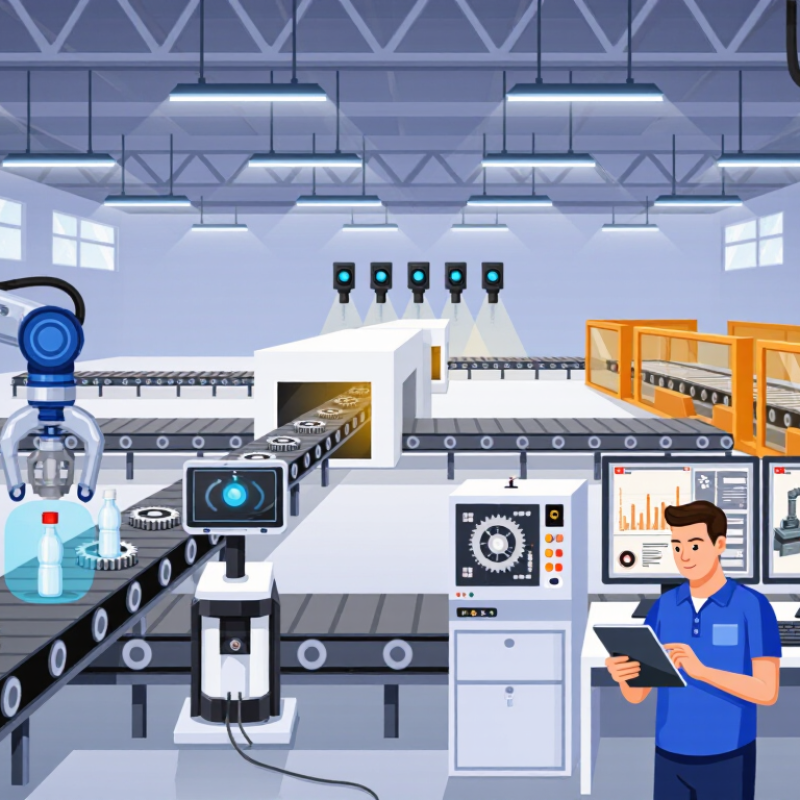
Typical projects combine sensors, motion-control equipment, robotics, and software that tracks production conditions. In electronics plants, compact robots can place components while cameras check alignment under bright inspection lights. In automotive facilities, coordinated robots handle repetitive welding and material movement. Food and chemical plants may prioritize cleanable equipment, process monitoring, and reliable temperature control. These are broad patterns, not fixed rules; the right technology depends on product, site conditions, and maintenance skills.

Tips: Ask for evidence from a similar production line, not just a technology list. Check cycle-time claims, inspection accuracy, spare-parts access, and operator training. A pilot run can expose integration problems early. One detail is easy to overlook: impressive automation can still create bottlenecks when upstream materials arrive late.

China Top 10 Automation Engineering Companies - Industries Served and Technologies Used by These Companies

The entries below are anonymized capability profiles illustrating common automation engineering specializations in China; they are not a verified company ranking.

Profile Primary Automation Focus Industries Served Typical Technologies Used Common Project Scope
Profile 1 Automotive production-line automation Passenger vehicles, commercial vehicles, automotive components Industrial robots, programmable logic controllers (PLCs), programmable safety systems, machine vision, conveyor and material-handling controls Assembly, welding, handling, inspection, line integration and commissioning
Profile 2 Battery cell and pack manufacturing systems Electric vehicles, energy storage, battery materials Precision motion control, robotic handling, laser process integration, machine vision, traceability systems, manufacturing execution systems (MES) Electrode, cell-assembly and pack-line automation; process monitoring and quality data collection
Profile 3 Electronics and semiconductor factory automation Consumer electronics, printed circuit boards, semiconductor packaging Cleanroom-compatible robots, servo systems, machine vision, automated optical inspection, environmental monitoring, equipment data interfaces Precision assembly, loading and unloading, inspection, testing and factory-floor connectivity
Profile 4 Industrial control and process automation Chemicals, water and wastewater, utilities, building materials Distributed control systems (DCS), PLCs, supervisory control and data acquisition (SCADA), process instrumentation, industrial communication networks Process control, monitoring, alarm management, control-room integration and system upgrades
Profile 5 Warehouse and intralogistics automation E-commerce, retail, manufacturing, third-party logistics Automated storage and retrieval systems (AS/RS), autonomous mobile robots (AMRs), conveyors, warehouse management systems (WMS), warehouse control systems (WCS) Storage, picking, sorting, pallet handling, goods-to-person operations and software integration
Profile 6 Food and beverage processing and packaging Food processing, beverages, dairy, packaged consumer goods Hygienic process instrumentation, PLC-based controls, robotic case packing, vision inspection, serialization and batch-record systems Filling, packaging, labeling, palletizing, recipe control and production-line traceability
Profile 7 Pharmaceutical and medical-device automation Pharmaceuticals, biotechnology, medical devices PLC and SCADA systems, cleanroom automation, electronic batch records, vision inspection, data-integrity controls Packaging, inspection, equipment integration, production monitoring and support for regulated validation processes
Profile 8 Machine vision and automated quality inspection Electronics, automotive, metals, consumer goods Industrial cameras, optical measurement, image-processing software, defect classification, code reading and robot guidance Surface inspection, dimensional measurement, presence checks, sorting and quality-data reporting
Profile 9 Robotic welding and fabrication cells Automotive components, heavy equipment, metal fabrication, rail equipment Arc-welding robots, welding power sources, positioners, offline programming, seam tracking and safety interlocks Cell design, fixture integration, welding-process automation, safety validation and production ramp-up
Profile 10 Factory digitalization and system integration Discrete manufacturing, process industries, multi-site production operations MES, industrial IoT gateways, OPC UA connectivity, production databases, dashboards, edge computing and predictive-maintenance analytics Equipment connectivity, production tracking, data visualization, system integration and operational reporting