Why Choose Vibratory Finishing Equipment for Your Projects?
Vibratory finishing equipment has become a cornerstone in the manufacturing and metalworking industries. According to a report by Grand View Research, the global market for vibratory finishing machines is expected to reach $1.4 billion by 2025. This growth reflects a rising demand for efficiency and quality in surface finishing processes.
Industry expert Dr. Emily Zhao states, "Vibratory finishing equipment not only enhances surface quality but also reduces processing time significantly." This highlights the critical role these machines play in improving productivity. Many manufacturers struggle with achieving desired surface finishes. These challenges can lead to increased production costs and longer lead times.
Investing in vibratory finishing equipment can transform your operations. It offers versatility for handling various materials while consistently delivering superior results. Despite the benefits, adopting this technology requires careful consideration of your specific needs and project requirements. Companies may need to reevaluate their processes to fully leverage the advantages of vibratory finishing equipment.
Overview of Vibratory Finishing Equipment
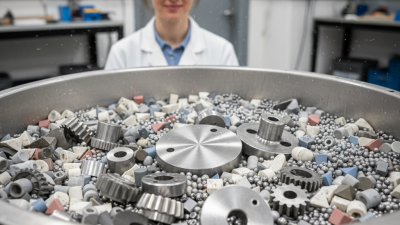
Vibratory finishing equipment has become essential in industries ranging from automotive to aerospace. This equipment is designed to provide efficient surface finishing for various materials, such as metals and plastics. Industry reports indicate that the vibratory finishing market is projected to grow at a CAGR of 5.7% over the next five years. This growth reflects increasing demand for improved surface quality and reduced production times.
One of the primary benefits of vibratory finishing is its ability to enhance surface smoothness. The process utilizes a combination of abrasive media and movement to achieve desired finishes, making it suitable for intricate parts. According to studies, parts finished with vibratory equipment can achieve a Ra value as low as 0.05µm. However, not all projects may benefit equally from this method. Some materials can suffer from excessive grinding if not monitored properly.
Another advantage is its adaptability. Vibratory finishing can handle a wide range of components in various sizes. This versatility, however, brings its own set of challenges. Operators must carefully select media and adjust parameters to prevent unwanted wear or defects. Achieving the perfect balance often requires trial and error, underscoring the need for expertise in this field.
Why Choose Vibratory Finishing Equipment for Your Projects?
| Feature |
Description |
Benefits |
| Efficiency |
Vibratory finishing processes are faster than many traditional methods. |
Reduces processing time and increases productivity. |
| Cost-Effectiveness |
Lower operational costs with reduced media consumption. |
Affordable solution for mass production needs. |
| Versatility |
Can be used for various finishing applications, including deburring, polishing, and cleaning. |
Adaptable to different materials and project requirements. |
| Quality |
Achieves consistent and high-quality finishes on parts. |
Enhances product appearance and customer satisfaction. |
| Safety |
Automated systems reduce manual labor and improve worker safety. |
Lowers risk of accidents and injuries on the shop floor. |
Advantages of Using Vibratory Finishing Equipment
Vibratory finishing equipment has gained popularity due to its efficiency and versatility. This method reduces processing times significantly. According to industry reports, vibratory finishing can decrease surface finishing time by up to 80%. The process gently polishes and deburrs parts simultaneously. This dual-action minimizes the number of operations required.
One notable advantage of vibratory methods is their adaptability. They can process diverse materials such as metals, plastics, and ceramics. This flexibility allows companies to enhance production lines without investing in multiple finishing systems. Moreover, vibratory equipment can handle complex shapes effectively. This ability improves consistency and quality in finishing, which is essential in competitive markets.
However, certain challenges exist. For instance, operators must be skilled to balance processing times and media types. Over-processing can lead to material loss and affect tolerances. It’s crucial to monitor operations closely to prevent quality issues. Some users may find it difficult to achieve uniformity across varying batch sizes. Understanding these nuances ensures better outcomes in vibratory finishing projects.
Applications of Vibratory Finishing in Various Industries
Vibratory finishing equipment plays a crucial role across several industries. Its applications range from automotive parts to consumer goods.
In the automotive sector, nearly 75% of manufacturers utilize vibratory finishing to enhance surface quality. This process effectively removes burrs, improves aesthetics, and increases durability.
The result is a more reliable product that meets stringent industry standards.
In the aerospace industry, precision is paramount. Studies show that vibratory finishing can reduce surface roughness by up to 50%. This is vital for components like turbine blades, where even minor imperfections can lead to catastrophic failures. Properly finished surfaces improve airflow and overall efficiency. However, many companies still overlook the importance of investing in quality finishing equipment.
Electronics manufacturers also benefit significantly from vibratory finishing. It helps in mass production, allowing companies to process thousands of components at once. Yet, some manufacturers struggle with consistency.
Variability in finishing can lead to defective products and increased waste. Investing in the right technology and processes is essential for achieving reliable results.
Factors to Consider When Choosing Vibratory Finishing Equipment
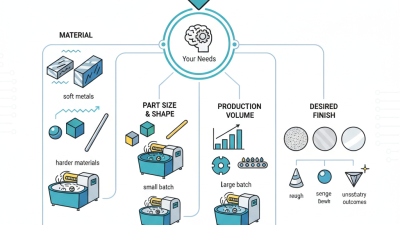
When selecting vibratory finishing equipment, several factors warrant attention. The type of materials being processed is crucial. Different materials require different approaches for optimal results. For example, softer metals may require gentler vibrations to avoid damage. On the other hand, harder materials benefit from more aggressive finishes. Understanding these subtleties can enhance project outcomes.
Another key consideration is the size and capacity of the equipment. Larger parts may necessitate bigger machines, while smaller batches may work with compact models. Balancing size and efficiency is often challenging. Moreover, the versatility of equipment plays a significant role. Some machines are equipped for both wet and dry finishing. This flexibility can lead to cost savings over time. It's important to reflect on whether the equipment will meet future needs as well.
Maintenance is an often-overlooked element. Regular upkeep ensures consistent performance. Neglecting maintenance can lead to diminished output quality. Many operators have learned this lesson the hard way. Proper training for staff is essential as well. Skilled personnel can maximize the equipment’s capabilities, reflecting a commitment to quality. Ultimately, the selection process involves careful thought and consideration of specific project requirements.
Comparison of Vibratory Finishing with Other Finishing Methods
Vibratory finishing equipment stands out in the world of metal finishing. Compared to traditional methods like tumbling or blasting, vibratory finishing is often more efficient. A study from the Finishing Industry Report indicates that vibratory processes can enhance productivity by up to 30%. This efficiency comes from uniform energy distribution, which delivers consistent results.
When it comes to surface quality, vibratory finishing excels. Reports show that it reduces surface roughness significantly compared to other methods. For instance, a comparison of methods revealed that vibratory finishing achieved a roughness average (Ra) of 0.2 microns, far superior to media blasting's range of 1.0 microns. This precision is critical for components requiring intricate detailing. However, it's worth noting that improper use of vibratory machines can lead to surface damage or inadequate finishing, highlighting the importance of skilled operators.
Vibratory systems also use less abrasive media than traditional tumbling. This can lead to reduced costs over time. However, many users may overlook the initial investment in high-quality equipment. Misalignment or inadequate tuning of machines can cause longer cycle times and inconsistent finishes. Thus, while vibratory finishing offers several advantages, proper training and setup are essential for optimal results.