Best Manufacturing Engineering Companies in China
China’s manufacturing sector is vast, but scale alone does not identify the right engineering partner. The United Nations Industrial Development Organization’s International Yearbook of Industrial Statistics 2024 estimates that China produced about 31% of global manufacturing value added in 2022. That scale supports a deep supplier base, from precision machining workshops to automated assembly plants. It also makes comparison harder. A polished factory tour cannot replace evidence of consistent process control.
The World Economic Forum’s Global Lighthouse Network reports examine how factories use digital technologies to improve productivity, quality, and resource efficiency. They offer useful context, not a ranking of China’s engineering companies. This guide considers practical signals: design capability, automation integration, quality systems, delivery performance, and experience with the buyer’s product and production volume. Taiichi Ohno, the architect of the Toyota Production System, cautioned, “Having no problems is the biggest problem of all.” His point still matters in manufacturing engineering: strong partners identify issues early and show how they resolve them. No checklist is perfect. Company claims should be checked against site visits, project references, and measurable results. The details matter. A reliable comparison should help readers distinguish impressive presentations from engineering performance on the factory floor.
Defining China’s Manufacturing Engineering Industry and Its Core Services
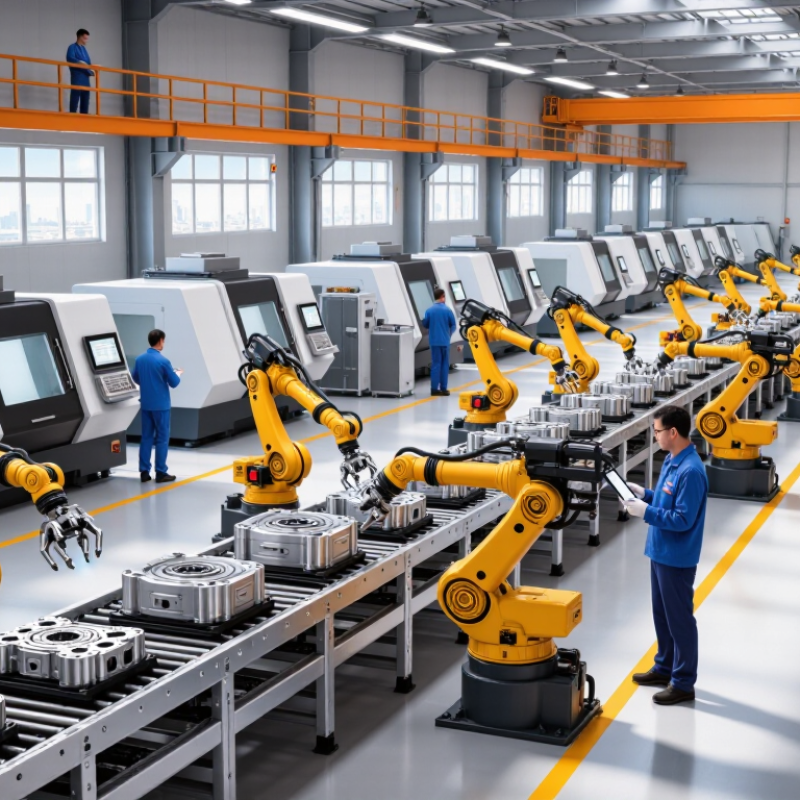
China’s manufacturing engineering industry connects product design with repeatable factory production. Its work spans process planning, equipment selection, factory layout, tooling, automation, and production-line commissioning. The aim is practical: make parts consistently, at a workable cost, and within defined quality limits. It is not the same as simply supplying machines.
Core services often begin with reviewing a part drawing and identifying difficult production steps. Engineers may then map workflows, balance stations, select inspection methods, and create fixtures for assembly. A shop-floor example is a line where operators fit components by hand; a locating fixture can reduce alignment variation. Small details count. Sensor placement and maintenance access can affect uptime as much as the main machine.
Companies in China serve varied production needs, from electronics assembly to metalworking and industrial equipment. Their capabilities differ, so buyers should check relevant process experience, measurement plans, commissioning support, and documented performance. A fast line is not automatically a good line. Throughput targets can overlook changeovers, operator training, or defects that appear after sustained operation. Even a sound engineering plan may need adjustment once real materials and factory conditions are tested.
China Installed 276,288 Industrial Robots in 2023, 51% of the Global Total (IFR)
Best Manufacturing Engineering Companies in China
China’s factory automation market is defined by an exceptional installation pace. The International Federation of Robotics (IFR), in World Robotics 2024, reports that China installed 276,288 industrial robots in 2023—51% of the global total. Worldwide installations reached 541,302 units, so China accounted for roughly one in every two new robots. That is substantial. The figure matters to manufacturing engineering because robot deployment drives demand for system integration, machine vision, safety controls, tooling, and production-line commissioning.
IFR also puts China’s robot density at 470 robots per 10,000 manufacturing employees in 2023, reflecting deeper automation across factories. On a shop floor, that may mean a robot tending a CNC machine, welding a frame, or moving cartons between conveyors. Yet headline volume can hide uneven capability: installation counts do not show uptime, process stability, or how well equipment handles product changes. Buyers should ask engineering partners for documented cycle-time results, changeover records, and maintenance plans, not just robot counts. There is a catch. IFR’s statistics describe national deployment, not the performance of every engineering provider; project-level evidence still needs careful checking.
Criteria for Comparing Leading Firms: Expertise, Certifications, and Delivery
Comparing manufacturing engineering companies in China starts with evidence of practical expertise, not polished claims. Ask how engineers assess material choices, tolerance stack-ups, tooling access, and design-for-manufacture changes. A capable team should explain trade-offs using your drawings and show a clear route from prototype to repeatable production. Request relevant, anonymized project examples. Details matter.
Check certifications by scope, issuing body, site, and expiry date. A certificate is useful, but it does not guarantee consistent work on your specific product. Ask how the firm manages inspection records, equipment calibration, nonconformities, and corrective actions. If possible, review a sample quality report and confirm that the certified facility will handle your order. Paperwork can look reassuring; the process behind it matters more.
Delivery claims need measurable support. Compare quoted lead times with recent on-time performance, production capacity, and the time needed for sampling and approval. Ask what happens when a supplier or machine becomes unavailable. Clarify which dates depend on your design sign-off or incoming materials. A site visit or pilot run can reveal practical gaps that a scorecard misses. No comparison method is perfect, and a tidy spreadsheet may hide real production uncertainty.
Leading Chinese Companies by Specialty: Automation, Plant Design, and Process Engineering
Best Manufacturing Engineering Companies in China
Chinese manufacturing engineering companies often specialize in different parts of a project: automation, plant design, or process engineering. Automation specialists integrate robots, sensors, and production-line controls.
The International Federation of Robotics’ World Robotics 2024 report recorded 276,288 industrial robot installations in China in 2023, representing 51% of global installations. That scale matters. But a high robot count does not guarantee a well-integrated factory; commissioning and worker training still shape daily performance.
Plant-design teams plan layouts, utilities, material flows, and safety systems. Look for practical evidence: clear equipment access, short material routes, and space for maintenance. Process-engineering specialists focus on operating conditions, production consistency, and waste reduction. Their value is often visible in details, such as stable temperatures, fewer changeover delays, and usable process documentation. These specialties overlap, but they are not interchangeable. A design can look efficient on paper and still create bottlenecks on the floor.
Tips: Match the engineering partner to your main constraint. Ask for project references in a similar process, measurable acceptance criteria, and a commissioning plan. Check who owns training and post-installation support. One uncomfortable question helps: what did the team learn from a project that missed its targets? A credible answer matters more than polished claims.
China’s R&D Spending Reached RMB 3.33 Trillion in 2023 (NBS): Implications for Innovation
China’s research and development spending reached RMB 3.33 trillion in 2023, according to the National Bureau of Statistics. That figure signals substantial national investment, but it does not show how evenly funding reaches manufacturing projects. For engineering teams, the practical question is whether research becomes reliable production.
Investment can support better materials testing, process simulation, robotics, and precision measurement. On a factory floor, progress may look modest: fewer rejected castings, steadier welds, or a machine that holds tighter tolerances across a long shift. These gains require engineers to connect laboratory results with equipment, operators, and supplier capabilities. Funding alone cannot do that.
Manufacturing companies evaluating engineering partners can ask for evidence from pilot runs, documented test methods, and clear explanations of process limits. Useful details include measurement uncertainty, cycle-time assumptions, and how a design handles heat or vibration. These questions are not glamorous. They often reveal more than a polished prototype. China’s rising R&D investment creates room for innovation, yet turning that investment into dependable output remains uneven and difficult to measure. A promising design can still fail when maintenance needs or production variation were underestimated.