Why Choose Multifilament Fishing Nets?
Choosing the right net begins with the work it must do. MULTIFILAMENT FISHING NETS use several fine yarns twisted or braided into each strand, creating a supple netting that can handle repeated use. For fishers comparing materials, that construction may offer useful strength, knot stability, and a softer feel in the hand. The exact performance still depends on fiber, mesh size, twine thickness, and finishing. Details matter.
Fisheries gear researcher Dr. Bent Herrmann studies how fishing-gear design affects selectivity. A paraphrase of a principle reflected in this field is: “Mesh design should fit the fishing task.” This is not a verified verbatim quotation, but it captures an important point: net choice should match target catch, operating conditions, and handling needs. A practical comparison starts with the mesh and knots. Inspect a sample under tension, check whether the openings keep their shape, and consider how the net feels when wet. Small differences show up on deck.
Multifilament construction is not automatically the best choice for every fishery. It may need more careful drying and storage, and performance varies between products. That deserves a closer look. This introduction examines why fishers choose multifilament netting, where its strengths can help, and which trade-offs are worth checking before purchase.
What Multifilament Fishing Nets Are Made Of
Why Choose Multifilament Fishing Nets?
What Multifilament Fishing Nets Are Made Of
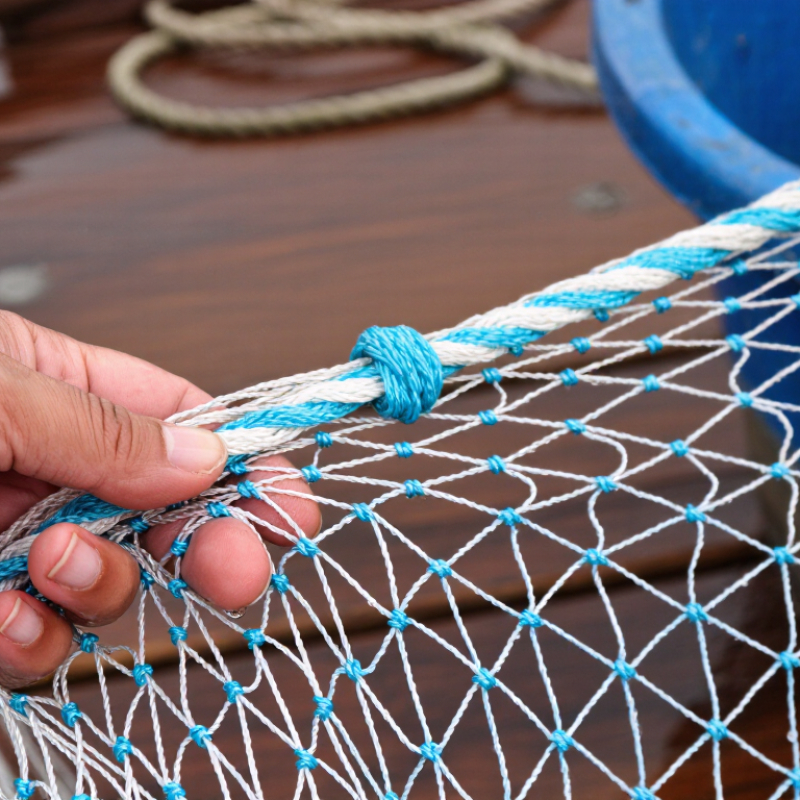
Multifilament fishing nets use yarn made from many fine, continuous filaments bundled or twisted together. Common materials include nylon, also called polyamide, polyester, and polypropylene. The exact fiber depends on the net’s intended use and construction. A close look at the yarn may reveal a soft, slightly fuzzy surface, unlike the smooth profile of a single-filament line. That texture can help the strands bend together, though it may also hold dirt or debris if the net is not cleaned and dried properly.
Nylon is often selected for its flexibility and abrasion resistance, but it can absorb water and may stretch. Polyester generally absorbs less water and can hold its shape well. Polypropylene is lightweight and may float, depending on the net design. These are useful tendencies, not guarantees: yarn thickness, coatings, knots, mesh size, and exposure all affect performance. I would not choose a net by fiber name alone. Two nets made from the same polymer can feel quite different in the hand.
Tips: Check the fiber label, yarn thickness, and mesh size together. Rinse away grit, then dry the net fully before storage. It takes a little longer, but helps prevent avoidable wear.
Why Choose Multifilament Fishing Nets? — What They Are Made Of
Multifilament describes a yarn made from many fine filaments twisted or bundled together. Fishing nets may use nylon (polyamide), polyester, or polyethylene. The chart compares typical polymer densities; actual values vary by grade.
How Their Woven Fibers Create a Flexible Mesh
Multifilament fishing nets gain flexibility from yarn made of many fine strands rather than one solid filament. Twisted or laid together, these strands can move slightly against one another as the net bends. When joined into mesh, that construction helps the openings change shape under shifting water or a moving load. The mesh feels supple in the hand, but its response depends on twine thickness, knot tightness, and mesh size. Small details matter.
The FAO technical paper Fishing Gear Materials describes the construction and properties of netting yarns, including multifilament materials. In practice, a net’s flexibility is not a guarantee of strength or long service life; abrasion, knots, and handling all influence performance. The FAO’s The State of World Fisheries and Aquaculture 2024 reports 223.2 million tonnes of global fisheries and aquaculture production in 2022, including aquatic animals and algae. That figure shows the scale of the sector, not that one mesh design is better. It is worth checking how a net behaves when wet and under tension, because a neat-looking mesh can still distort more than expected.
Key Benefits for Strength, Handling, and Fish Retention
Why Choose Multifilament Fishing Nets?
Multifilament nets are made from several fine yarns twisted or braided together. That layered construction gives the twine a flexible feel and can help it tolerate repeated handling. On deck, the net folds more softly than stiff monofilament, making it easier to gather, coil, and mend around a small tear. Strength still depends on material, twine diameter, knot style, and workmanship. Small details matter.
Fish retention depends heavily on mesh size and how the net is hung, not just on the number of filaments. Correctly matched mesh can hold target fish while allowing some smaller fish to pass. A 2022 Science Advances study, based on interviews with 451 fishers, estimated that 2.3% of fishing nets were lost annually. That figure does not prove one net construction prevents loss, but it underlines why durable gear and careful inspection matter.
Multifilament twine can also make a net feel less harsh in the hands during hauling and repair. Still, it may absorb more water and debris, so drying and regular checks are important. Look closely at knots, chafed sections, and areas that rub against the vessel. The trade-off is real. Choose twine and mesh for the fishing method, species, and working conditions; no single construction suits every operation.
Why Choose Multifilament Fishing Nets? - Key Benefits for Strength, Handling, and Fish Retention
| Dimension | Multifilament net characteristics | Practical benefit or consideration |
| Yarn construction | Made from multiple fine filaments gathered into yarn, commonly by twisting or braiding. | The bundled construction gives the netting a flexible feel; exact properties depend on fiber material and construction. |
| Strength and load | Load capacity varies with fiber, yarn size, mesh construction, knots, and net condition. | Choose netting using its rated specifications and intended load; multifilament construction alone does not determine strength. |
| Handling and flexibility | Often pliable and easy to fold, coil, and handle compared with stiffer netting constructions. | Can be convenient to set and retrieve; handling characteristics vary by yarn and finish. |
| Fish retention | Retention is not determined by multifilament construction alone. | Mesh size and shape, twine diameter, net hanging, target species, and fishing method are key factors in catch and retention. |
| Abrasion and inspection | Individual filaments can wear or break through use, especially at contact points and knots. | Inspect regularly for fraying, broken yarn, and damaged meshes, and repair defects before use. |
| Care and service life | Service life depends on material, sunlight exposure, abrasion, storage, and maintenance. | Rinse off salt and debris when appropriate, dry thoroughly, and store away from excessive heat and direct sunlight. |
Common Uses Across Fishing Methods and Environments
Why Choose Multifilament Fishing Nets?
Common Uses Across Fishing Methods and Environments
Multifilament netting is used in gillnets, trammel nets, and some seine applications. Its knotted, flexible web can adapt to different gear shapes and handling needs. In sheltered bays, easy folding may matter most. In rocky rivers, abrasion resistance deserves closer attention. The right choice depends on species, mesh opening, twine thickness, and hauling frequency. No net suits every setting.
The FAO’s The State of World Fisheries and Aquaculture 2024 reports 92.3 million tonnes of capture fisheries production in 2022. These fisheries span many methods and environments; the figure does not measure net use. For smaller crews, manageable netting can simplify stowing and hand repairs. Heavier netting may withstand frequent hauling, but can add drag and take longer to dry. It is easy to overvalue softness. Sunlight, salt, and neglected chafe points can still shorten a net’s working life.
Tips: Match mesh size and twine to the target catch and conditions. Check knots and worn contact points before each trip. Rinse nets after use, then dry them out of direct sun. Record repairs; patterns of damage can reveal where the setup needs adjustment.
How to Choose a Multifilament Net for Specific Conditions
Why Choose Multifilament Fishing Nets?
How to Choose a Multifilament Net for Specific Conditions
Choosing a multifilament net starts with the fish and the water, not the product label. Match mesh opening to the target species and its size; overly large mesh may let fish escape, while tight mesh can collect unwanted debris. Small details matter. Also consider net depth and length against the area you fish, so the gear is manageable rather than awkward to set or retrieve.
Water conditions guide the material and construction. In clear, calm water, a finer, less visible net may be useful, but it can be harder to handle. In rocky or abrasive areas, look for durable twine and reinforced edges, then inspect for fraying after each trip. Strong current calls for careful attention to net height, float placement, and anchoring. A net that performs well in still water may sag or twist when the current picks up.
Check the maker’s mesh and twine specifications instead of judging thickness by sight alone. If possible, handle a sample and tie a test knot; stiff netting can resist smooth deployment. Test before committing. Your first choice may still need adjustment: water clarity, debris, and seasonal fish size can change what works. Record mesh size and conditions after each outing to make the next selection more informed.