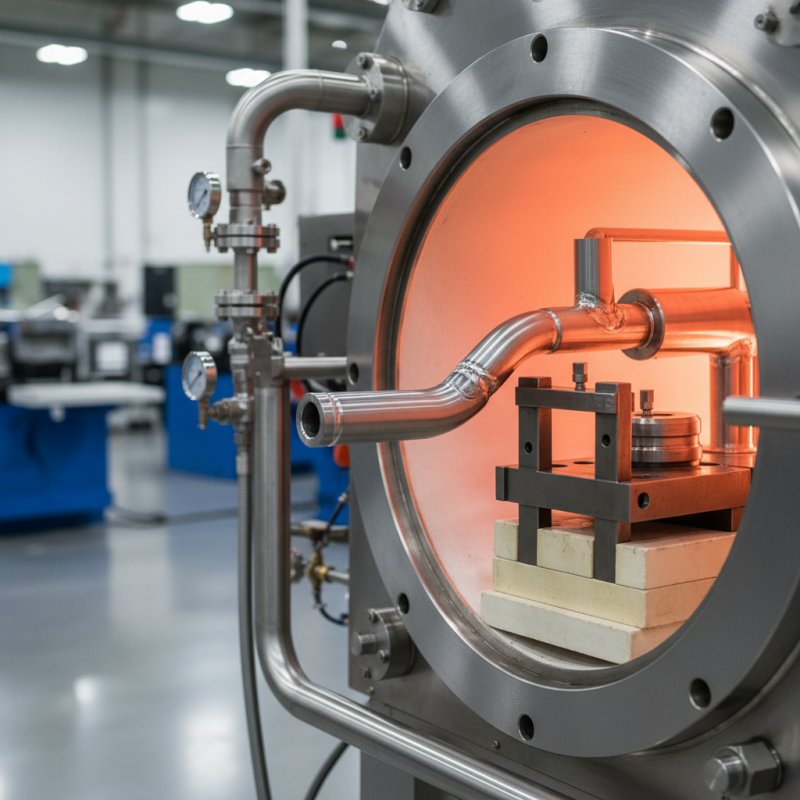
Vacuum Brazing Furnace Tips for Efficient Metal Joining?
The efficiency of metal joining processes is crucial in modern manufacturing. One of the most effective methods is using a Vacuum Brazing Furnace. This technology offers exceptional strength and durability in metal assemblies. It operates under low pressure, preventing oxidation and contamination.
While the process seems straightforward, many factors can affect its performance. Temperature control remains a significant challenge. Insufficient heating can lead to weak joints. Conversely, overheating may damage sensitive components.
Proper furnace maintenance is also essential for optimum results. Regular checks on vacuum levels and system integrity can greatly enhance performance. Failure to address these areas could result in inconsistent joining quality. Thus, understanding the nuances of Vacuum Brazing Furnaces is vital for achieving desired outcomes.
Understanding Vacuum Brazing: Principles and Benefits
Vacuum brazing is a specialized metal joining technique that offers several advantages. This method occurs in a controlled, vacuum environment. The absence of oxygen prevents oxidation during the process. As a result, stronger and more reliable joints can be achieved. This is crucial for applications in aerospace and automotive industries. The precision of vacuum brazing allows for exact fitments.
The principles of vacuum brazing hinge on melting a filler metal to bond workpieces. The process requires careful control of temperature and pressure. This can be a challenge for operators, as improper settings can lead to weak joints. Understanding the melting point of the filler material is key. Operators must also ensure that parts are clean and free from contaminants. Despite these challenges, the benefits are significant. Each joint made with vacuum brazing is often stronger than the base materials.
With a focus on precision and clean environments, vacuum brazing might seem ideal. Yet, the initial setup can be costly. Training for operators is essential, as mistakes can be costly. A thorough understanding of the technique leads to more successful results. Continuous reflection on techniques and outcomes is necessary for improvement. Each step in the process offers learning opportunities.
Key Components of a Vacuum Brazing Furnace
The key components of a vacuum brazing furnace are essential for effective metal joining. Understanding these elements can enhance your brazing outcomes. A robust chamber design ensures an efficient vacuum environment, reducing oxidation during the process. The material of the chamber also plays a vital role in maintaining temperature stability.
High-quality heating elements are necessary for uniform temperature distribution. They should withstand high temperatures without degrading. Thermocouples are crucial for accurate temperature monitoring, ensuring the process stays within required parameters. Similarly, a reliable vacuum pump is vital for achieving the necessary vacuum levels. Any fluctuation in vacuum quality can compromise the brazing quality.
Lastly, consider the control system. It must allow for precise adjustments to temperature and time settings. The user interface should be intuitive, minimizing operator errors. Implementing these components correctly can be challenging but is critical for achieving optimal results. Regular maintenance and calibration of these parts will help in reinforcing system reliability and performance over time.
Preparing Metals for Vacuum Brazing: Surface Treatments
Preparing metals for vacuum brazing involves essential surface treatments that significantly enhance bonding quality. Cleanliness is crucial. Any contaminants, such as oils or oxides, can prevent proper adhesion. A thorough degreasing process is vital. This may include solvents, ultrasonic cleaning, or alkaline solutions. Each metal type may require a different approach to achieve optimal cleanliness.
Surface roughening can also improve mechanical interlocking during the brazing process. Techniques like sandblasting or grinding can increase surface area. However, these methods may alter the metal’s properties, which must be considered carefully. Overdoing it can lead to unwanted stress concentrations, potentially causing issues later on.
Another important aspect is the use of flux. The right flux can help remove oxides during the heating process. However, too much flux can lead to inclusions, which may weaken the joint. Balancing the amount of flux is essential. The goal is to facilitate quality bonding without introducing defects. A thoughtful approach to surface treatments will lead to more reliable vacuum brazing outcomes.
Vacuum Brazing Furnace Tips for Efficient Metal Joining: Preparing Metals for Vacuum Brazing - Surface Treatments
| Surface Treatment Method | Purpose | Recommended Material Examples | Key Benefits |
| Cleaning | Remove contaminants from metal surfaces | Steel, Aluminum, Copper | Enhances bonding strength |
| Abrasive Blasting | Create a rough surface for better adhesion | Stainless Steel, Titanium | Improves joint integrity |
| Chemical Cleaning | Remove oils, greases, and oxides | Brass, Aluminum Alloys | Prepares surface for optimal wetting |
| Passivation | Enhance corrosion resistance | Stainless Steel | Extends service life of components |
| Hydrogen Treating | Diffusion of hydrogen to remove impurities | Nickel and Nickel Alloys | Improves wettability and bonding |
Optimizing Process Parameters for Efficient Metal Joining
Optimizing process parameters in vacuum brazing can significantly enhance metal joining efficiency. Temperature control is crucial. Ideal heating rates promote uniform melting of the filler material. This uniformity ensures better flow into joints. Setting the furnace temperature accurately is essential. A slight variation can lead to defects or weak joints.
Pressure levels also play a role. Too much pressure can cause the filler to escape, while too little may not achieve proper bonding. Careful calibration of these settings is vital for successful outcomes.
Time is another parameter to consider. Extended time in the furnace can lead to excessive oxidation. This can weaken the joint and reduce durability.
Material preparation is sometimes overlooked. Cleaning surfaces before brazing is crucial for effective adhesion. Oxide layers or contaminants can lead to joint failure. Investments in proper cleaning methods yield better results. Even minor adjustments in parameters can produce noticeable changes in the final product. Continuous monitoring and adjustment of the process can help achieve optimal results. Reflecting on these factors is essential for improving efficiency in metal joining.
Common Challenges in Vacuum Brazing and Their Solutions
Vacuum brazing is a precise process for joining metals, but it comes with its unique challenges. One common challenge is maintaining a consistent temperature throughout the furnace. Uneven heating can lead to poor bonding. This can be mitigated by using accurate thermocouples and optimizing the placement of heat sources. Regularly calibrating the furnace's temperature sensors ensures reliable performance.
Another issue is contamination in the vacuum environment. Even minor impurities can degrade weld quality. To counteract this, it is crucial to perform routine maintenance on the vacuum system. This includes checking seals and ensuring proper outgassing of materials. Keeping a clean work area also helps minimize contamination risks. Operators should be trained to identify potential contaminants, an often overlooked aspect.
Control of the braze alloy flow is also essential. Too much or too little can lead to weak joints. Proper fixture design helps regulate alloy distribution. Designing components with built-in features can ensure even flow. Monitoring the braze process allows for on-the-spot adjustments, fostering a more robust joining procedure. Addressing these challenges thoughtfully can enhance the overall brazing outcome.