Top Neon LED Strip Suppliers for Global Buyers
Choosing the right Neon Led Strip supplier requires more than comparing prices on a polished website. Global buyers need consistent brightness, dependable shipping, clear specifications, and responsive technical support. A reliable supplier should explain LED density, color temperature, voltage options, bending direction, and silicone protection without vague promises. Small details matter.
In practical sourcing, samples reveal what catalogs often hide. Inspect the strip in daylight and darkness. Check whether the light appears even around corners. Measure the actual power draw after several hours of operation. Review the connector fit, adhesive strength, and cable quality. For outdoor projects, confirm the tested IP rating and installation conditions. A supplier with documented quality control can provide factory images, test reports, warranty terms, and traceable production information. Certifications should be verified for the destination market, not simply displayed as decorative logos.
Top suppliers also understand international procurement challenges. They support custom lengths, private labeling, packaging requirements, and safe export preparation. Their teams should answer technical questions clearly and identify limitations before accepting an order. No supplier is perfect. Even experienced buyers can overlook heat management, voltage drop, or replacement lead times. That is why this guide evaluates suppliers through product performance, manufacturing experience, communication, and after-sales reliability. The strongest partners are not always the cheapest. They are the ones that help buyers avoid costly surprises while delivering stable Neon Led Strip solutions across different climates, applications, and project scales.
Neon LED Strip Basics and Key Product Features
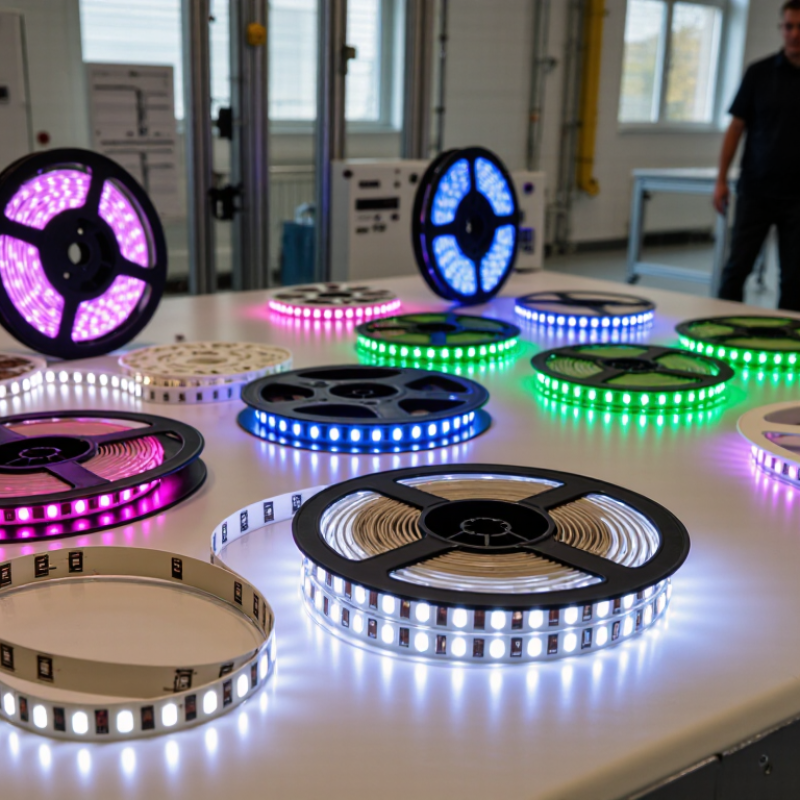
Neon LED strips are flexible lighting products with LEDs enclosed in a silicone or similar protective jacket. This jacket creates a smooth, continuous glow instead of visible light points. Most models use low-voltage direct current and require a compatible power supply. Confirm voltage before ordering. A mismatch can cause flickering, overheating, or early failure.
Key product features include brightness, color temperature, bending direction, cutting marks, and waterproof protection. Side-bending and top-bending designs serve different installation needs. Check the minimum bending radius before shaping corners. A tight curve may damage the internal circuit. For outdoor projects, inspect the stated IP rating, connector sealing, and jacket resistance against ultraviolet exposure. Do not judge quality by brightness alone. Even illumination matters in signs, shelves, and architectural edges.
Global buyers should request samples, test several meters, and review technical documents before placing a large order. Useful documents include photometric data, electrical specifications, safety test records, and production quality procedures. Ask suppliers about cut-length accuracy and replacement handling. Small details matter during installation. I have found that connectors often deserve more attention than the strip itself. A beautiful sample can still disappoint when its accessories fit poorly. Color consistency may also change between batches, so written tolerances are worth requesting. Supplier communication, packaging strength, and realistic lead times reveal practical reliability.
Top Neon LED Strip Suppliers by Market and Specialty
Top Neon LED Strip Suppliers by Market and Specialty
Global buyers should match suppliers to regional installation conditions, not only quoted price. Grand View Research reports that the global LED lighting market is expected to maintain strong growth through 2030, supported by energy efficiency and smart controls. In North America, suppliers often focus on certified low-voltage systems, retail displays, and architectural projects. European suppliers commonly emphasize compact profiles, dimming compatibility, and stricter energy performance requirements. These differences matter. A visually attractive strip can still fail during approval or installation.
Asia-Pacific remains a major sourcing center for high-volume production, custom lengths, and flexible color options. Suppliers there often support OEM packaging, rapid sampling, and large signage orders. However, buyers should verify lumen output, copper thickness, adhesive performance, and batch consistency. MarketsandMarkets identifies smart lighting and connected controls as important growth areas, creating demand for addressable neon strips and app-compatible systems. Specifications can sound impressive. Testing is still essential.
For outdoor hospitality and commercial façades, suppliers specializing in IP-rated construction should provide water-ingress testing and operating-temperature data. In hot regions, silicone quality and heat dissipation deserve extra attention. The U.S. Department of Energy’s solid-state lighting reports continue to highlight efficiency, thermal management, and product reliability as core performance factors. I would not accept a generic IP rating without test conditions. Certification names alone can mislead, especially when installation details remain unclear. Some supplier comparisons also overlook warranty response time, which may matter more than a small unit-price difference.
Quality Standards, Certifications, and Customization Options
Top Neon LED Strip Suppliers for Global Buyers
Global buyers should evaluate neon LED strip suppliers through documented quality controls, not bright sample photos. Reliable suppliers identify LED binning, copper thickness, silicone grade, and cutting tolerances. Ask for production records and a sample measured at its intended voltage. A warm showroom sample can hide uneven brightness. Small details matter.
Certifications must match destination markets and product construction. Request current reports for IEC 60598 safety testing, EMC performance, and material compliance such as RoHS or REACH where applicable. Recognized safety certification may be required for certain regional installations. IP67 claims should include enclosure and cable details, not only the strip body. Independent laboratory reports carry more weight than a logo on a datasheet. Still, certification does not prove every production batch is identical. Buyers should verify serial numbers, report scope, and factory audit dates.
Customization works best when specifications are written before quotation. Options may include 12V or 24V operation, color temperature, RGB control, side-bending profiles, custom lengths, connectors, and silicone colors. Confirm minimum order quantities and replacement policies. Test a full-length sample with the planned dimmer, controller, mounting channel, and power supply. Check heat after several hours. I have seen attractive prototypes fail at the first sharp corner. That lesson is easy to overlook. A capable supplier should explain limitations clearly, even when the answer reduces the order value.
Pricing, Shipping, and Import Considerations for Global Buyers
Global buyers should compare landed cost, not the supplier’s unit price. Grand View Research estimated the global LED lighting market at about USD 78 billion in 2023, with strong growth through 2030. That scale supports competitive neon LED strip pricing, but quotations remain highly specification-driven. Confirm LED density, voltage, wattage, silicone grade, color consistency, controller compatibility, and minimum order quantity. A low price may hide weaker diffusion or higher power consumption.
Ask for a complete pro forma invoice. It should separate product value, packaging, inland transport, freight, insurance, and import duties. Incoterms 2020 defines which party carries transport risk and customs responsibilities. “Delivered” is not always cheaper. Sometimes it only moves the uncertainty. Request samples, test reports, carton dimensions, and a realistic production lead time before ordering. Allow extra budget for replacement pieces and damaged packaging.
Shipping schedules also need caution. UNCTAD’s Review of Maritime Transport 2023 highlighted how disruptions can affect vessel capacity, routing, and delivery reliability. For fragile silicone profiles, stronger cartons and moisture protection matter. Check the correct HS classification with a licensed customs broker, because duties and product requirements vary by destination. Energy performance deserves attention too. The U.S. Department of Energy’s solid-state lighting research shows continuing gains in LED efficacy, yet brighter output can increase heat and power demand. Buyers should compare lumens per watt, not appearance alone. Forecasts are useful, but supplier documentation is the final reality.