2026 Top Finishing Equipment Trends and Innovations to Watch?
In the evolving landscape of manufacturing, the focus on finishing equipment is sharper than ever. As we approach 2026, several trends and innovations are reshaping this essential category. Efficient finishing equipment enhances product quality, improves aesthetics, and streamlines production processes. Technologies are advancing rapidly, leading to tools that are not only more effective but also more energy-efficient.
However, with new innovations, there are challenges to consider. Some finishing equipment may require more training for operators, potentially leading to downtime or errors. Additionally, the rapid pace of technological change can create uncertainty about investment returns. Manufacturers must evaluate both the benefits and potential pitfalls carefully.
Staying informed about the latest advancements is crucial. This insight helps businesses maintain a competitive edge. In the coming year, the spotlight will be on sustainability and adaptability in finishing equipment. Leaders in the industry will need to embrace these changes while being mindful of potential risks and uncertainties.
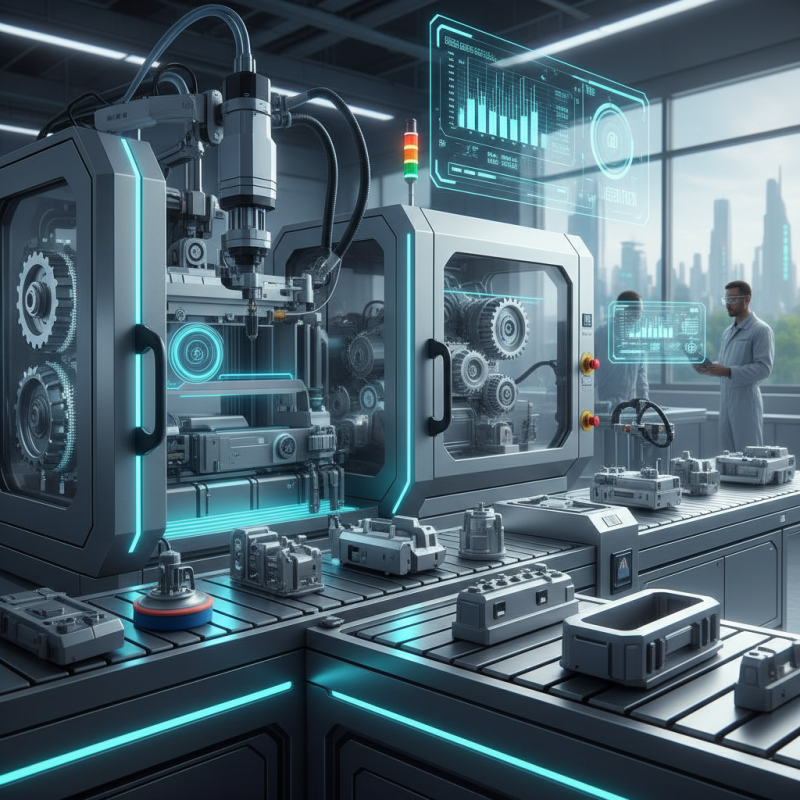
Emerging Technologies in Finishing Equipment for 2026
As 2026 approaches, the finishing equipment sector is on the brink of transformative change. Emerging technologies are reshaping how manufacturers approach surface finishing. According to a recent industry report, the market for advanced finishing equipment is projected to grow by 7.5% annually, highlighting a clear shift toward automation and precision. The adoption of AI-driven technology is at the forefront, enabling improved quality control and reduced waste.
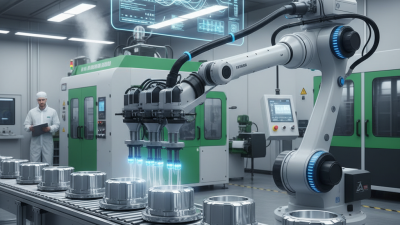
Robotics are also gaining traction in finishing processes. Automated systems can now apply coatings more evenly and efficiently, addressing common human errors. This technology allows manufacturers to adjust parameters in real time. With around 30% of manufacturers already integrating robotics, the pace is set to accelerate. Such innovations demand investment, yet they promise significant returns in efficiency and consistency.
Furthermore, sustainability is becoming central to equipment design. Eco-friendly materials and energy-efficient technologies are now crucial selling points. A study indicates that 65% of companies are prioritizing green initiatives in their equipment upgrades. While this shift is promising, challenges remain. Balancing cost and sustainability efforts is essential for successful implementation. As new technologies emerge, manufacturers must remain adaptable and ready to face these evolving needs.
Sustainable Innovations Shaping Finishing Equipment Designs
In 2026, the trend of sustainability in finishing equipment is further shaping the industry. Manufacturers increasingly focus on eco-friendly materials and energy-efficient processes. Sustainable innovations not only reduce environmental impact but also enhance product quality. This shift is crucial as businesses seek to align with green practices.
Moreover, the integration of recycled materials is becoming more prevalent. Equipment designs are evolving to incorporate materials that minimize waste. For example, using biodegradable components can significantly reduce the carbon footprint. Companies benefit by gaining a competitive edge while promoting environmental responsibility.
Tips: Consider evaluating your current equipment. Look for areas where you can introduce sustainable practices. Small changes can lead to significant improvements over time. Engage your team in brainstorming sessions. Collaborating can spark innovative ideas that contribute to eco-friendly equipment design.
Automation and Robotics Trends in Finishing Processes
The finishing process in manufacturing is becoming increasingly automated, driven by the need for efficiency. According to a recent report by the International Journal of Advanced Manufacturing Technology, automation can improve production speeds by up to 30%. This shift enhances productivity and minimizes human error. As companies adopt these technologies, they often face challenges in worker reskilling, pushing organizations to rethink workforce strategies.
Robotic systems are at the forefront of this transformation. They execute tasks that require precision and speed, which humans may find challenging. A study from Smithers Pira indicates that spending on robotic technologies in manufacturing is expected to rise to $152 billion by 2025. However, integration of these systems presents obstacles. Companies must ensure compatibility with existing workflows and address potential downtime during transitions.
While automation provides undeniable benefits, it presents ethical dilemmas. There can be job displacement, prompting industry leaders to advocate for initiatives in retraining workers. Moreover, reliance on technology can lead to vulnerabilities, such as system failures. Addressing these gaps is essential for sustainable growth in the finishing equipment sector, ensuring technology complements human capabilities rather than replacing them entirely.
Impact of Digital Transformation on Finishing Equipment Efficiency
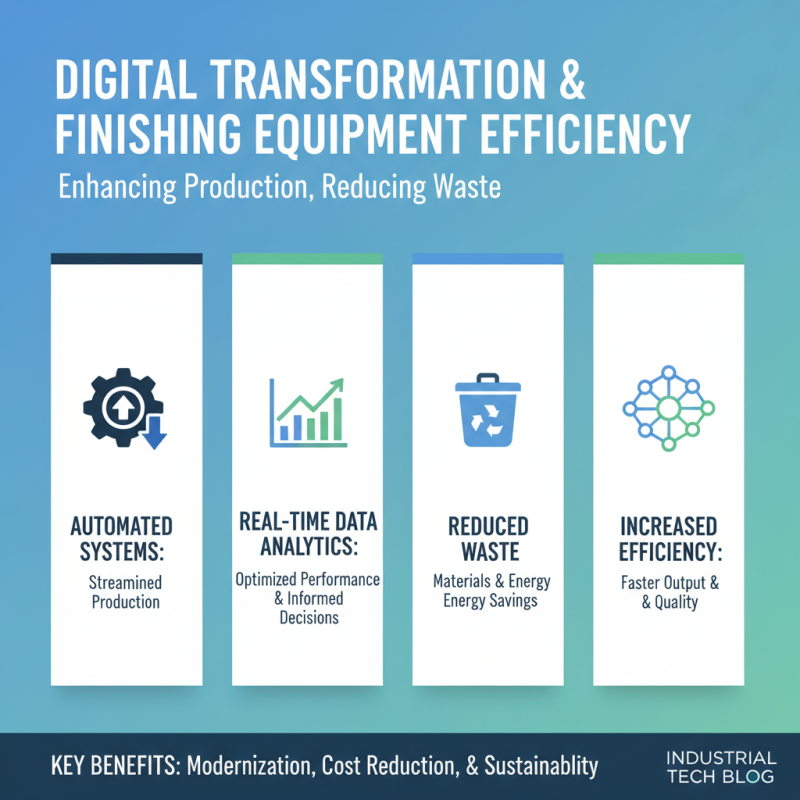
Digital transformation is reshaping the landscape of finishing equipment. Companies are leveraging advanced technologies to enhance efficiency and reduce waste. Automated systems now streamline production processes. Real-time data analytics help make informed decisions, optimizing performance. As more companies adopt these innovations, understanding their impact is crucial.
One notable trend is the integration of IoT devices. These devices collect data from machines, allowing for predictive maintenance. This proactive approach minimizes downtime and prolongs equipment lifespan. However, challenges exist. Not all companies have the resources or expertise to implement these systems effectively.
Tips for success: Focus on training personnel to adapt to new technologies. Invest in software that analyzes data for actionable insights. Additionally, consider pilot projects to assess the benefits before full-scale implementation. Reflect on current processes—are there areas requiring enhancement or support? Embrace the transformation, but remain aware of its complexities.
Market Predictions for Finishing Equipment in Various Industries
The finishing equipment market is experiencing rapid growth across various sectors. According to a recent report by MarketsandMarkets, the global finishing equipment market is projected to reach $12 billion by 2026, driven by increasing demand in industries like automotive and aerospace. In these sectors, automation is key. Companies are investing heavily in robotic finishing solutions that enhance precision and reduce labor costs. This shift underscores a trend towards greater efficiency and the need for technological integration.
Furthermore, sustainability is becoming a focal point. A study by ResearchAndMarkets indicates that eco-friendly finishing solutions are gaining traction, particularly in the manufacturing and construction industries. Water-based coatings and energy-efficient processes are preferred as companies aim to minimize their environmental footprint. However, the adoption of these practices can be slowed by initial costs and gaps in technology. Many firms are still exploring best practices for integrating sustainable processes, showcasing the ongoing challenge of balancing profit with responsibility.
Emerging technologies, including AI and machine learning, are set to transform finishing processes. A report from Grand View Research suggests that these innovations will improve product quality and reduce waste. Yet, even with these advancements, some companies struggle with integration. Misalignment in technology adoption can lead to inefficiencies, highlighting the need for expert guidance in the transition to modernized processes. The industry's journey towards these innovations reflects both opportunities and challenges.