
Plastic Raw Materials are the starting point for products seen every day, from food packaging and appliance housings to pipes and automotive components. Their quality affects processing stability, product performance, and production costs. For buyers, the choice is practical: a resin must suit the application, run reliably on existing equipment, and arrive with clear technical documentation.
The OECD’s Global Plastics Outlook reports that global plastics production reached 460 million tonnes in 2019. It also estimates that 353 million tonnes of plastic waste were generated that year, while only 9% was ultimately recycled. These figures highlight both the scale of the industry and its resource challenges. China is a major manufacturing base, with suppliers serving domestic processors and international markets. Yet company size alone does not establish product suitability. Resin grades, quality controls, delivery capacity, and technical support all deserve close examination.
This overview of the Top 10 Plastic Raw Material Manufacturers in China introduces companies through those buyer-relevant factors. It considers product range, manufacturing capabilities, market presence, and publicly available information about quality and sustainability practices. A buyer might compare a supplier’s specification sheet with a sample run on an extrusion line, then check how promptly its technical team responds. No shortlist can replace that work. Public disclosures vary, and reported capacities may not reflect current output. Use the comparison as a starting point, not a final verdict. Real-world fit still matters.
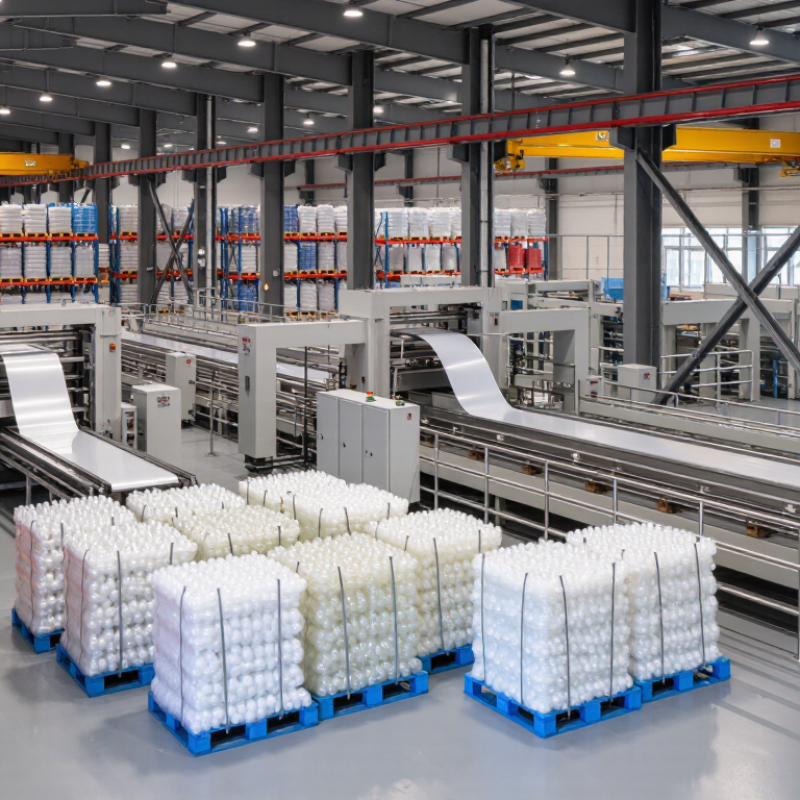
China’s plastic raw material manufacturing industry spans commodity resins, engineering plastics, and selected specialty compounds. Common materials include polyethylene, polypropylene, PVC, PET, and ABS. Producers convert chemical feedstocks into polymer pellets, which manufacturers later melt, mold, extrude, or spin into products. The industry’s scope also includes compounding, where resins are blended with pigments, stabilizers, or reinforcing fillers. Scale matters.
Factories serve packaging, construction, household goods, electronics, automotive components, and textile applications. A packaging film producer may need resin with predictable melt flow, while an injection-molding plant may prioritize impact strength and consistent color. These differences create many grades, even within one polymer family. Technical data sheets help buyers compare density, tensile properties, and processing conditions, but actual performance also depends on equipment and operating settings.
The supply chain includes feedstock suppliers, polymerization plants, compounders, testing laboratories, and logistics providers. Quality checks can cover moisture, contamination, pellet size, and batch-to-batch variation. Regional capacity and access to ports, energy, and downstream factories influence where production develops. Still, industry boundaries are not always neat: some companies make base resin, while others mainly modify or distribute it. That distinction can make manufacturer comparisons less straightforward than a simple product list suggests.
A useful manufacturer shortlist should reflect more than production volume or a polished catalogue. Check whether the supplier can provide recent technical data sheets, consistent resin specifications, and clear batch traceability. Ask for sample material and compare its melt flow, color, and pellet size against your process requirements. For a practical check, record how quickly the supplier answers technical questions. A fast reply is not proof of quality, but vague answers deserve scrutiny. Numbers can mislead.
Compare quality control, delivery reliability, technical support, and total landed cost using the same criteria for every candidate. Ask how the supplier handles out-of-spec batches and whether it can explain test methods and tolerances. Where possible, review production or inspection records, rather than relying only on sales claims. Capacity matters, but so does consistency between orders. A shortlist is never perfect; one missed detail, such as a long replenishment delay, can change the decision. Recheck important claims before committing to larger volumes.
This guide profiles ten types of Chinese plastic raw material manufacturers by their capabilities, not as a fixed ranking. One profile focuses on polyethylene for film and packaging. Another supplies polypropylene grades for injection molding. A third specializes in PVC compounds for pipes and profiles. The fourth develops ABS for appliance housings. The fifth produces engineering plastics for parts exposed to heat or repeated stress.
The remaining profiles cover recycled-content resins, masterbatch, modified plastics, transparent polymers, and custom compounding. Their strengths can differ sharply. A large catalogue does not guarantee a suitable grade. Ask each supplier for current technical data, sample test results, and clear batch-traceability details. Check whether its processing advice matches your equipment and intended application. Details matter. Even experienced buyers can overlook drying requirements or shrinkage differences between grades.
Tips: Request a small trial batch before placing a large order. Compare melt flow, color consistency, and packaging condition. Keep written records; supplier claims should be verified against your own production tests.
China’s leading plastic raw material manufacturers produce a broad range of resins, including polyethylene, polypropylene, PVC, PET, and engineering plastics. Their products serve packaging, construction, automotive, electronics, and household goods. Grades vary in melt flow, strength, clarity, and heat resistance, so buyers should match technical data to the finished part.
Production capabilities differ. Large plants may operate continuous polymerization lines, automated pelletizing systems, and in-house laboratories. Smaller or specialized producers may focus on color, impact resistance, or custom processing needs. Look for consistent lot testing, traceable specifications, and clear capacity information. Details matter.
A packaging converter might choose a film-grade resin for steady extrusion and reliable sealing. A pipe maker may prioritize pressure performance and long-term durability. Automotive suppliers often need materials that balance low weight with impact strength. These examples are practical, not universal; processing conditions can change results.
Comparing ten manufacturers requires more than checking annual output. Ask about grade availability, sample testing, delivery schedules, and quality controls. Published capacity figures can be difficult to compare because reporting methods differ. That deserves scrutiny. A careful trial run may reveal issues that a polished product sheet cannot.
A manufacturer suited to one buyer may not fit another. Compare suppliers against the material’s end use, required volume, and processing method.
For injection molding, ask whether the proposed resin grade matches your melt-flow range and color requirements. For film or extrusion, confirm thickness consistency and relevant performance data. Small details matter.
Request a recent technical data sheet, a sample, and test results for the same grade you plan to order. Check whether the supplier can explain batch variation, quality checks, and how issues are recorded. Ask for evidence. A clear answer is more useful than a polished promise.
Compare minimum order quantities, sample lead times, packaging, and capacity during busy periods. A low quote can look convincing; however, a higher price does not automatically mean better control. Review the full cost, including freight and any testing you require.
Communication is part of the comparison, too. If specifications change, note how quickly the supplier responds and whether revised details appear in writing.
One weakness in this process: samples cannot prove that every future batch will match. Confirm how production lots are checked before placing a larger order.
