China has become a major production base for Polyaluminum Chloride Water Treatment chemicals. Its suppliers serve municipal plants, industrial facilities, and smaller regional systems. This guide introduces ten notable Chinese suppliers and explains why they deserve attention.
The selection considers manufacturing experience, product consistency, technical support, and export performance. It also examines PAC grades, aluminum oxide content, basicity, insoluble matter, and packaging options. These details affect floc formation, sludge volume, and treated-water clarity. A reliable supplier should provide recent test reports, safety data sheets, and batch traceability. Independent laboratory verification remains valuable, especially before a large purchase.
Some manufacturers focus on drinking-water applications. Others specialize in wastewater from textiles, mining, paper, or chemical production. Their strengths are not identical. One company may offer competitive pricing, while another provides stronger formulation support. Delivery capacity also matters when treatment plants operate continuously. A delayed shipment can disturb dosing plans and increase operating pressure.
No ranking is permanently correct. Market conditions change. Product performance can vary between batches, too. This is why buyers should test samples under actual water conditions before signing long-term contracts. Jar testing, pH monitoring, and residual aluminum checks can reveal practical differences that brochures often miss. The following overview aims to support careful supplier comparisons through visible evidence, technical reasoning, and realistic purchasing considerations. It is informative, not a substitute for site-specific engineering advice.
Polyaluminum chloride, or PAC, is an inorganic coagulant used in drinking water and wastewater treatment. It contains aluminum-based polymers that destabilize suspended particles. These particles then join into larger flocs. The flocs settle or float more easily.
PAC often works faster than traditional aluminum salts. It can perform across a wider pH range, but performance still depends on water chemistry. Operators usually dilute PAC before dosing it into a rapid-mixing tank. Gentle mixing follows, allowing flocs to grow without breaking. A jar test should guide the dosage. Clear water is not enough evidence. Residual aluminum, sludge volume, and final pH also require testing. Small changes in turbidity can alter the best dose.
In industrial practice, PAC is supplied as a liquid or pale powder. Liquid products simplify dosing, while powder grades usually reduce transport weight. Storage conditions matter. Moisture can damage powder, and excessive heat may affect liquid stability. When evaluating Chinese suppliers, buyers should request concentration data, basic quality certificates, batch records, and independent test results. Technical support matters too. A supplier should explain dosage adjustments for seasonal temperature and turbidity changes. Some treatment teams rely too heavily on standard dosing tables. That approach can fail during heavy rain or sudden industrial discharge. Process trials remain necessary. They are slower, but often more honest.
| Profile | Typical PAC Form | Typical Al2O3 Content | Typical Basicity | Primary Water-Treatment Application | Common Operating Range | Main Treatment Function |
|---|---|---|---|---|---|---|
| 1 | Drinking-water grade, spray-dried powder | 28–30% | 40–85% | Raw-water clarification and surface-water treatment | Often evaluated at approximately 5–50 mg/L as commercial product, subject to jar testing | Destabilizes colloids and promotes the formation of settleable flocs |
| 2 | Municipal-wastewater grade, powder | 26–30% | 45–85% | Primary clarification and secondary-effluent polishing | Commonly tested at approximately 10–100 mg/L | Removes suspended solids, turbidity and part of the organic load |
| 3 | Industrial-wastewater grade, powder | 24–30% | 40–90% | Textile, chemical, food-processing and general industrial effluent | Dosage varies widely according to color, solids, pH and alkalinity | Coagulates suspended particles, emulsified matter and selected colloids |
| 4 | High-basicity PAC, powder | 28–30% | 70–90% | High-turbidity water and processes where reduced alkalinity consumption is preferred | Usually optimized through jar testing and pH monitoring | Provides rapid coagulation while limiting the reduction of treated-water alkalinity |
| 5 | Low-basicity PAC, powder | 26–30% | 40–60% | Applications requiring strong charge neutralization and fast floc formation | Applied after adjustment of pH and alkalinity conditions | Neutralizes negatively charged particles and assists sedimentation |
| 6 | Liquid PAC solution | 8–18% as Al2O3 | 40–90% | Continuous dosing systems in municipal and industrial plants | Selected according to solution strength, flow rate and target residual turbidity | Enables direct metering without on-site powder dissolution |
| 7 | Low-iron PAC | 28–30% | 40–85% | Drinking-water treatment and processes sensitive to iron coloration | Used where low iron content and clear treated water are important | Coagulates contaminants while minimizing iron-related color and residue |
| 8 | Standard PAC with moderate insoluble matter | 24–28% | 40–85% | General industrial clarification and non-potable water treatment | Typical insoluble matter is often specified at about 1–3% maximum | Offers economical removal of suspended solids and turbidity |
| 9 | High-purity PAC for advanced clarification | 29–31% | 50–90% | High-quality process water, reuse water and advanced pretreatment | Requires control of pH, alkalinity, mixing energy and flocculation time | Produces dense flocs and supports lower residual turbidity |
| 10 | Customized PAC formulation | Specified by contract | Specified by contract | Special wastewater containing color, oil, metals or difficult-to-remove colloids | Defined through laboratory jar tests and pilot-scale trials | Balances aluminum content, basicity, impurities and application-specific performance |
Polyaluminum chloride is a pre-hydrolyzed aluminum-based inorganic coagulant. When added to water, it forms positively charged hydrolysis species and aluminum hydroxide flocs that neutralize particle charges, adsorb contaminants and improve sedimentation or flotation. Actual dosage and product selection depend on raw-water quality, pH, alkalinity, temperature, mixing conditions and regulatory requirements; jar testing should be used before full-scale application.
Evaluating China’s top PAC suppliers requires more than comparing prices. Start with product data. Check aluminum oxide content, basicity, pH range, moisture, and insoluble matter. These values affect floc formation and sludge volume. Ask for recent batch test reports, not outdated templates. A reliable supplier should explain testing methods clearly.
Request samples from several shortlisted suppliers. Test them with your actual raw water, temperature, and dosage conditions. Jar testing often reveals differences hidden by similar specifications. Record settling speed, water clarity, residual aluminum, and sludge texture. Small details matter. A supplier with technical staff should help adjust dosage without making unsupported promises. Their advice should match laboratory evidence and field experience.
Supplier evaluation must also include production and delivery controls. Review factory capacity, raw material sources, packaging quality, storage conditions, and batch traceability. Verify whether quality records can be checked before shipment. Export documents should be accurate and consistent with the product label. Communication speed is useful, but technical accuracy matters more. A polished website proves little. I have seen specifications look impressive while actual samples performed unevenly. That is a warning worth remembering. Suppliers should accept reasonable audits and discuss corrective actions openly. No evaluation is perfect. Water chemistry changes, and one successful trial may not represent every season. Keep a backup source, repeat testing, and judge long-term consistency rather than a single low quotation.
China Top 10 Polyaluminum Chloride Water Treatment Suppliers
China’s top ten polyaluminum chloride suppliers differ by practical strengths, not only production volume. Some excel in high-basicity grades for municipal drinking water treatment. Others focus on wastewater, paper production, or industrial clarification. Their strongest operations usually maintain stable aluminum oxide content, controlled basicity, and low insoluble matter. These details affect settling speed and sludge volume.
Production scale is another advantage. Large facilities can support regular bulk orders, export packaging, and dependable delivery schedules. More specialized suppliers may offer customized powder or liquid formulations. Technical teams can adjust dosage after reviewing turbidity, pH, temperature, and organic load. Useful suppliers provide batch certificates, safety data, and test samples before commercial supply. This is practical evidence, not polished advertising.
Laboratory capability separates reliable suppliers from ordinary traders. A proper supplier should conduct jar tests, measure residual aluminum, and explain storage limits. Some provide application guidance for dosing pumps and mixing systems. Others are stronger in container loading, moisture-resistant bags, or regional export support. No supplier leads every category. A high-capacity factory may offer less flexible customization. A smaller producer may respond faster but face tighter production capacity. That trade-off deserves careful review. Even a clear certificate cannot replace an on-site trial, because local water chemistry often changes the result.
China’s top ten polyaluminum chloride suppliers should be judged by evidence, not catalog claims. Product quality begins with stable aluminum content, basicity, insoluble matter, and pH control. Buyers should request recent batch reports, not only standard specifications. A clear certificate matters.
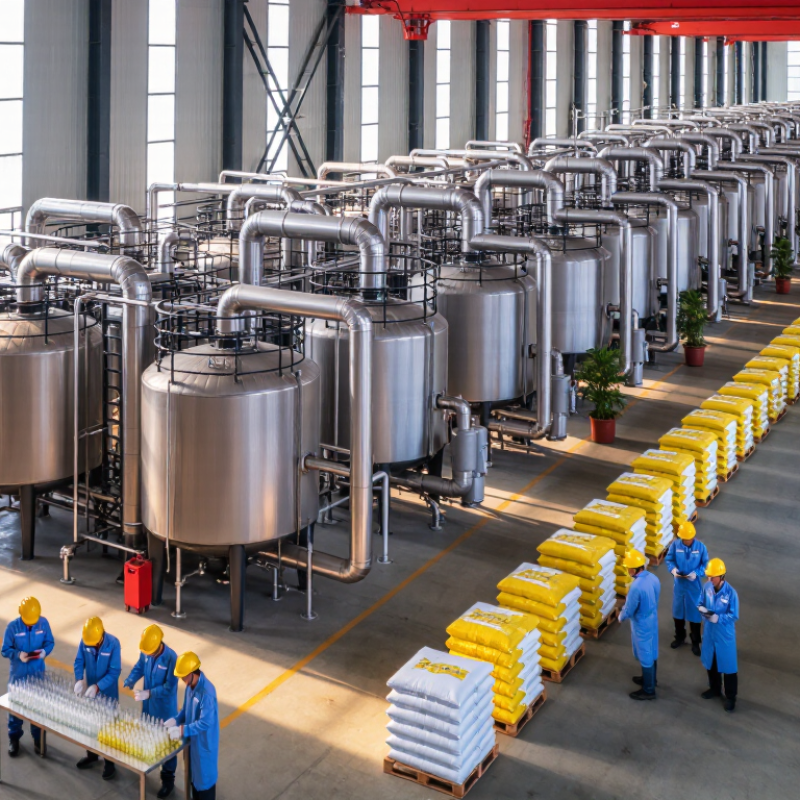
Reliable producers commonly operate dedicated reaction tanks, filtration units, drying towers, and sealed packing lines. These facilities support both liquid and spray-dried PAC grades. Experienced teams can adjust formulations for municipal water, industrial wastewater, and sludge dewatering. Small details matter. Moisture-proof bags and clean loading areas reduce avoidable contamination.
Certifications can strengthen confidence when their scope matches the supplied product. ISO 9001 supports documented quality systems, while ISO 14001 reflects environmental management practices. Some suppliers may hold drinking-water approvals, but buyers must verify issuing bodies, validity dates, and regional acceptance. Production capacity should also be tested against delivery records, storage conditions, and emergency supply plans.
Large output alone proves little.
A practical audit should include plant photographs, laboratory equipment, retention samples, and traceability from raw materials to shipment. Ask whether each batch receives testing for Al2O3, basicity, turbidity removal, and heavy metals. Results should be reproducible. They are not always perfect.
Suppliers serving overseas projects may offer technical support, dosing guidance, and customized packaging. However, technical promises need field data from comparable water sources. One jar-test result cannot represent every season. This is where careful buyers should remain skeptical. Performance depends on dosage, temperature, alkalinity, and mixing conditions.
China Top 10 Polyaluminum Chloride Water Treatment Suppliers
Choosing a PAC supplier requires more than comparing prices or online rankings. The 2023 WHO/UNICEF Joint Monitoring Programme reported that 2.2 billion people lacked safely managed drinking water in 2022. This pressure increases demand for stable treatment chemicals. However, supplier quality can vary between batches. Confirm aluminum oxide content, basicity, insoluble matter, pH, and heavy-metal limits before approval. Ask for recent certificates of analysis, not only a standard product brochure.
Project conditions matter. A supplier should provide jar-test support using your raw water, especially when turbidity changes after heavy rain. Check production capacity, packaging quality, delivery records, and emergency stock. The FAO AQUASTAT database shows agriculture remains responsible for about 70% of global freshwater withdrawals. Industrial users therefore need efficient dosing and reliable wastewater control. A cheaper PAC may create more sludge, higher disposal costs, or unstable filtration. I would not treat a polished certificate as proof. Independent testing is still wise.
Tips: Request three consecutive batch records. Test PAC on actual site water. Confirm applicable drinking-water or wastewater standards. Review technical responses, not just sales promises. Keep a small retained sample for later comparison. Even experienced teams can miss seasonal variation. Recheck performance after changing dosage, source water, or transport conditions.
This chart shows representative technical benchmarks commonly used when comparing PAC products: alumina content (Al₂O₃) and basicity. Liquid PAC commonly contains about 10% Al₂O₃, while solid PAC products typically contain approximately 28–30%. Actual performance depends on raw-water quality, dosage, and jar-test results, so suppliers should be evaluated using current certificates of analysis, compliance documents, and trial samples.
