What is PET Release Film and How to Choose the Best Option?
PET Release Film is an essential material used in various industries, from labeling to electronics. According to a recent report by Smith Market Insights, the global demand for PET Release Film is expected to grow at a CAGR of 5.2% over the next five years. This growth can be attributed to the rising need for high-performance adhesive solutions.
Industry expert Dr. Jane Taylor notes, "Choosing the right PET Release Film is crucial for optimizing production efficiency." Her insights underscore the importance of selecting films that meet specific application requirements. With a multitude of options available, understanding the characteristics of PET Release Film can significantly impact manufacturing processes.
Despite the clear benefits, selecting the best PET Release Film can be challenging. Factors such as surface tension, release force, and thickness play vital roles. Many manufacturers struggle to navigate these variables effectively. An informed choice is necessary to ensure quality and performance.
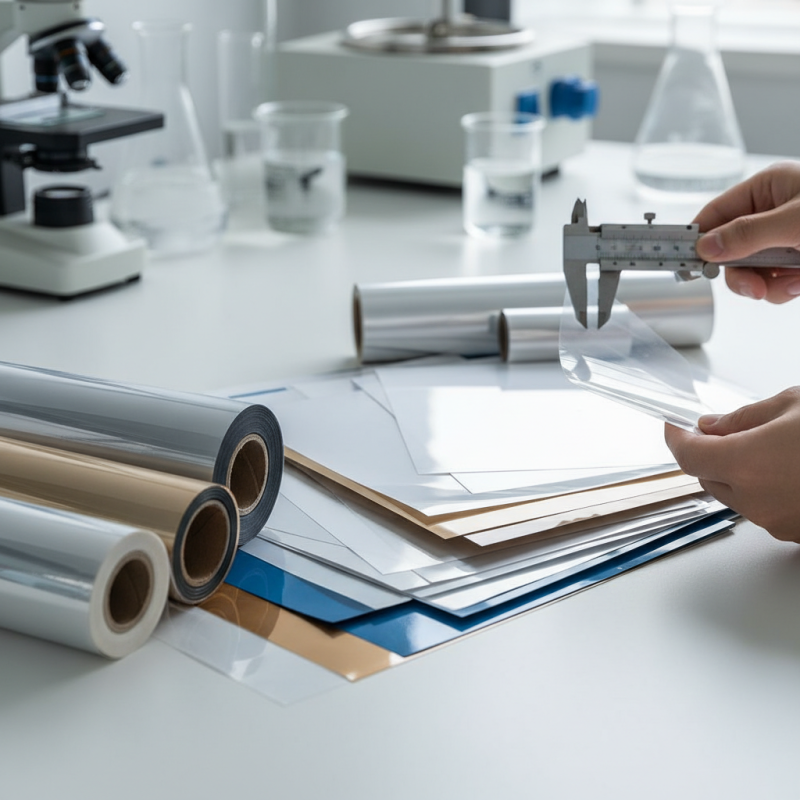
What is PET Release Film and Its Applications?
PET release film plays a key role in various industries, from electronics to food packaging. This thin film provides a smooth surface that allows easy separation from adhesive materials. Its applications are diverse, ranging from labels to liners in the automotive sector. According to a report by Grand View Research, the global PET film market size was valued at USD 18.18 billion in 2022 and is expected to expand significantly.
When choosing PET release film, consider the specific requirements of your application. Different films have different release properties, which affect how easily they detach from surfaces. For instance, a low-release film is suitable for delicate adhesives, while high-release films are better for heavy-duty applications. Understanding your project's demands is vital.
**Tips:** Look for certifications that confirm the film's durability. Investigate how temperature and humidity affect performance. Testing small samples can prevent costly mistakes. Remember, not all PET films are created equal. Ensuring compatibility with your materials is crucial for optimal results.
Applications of PET Release Film
Key Characteristics of PET Release Film to Consider
When evaluating PET release films, several key characteristics play a critical role in selection. One essential aspect is the film's release properties, affecting how easily it can release adhesives or coatings. Industry reports indicate that films with a modified silicone coating deliver superior release performance compared to untreated options. Understanding this factor can improve efficiency in manufacturing processes.
Another important characteristic is the thickness of the film. Thinner films tend to be more flexible, which can enhance conformability around curves or complex shapes. A report from the Flexible Packaging Association suggests that films between 30 and 100 microns are optimal for most applications. However, thinner films may compromise durability, leading to higher waste rates—something manufacturers must consider.
Finally, the surface energy of the PET film should not be overlooked. Films with lower surface energy promote better release properties but may struggle with adhesion issues in high-performance applications. It's a delicate balance that requires careful analysis of application requirements. Many industries still face challenges in aligning their needs with the available options. Conducting thorough testing is crucial for ensuring compatibility and effectiveness in real-world scenarios.
Factors Influencing the Selection of PET Release Film
When selecting PET release film, several factors play a significant role. The film's surface properties affect its performance. Smooth surfaces enhance the release process, while textured options can provide better grip for adhesives. Consider the film’s thickness too. Thinner films may be more flexible, but thicker options offer durability.
Tips: Evaluate your specific application needs before purchasing. Analyze how the film's thickness interacts with your materials. A mismatch can lead to unsatisfactory adhesion or release.
Chemical resistance is another key factor. Some applications involve exposure to solvents or oils. Ensure the chosen film resists these substances. This will prevent degradation and maintain its functionality.
Tips: Conduct a preliminary test with samples. This will help identify compatibility issues that may arise in actual use.
Finally, the environmental conditions where the film will be used matter. High humidity or temperature fluctuations can affect performance. Make sure the selected film can withstand these conditions for optimal results.
Comparing Different Types of PET Release Film
When evaluating different types of PET release films, considerations like adhesion properties and thermal stability play vital roles. According to a report by Smithers Pira, the global market for release films is projected to reach over $1 billion by 2025. This growth suggests increasing applications across diverse sectors, including electronics and automotive.
Several PET release films vary widely in thickness and surface treatment. Films range from 0.025mm to 0.075mm, designed for specific applications. Thicker films typically provide better dimensional stability but may impact flexibility and user-friendliness. Moreover, surface energy influences how easily the film releases from adhesives or coatings. Higher surface energy films may perform better in high-temperature applications.
Testing different films under controlled conditions is essential. Discrepancies in performance may arise from variations in production processes. Anomalies in supply chains can also affect film properties even within the same batch. Careful consideration of these factors can lead to a more informed decision when choosing the best PET release film for specific needs.
Best Practices for Using PET Release Film in Various Industries
PET release film is widely used in various industries, including packaging, textiles, and electronics. Choosing the right film can enhance efficiency and product quality. But how do you ensure you are using PET release film effectively?
When utilizing PET release film, consider the specific application. Different industries have diverse requirements. In packaging, the film should offer excellent transparency and release properties. For textiles, the film must withstand heat and pressure during the application process. Always conduct a test run to avoid issues.
Tip: Regularly inspect the film for defects before use. Any small imperfection can lead to significant problems during production.
Understanding the environmental conditions is also crucial. The film should perform well in varying
temperatures and humidity levels. This is especially true in manufacturing settings. A film that doesn't maintain its properties can affect product output.
Tip: Always store the release film in a controlled environment. This prevents degradation and ensures optimal performance.
Overall, having a clear understanding of your application requirements and conducting proper tests can lead to better results with PET release films.