Top Manufacturing Equipment Tips for Increased Efficiency?
In today's competitive landscape, optimizing manufacturing equipment is essential for success. Efficient machinery can significantly enhance productivity and reduce waste. However, many companies overlook simple adjustments that could lead to remarkable improvements.
Investing in the right tools isn't enough. Regular maintenance is often neglected, leading to downtime and costly repairs. Operators need training to maximize the capabilities of their equipment. Yet, many workers remain uninformed about optimal usage. Communication across departments can break down silos and foster collaboration.
Innovation plays a key role in efficiency. Integrating automation can streamline processes. Yet, the comfort of traditional methods can hinder progress. Companies must remain open to change while balancing efficiency with employee morale. Consideration of human factors is crucial but often underestimated.
Key Considerations for Selecting Manufacturing Equipment Effectively
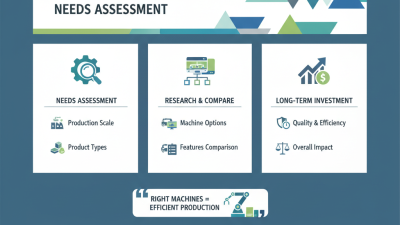
When selecting manufacturing equipment, several key factors come into play. Efficiency is critical; manufacturers today report that optimized equipment can improve productivity by up to 30%. This significant boost helps organizations meet growing demands without additional labor costs. Evaluating production rates, energy consumption, and maintenance needs is vital. A poorly selected machine can lead to downtime and increased operational expenses.
Another essential consideration is adaptability. The ability to switch between products quickly is often necessary. A study indicated that companies with versatile equipment could reduce lead times by as much as 25%. This flexibility is beneficial in fast-paced markets. However, not all equipment offers this feature. Conducting thorough research is indispensable.
Additionally, don't overlook the importance of training. Operators need to be skilled in using new equipment efficiently. Surprisingly, lack of training can hinder the benefits that new tools provide. Data shows that 60% of equipment failures stem from operator errors. Consider a training program integral to your equipment acquisition process. Addressing these factors will lay the groundwork for improved efficiency and overall success in manufacturing.
Optimizing Equipment Layout for Enhanced Workflow and Productivity
Optimizing equipment layout is essential for enhancing workflow and productivity in manufacturing. An effective layout minimizes wasted movement and reduces unnecessary handling. When machinery is arranged in a logical sequence, it streamlines operations. Employees spend less time moving between tasks and more time focusing on their work. For instance, placing cutting machines near assembly lines can significantly improve turnaround times.
However, creating the perfect layout can be challenging. Sometimes, what seems efficient on paper may not translate well to actual practice. Workers might find certain setups awkward. Regularly gathering feedback from staff can help identify areas for improvement. Equipment placement should be flexible. Adjustments may be necessary as workflows change over time.
Also, consider the flow of materials and information. This process should be continuous and intuitive. An ideal layout allows for easy access to tools and supplies. It encourages communication among team members. Clutter can disrupt this flow, leading to decreased efficiency. A periodic reassessment of the workspace can help identify bottlenecks and keep processes smooth. Making these changes can lead to increased productivity and a better working environment.
Top Manufacturing Equipment Tips for Increased Efficiency
Implementing Preventive Maintenance for Reduced Downtime
Implementing preventive maintenance is key to reducing downtime and enhancing productivity. Regular checks on manufacturing equipment can catch issues early. For example, a worn-out belt can lead to unexpected halts. These small problems can escalate quickly. Scheduling consistent inspections prevents larger, costlier repairs later.
Tips for effective preventive maintenance include creating a checklist for daily equipment checks. Record data and track anomalies. Consistency is crucial. Consider training staff on basic maintenance tasks. Empowering the team creates a proactive mindset. Always keep spare parts on hand. Delays in orders can extend downtime unnecessarily.
Don’t forget to review maintenance history regularly. Analyzing past repairs can highlight recurring issues. This allows for targeted improvements. Mistakes happen; learn from them. If a machine frequently breaks down, it might need an overhaul. Avoiding the small stuff may lead to bigger problems down the line. Prioritize preventive maintenance, and the results will show in efficiency.
Leveraging Automation and Technology for Increased Efficiency
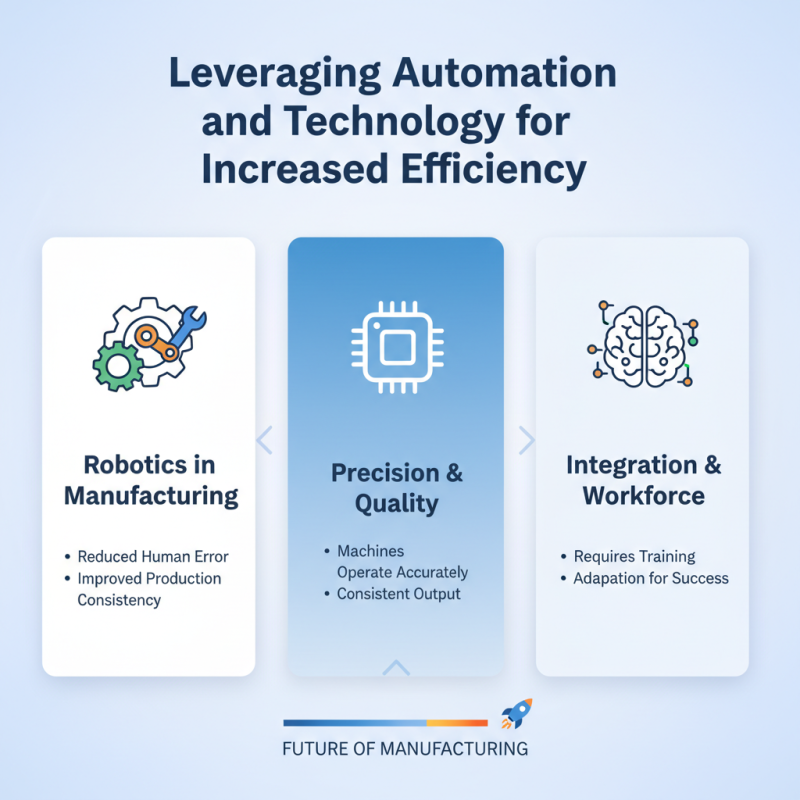
In today's fast-paced manufacturing world, automation plays a vital role. Implementing robotics can significantly reduce human error. Machines operate with precision, improving consistency in production. However, integrating these systems is not a simple task. It requires training and adaptation from the workforce.
Technology can also enhance efficiency. For example, using data analytics helps identify bottlenecks. Patterns can be spotted that might otherwise go unnoticed. Yet, the reliance on data has its risks. Misinterpretation can lead to misguided decisions. Ensuring accurate data collection is essential and often challenging.
Investing in smart technology, like IoT devices, boosts communication between machines. They can report issues in real-time, allowing for prompt fixes. This reduces downtime but does increase the complexity of operations. Maintenance schedules must be revisited and updated as technology evolves. Balancing these advancements with practical workflows can be tough but necessary for success.
Training Staff on Equipment Usage for Maximized Output
Training staff on equipment usage is vital for maximizing output. Many employees struggle with complex machines. A clear understanding of equipment can significantly enhance production rates. Regular training sessions can bridge this gap. Visual aids during training can help employees grasp concepts better. Hands-on practice is crucial. It allows workers to familiarize themselves with the machinery.
However, not all training sessions hit the mark. Sometimes, complex terminology confuses rather than assists. Trainers must simplify their language. Engaging employees in discussions can reveal their specific challenges. Feedback from staff after training is essential. It highlights areas needing improvement. Sometimes, equipment manuals are too dense. Condensing information into bite-sized pieces can help.
Continuous training is necessary, given evolving technology. What worked last year may not suffice now. Staff should be encouraged to ask questions. Addressing doubts fosters a supportive environment. At times, revisiting basic operations can boost confidence. Each employee has unique learning styles. Recognizing these can lead to better outcomes. Adapting training methods is a work in progress. It requires constant evaluation and adjustment.
Top Manufacturing Equipment Tips for Increased Efficiency - Training Staff on Equipment Usage for Maximized Output
| Training Topic |
Description |
Duration (Hours) |
Expected Outcome |
| Basic Equipment Operation |
Introduction to the equipment and basic operational procedures. |
2 |
Increased comfort and safety while handling equipment. |
| Preventative Maintenance |
Training on how to conduct regular maintenance and troubleshoot minor issues. |
3 |
Reduced equipment downtime and extended lifespan. |
| Safety Protocols |
Understanding workplace safety and emergency procedures. |
1.5 |
Enhanced safety awareness and reduced accident rates. |
| Advanced Equipment Techniques |
In-depth training on advanced operational techniques and optimization. |
4 |
Higher production output and efficiency improvements. |
| Operator Accountability |
Training on the importance of individual responsibility in equipment handling. |
1 |
Improved compliance with operational standards. |