What is HPMC and its Top 10 Applications in Industries?
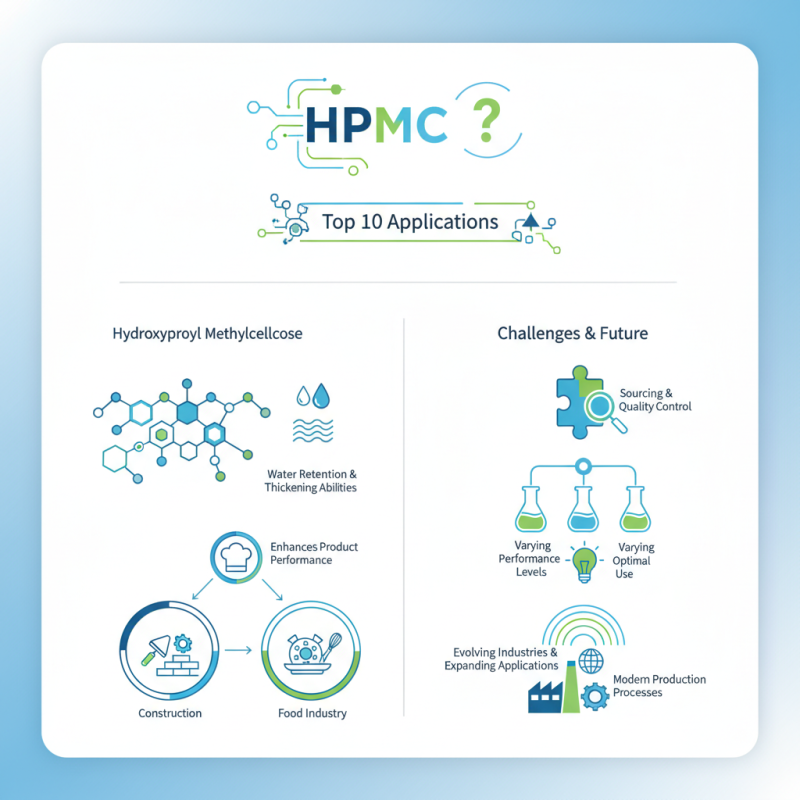
Hydroxypropyl Methylcellulose, commonly known as HPMC, is a versatile cellulose derivative. It finds wide usage across various industries. This compound offers unique properties such as excellent water retention and thickening abilities. Many industries leverage these traits to enhance product performance.
In the construction sector, HPMC serves as a crucial additive in cement and mortar. It improves workability and prolongs the open time. In the food industry, HPMC acts as a stabilizer and emulsifier. It ensures uniformity and enhances texture in various food products.
Despite its benefits, HPMC presents challenges. For instance, the sourcing and quality control of HPMC can be complex. Different grades may offer varying performance levels. Understanding these nuances is essential for optimal use. As industries evolve, the applications of HPMC will likely expand, reflecting its importance in modern production processes.
What is HPMC?
Hydroxypropyl Methylcellulose (HPMC) is a versatile cellulose derivative. It is derived from natural cellulose, modified to enhance its properties. HPMC is water-soluble, which makes it popular in many industries. It has a unique ability to form gels and act as a thickening agent. This substance is not only a binder but also a film-forming agent. Its ability to control viscosity is significant.
According to a market report by Grand View Research, the global HPMC market size reached approximately USD 800 million in 2022. It is expected to grow at a CAGR of about 5% from 2023 to 2030. The construction industry is one of the largest consumers of HPMC, primarily in tile adhesives and cement applications. In pharmaceuticals, HPMC is favored as a matrix-forming agent for controlled drug release. The food industry also utilizes HPMC as a thickener and emulsifier.
Despite its many applications, HPMC has challenges. Its cost can vary significantly based on purity and viscosity grade. Additionally, the sourcing of raw cellulose is not always sustainable. This raises concerns about environmental impact. More research is essential to mitigate these issues and improve the substance’s eco-friendliness.
Chemical Composition and Properties of HPMC
Hydroxypropyl methylcellulose (HPMC) is a semi-synthetic polymer. Its unique chemical structure includes hydroxypropyl and methyl groups. This composition provides HPMC with exceptional properties. It is soluble in cold water but not in hot water, which can be perplexing. The viscosity of HPMC solutions can vary widely based on concentration and molecular weight. The diverse functionalities make it valuable across multiple industries.
In construction, HPMC is used as a thickener in cement and gypsum products. It enhances workability and improves adhesion. In the food industry, HPMC serves as a food additive, acting as a stabilizer and emulsifier. Its gelling properties can help food manufacturers achieve desired textures. Interestingly, in pharmaceuticals, HPMC is found in tablet formulations as a binder and controlled-release agent. This multifaceted polymer has roles that sometimes overlap, causing confusion about its specific uses.
Environmentally, HPMC is considered biodegradable, but its long-term impact needs further examination. It's crucial to understand how it interacts with other materials in applications. Misunderstandings can arise about its behavior in different environments. This raises the question: Are we fully aware of all the implications of using HPMC? As industries innovate, we should reflect on these aspects continually.
Top 10 Industrial Applications of HPMC
Hydroxypropyl methylcellulose (HPMC) is a versatile polymer. Its properties make it suitable for various industries. This compounds hydrophilic nature allows it to form gels and provide viscosity. This is essential in many applications.
In the construction industry, HPMC is widely used in mortars and adhesives. It improves workability and water retention. This leads to better bonding and durability. In the food industry, it serves as a thickener and stabilizer. Its ability to create a smooth texture enhances the overall product appeal. In pharmaceuticals, HPMC functions as a binder and controlled-release agent in tablets.
Another significant application is in cosmetics. HPMC helps create a creamy, thick texture in lotions and creams. It is also used in personal care products for its emulsifying properties. In the paint and coating sector, it improves consistency and reduces dripping. However, it’s crucial to consider the sourcing and impact. Balancing performance with sustainability should always be a part of the conversation.
Top 10 Industrial Applications of HPMC
Benefits and Advantages of Using HPMC in Various Industries
HPMC, or Hydroxypropyl Methylcellulose, is a versatile compound used in various industries. Its unique properties make it a popular choice for many applications. It acts as a thickener, binder, and film-forming agent. These properties offer numerous benefits across different sectors.
In construction, HPMC enhances the workability of mortar and plaster mixtures. It improves water retention, ensuring better adhesion and reduced cracking. In the pharmaceutical field, it is valued for its stability and safety. It assists in creating controlled-release formulations, allowing medications to be released gradually. The food industry also utilizes HPMC as a food additive, enhancing texture and shelf life.
While HPMC has many advantages, there are challenges to consider. Sourcing high-quality HPMC can be inconsistent. Additionally, not all formulations achieve the desired results. These nuances remind users to carefully evaluate their specific needs. Despite these setbacks, the benefits of HPMC often outweigh the challenges. It remains a crucial component in numerous industries.
Future Trends and Innovations in HPMC Applications
Hydroxypropyl methylcellulose (HPMC) is a versatile polymer used in many industries. Its applications continue to evolve. Future trends indicate a growing demand for HPMC in construction, pharmaceuticals, and food industries. According to recent industry reports, the global HPMC market is projected to reach $1.5 billion by 2026, driven by innovations in production and application methods.
In construction, biodegradable additives are becoming more important. HPMC enhances workability and water retention in cement-based materials. This aligns with the green building movement. In the pharmaceutical sector, HPMC serves as a drug-release agent. Recent studies show a 20% increase in HPMC use for controlled-release formulations. Its versatility offers significant benefits but requires careful formulation to avoid inconsistent results.
In the food industry, HPMC acts as a thickener and stabilizer. Consumers are seeking cleaner labels, pushing manufacturers to explore natural alternatives. A report suggests a shift toward plant-derived HPMC sources. This transition is not without challenges. Sourcing and sustainability concerns must be addressed to meet the evolving consumer expectations.