
How Do You Choose the Right Storage Rack Upright?
Choosing the right Storage Rack Upright starts with the loads your warehouse actually handles, not the tallest frame in a catalogue. Record each pallet’s weight and dimensions, then note how beams, forklifts, and floor space affect the rack layout. A compact upright may suit light, steady inventory, while heavier or taller loads require a system rated for those conditions. Small details matter.
Check the upright’s profile, steel thickness, connection slots, and compatibility with the beams you plan to use. Two frames can look similar yet differ in capacity or fit. Compare manufacturer specifications rather than relying on appearance. Confirm that stated capacities match the complete rack configuration, including beam levels and spacing. Fit comes first.
The surrounding conditions count, too. Measure clear aisle widths, ceiling height, sprinkler clearance, and the condition of the floor. In a busy facility, forklift impacts and frequent reconfiguration can influence the protection and inspection practices you need. Ratings are not a substitute for careful installation. Have a qualified rack professional review unusual layouts, damaged components, or loads that exceed published guidance.
This guide will explain how to evaluate capacity, dimensions, compatibility, and durability before selecting an upright. It will also point out common selection mistakes, such as mixing components without approval or overlooking uneven loading. There is no universal best choice. The right decision depends on your products, equipment, and daily workflow—and a second measurement is often worthwhile.
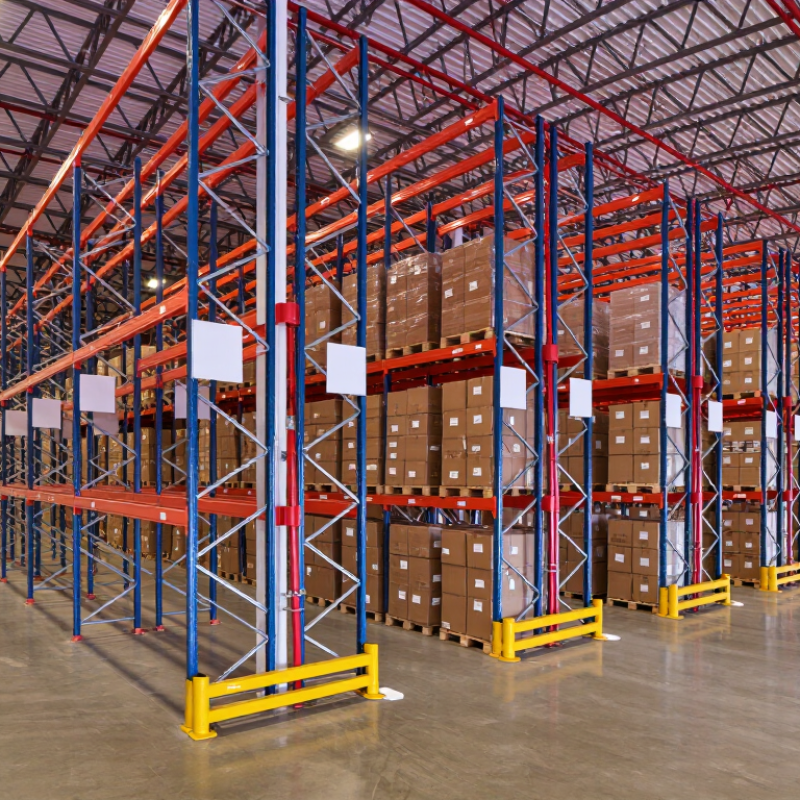
Understand the Role of Storage Rack Uprights
A storage rack upright is the vertical column that supports beams and transfers stored load toward the floor. Uprights work in pairs, joined by horizontal and diagonal bracing to form a stable frame. The frame must resist both the weight of the goods and forces created during loading. Small details matter.
Upright height, depth, steel thickness, and hole spacing affect which beams can connect safely. Check the rack’s load information for the exact frame and beam configuration; similar-looking parts may have different capacities. Floor condition and anchoring also matter, especially where concrete is cracked or uneven. Do not treat an upright’s appearance as proof of its rating.
During a warehouse walk-through, look for bent columns, loose anchors, damaged bracing, and impact marks near aisle level. These can signal that a frame needs inspection before continued use. It is easy to focus on beam capacity and overlook the upright beneath it. I might, too. Leave enough clearance for forklifts, and keep labels visible so operators can identify the approved limits. If a layout changes, have a qualified rack professional assess the complete structure rather than replacing one upright by guesswork.
| Selection Factor | Dimension or Data to Check | Why It Matters | Practical Guidance |
|---|---|---|---|
| Required load capacity | Maximum load per beam level, number of loaded levels, and total bay load | Uprights carry the loads transferred through the beams. Capacity depends on the complete rack configuration, not just the upright profile. | Use the rack supplier’s load tables for the exact frame height, beam elevations, beam lengths, and loading conditions. Do not estimate capacity from appearance alone. |
| Upright height | Floor-to-top-of-frame height; record in millimetres or inches | Frame height affects storage layout, available clearance, and the rack’s structural capacity. | Measure the usable building height and account for sprinklers, lighting, roof structure, and required operating clearances before choosing a frame. |
| Frame depth | Front-to-back frame dimension, matched to the load and beam arrangement | The frame depth supports the load across the rack and must suit the pallet or stored product dimensions. | Check the actual pallet or load footprint, including overhang. Confirm the required frame depth and any permitted overhang with the rack designer. |
| Upright profile and steel thickness | Profile shape, face dimensions, steel thickness, and manufacturer’s section data | These properties influence the upright’s strength and stiffness, but a larger-looking profile does not by itself establish a safe load rating. | Compare certified specifications for the complete upright frame. Avoid selecting a replacement based only on matching external dimensions. |
| Beam connection compatibility | Connector type, slot pattern, connection dimensions, and locking mechanism | Beam connectors must engage correctly with the upright. Incompatible connections can prevent secure installation or alter the rack configuration. | Verify that beams and frames are designed to work together. Do not assume that visually similar slots or connectors are interchangeable. |
| Beam elevations and spacing | Number of beam levels, vertical spacing, and the lowest and highest beam positions | Upright capacity can change with beam spacing and the positions of the beam connections. | Provide the proposed beam layout when requesting a capacity check. Changes to beam heights may require a new engineering review. |
| Floor and anchoring conditions | Floor condition, slab information, baseplate dimensions, and anchor requirements | Rack forces pass through the baseplates and anchors into the floor. A suitable upright cannot compensate for an inadequate floor or anchoring arrangement. | Confirm floor suitability and anchoring details with a qualified rack designer or structural professional, especially for new or heavily loaded installations. |
| Impact and damage exposure | Forklift traffic, aisle width, protective barriers, and visible column damage | Impact damage can reduce an upright’s capacity and may make a frame unsafe even when damage appears limited. | Use appropriate column protection where needed, inspect regularly, and remove damaged components from service until they have been assessed and repaired or replaced. |
| Replacement and system identification | Frame dimensions, connection details, load rating, and available system documentation | Upright frames that look similar may have different structural properties or connection designs. | Identify the existing rack system and verify replacement compatibility and capacity before installation. Keep configuration and inspection records available. |