Top Electric Motors for Your Project?
Choosing the right motor can shape an entire project, from its noise level to how reliably it moves a load. An Electric Motor Project should start with the job the motor must perform, not with a product’s advertised power rating. A small conveyor, a camera slider, and a water pump need different combinations of torque, speed, and control. The best choice is the one that fits the real operating conditions. Sometimes, that means choosing a less powerful motor.
This guide compares common options, including brushed and brushless DC motors, AC induction motors, steppers, and servos. It explains where each type can work well and what trade-offs to check before buying. Look beyond peak output: supply voltage, startup current, duty cycle, mounting space, cooling, and controller compatibility can all affect performance. Small details matter. A motor that runs briefly on a workbench may overheat during hours of continuous use.
Before settling on a model, estimate the load and required speed, then review the manufacturer’s datasheet. Allow room for starting torque and unexpected friction, but avoid oversizing without a reason. Bigger is not always better. Product specifications may also leave practical questions unanswered, so testing under realistic conditions is useful. No single motor suits every build. The sections ahead offer a practical way to narrow the options and make a more informed choice.
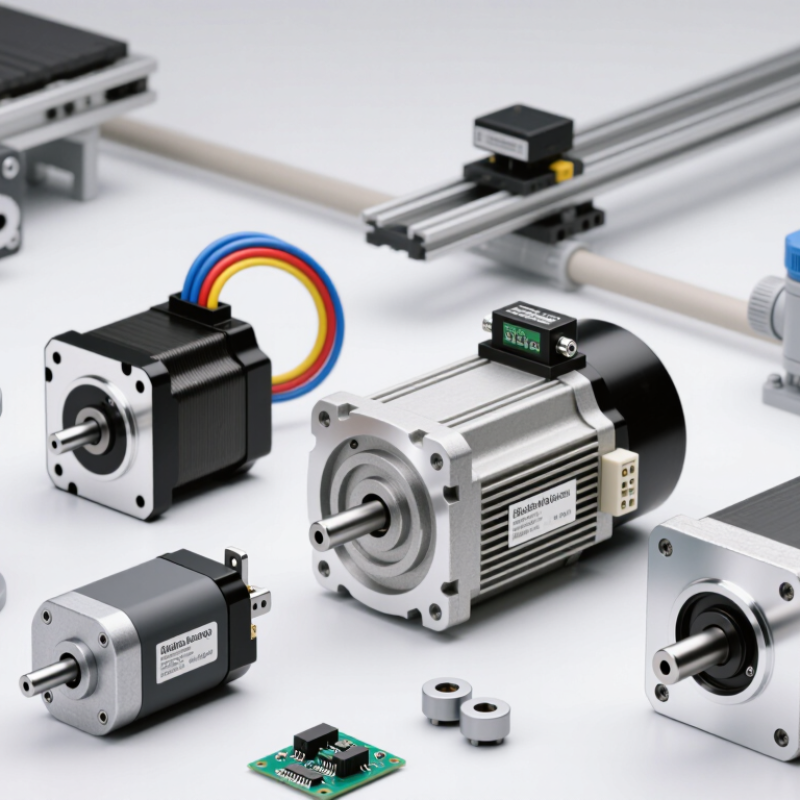
Electric Motor Fundamentals: How Power, Torque, Speed, and Duty Cycle Fit Together
Top Electric Motors for Your Project?
Choosing an electric motor starts with the load, not the nameplate’s biggest number. Power describes how quickly work gets done; torque is the turning force at the shaft. For a rotating motor, power depends on both torque and speed. A conveyor moving slowly with a heavy load may need high torque, while a small fan usually needs steady speed and modest torque.
Check the required starting torque, too. A motor that runs smoothly unloaded can stall when a loaded belt starts. Details matter.
Duty cycle tells you how long and how often the motor operates. Continuous use creates a different heat burden than brief, spaced starts. Match the motor’s rated duty and cooling conditions to the actual workload, including stops, starts, and ambient temperature.
The U.S. Department of Energy’s 2014 motor-systems sourcebook reports that motor systems use about 68% of electricity consumed by U.S. manufacturing.
The International Energy Agency’s 2011 analysis estimated motor-driven systems account for roughly 46% of global electricity use.
These figures explain why proper sizing matters. Oversizing is not automatically safer; it can mean poor efficiency under light loads. I’ve seen a paper selection look perfect, then miss the real starting load. Check the application data, and leave room to question assumptions.
Compare AC, DC, Servo, and Stepper Motors by Control and Load Requirements
Choosing a motor starts with the motion it must deliver. AC motors are practical for fans, pumps, and conveyors that run steadily. Add a variable-frequency drive when speed needs adjustment, but check cooling at low speeds. A slow, heavily loaded motor may overheat without suitable ventilation.
DC motors offer straightforward speed control and strong starting torque. Brushed types need periodic brush inspection; brushless types require compatible electronic control. Servo motors use feedback to correct position or speed as conditions change. They suit robotic joints or packaging axes that repeatedly stop at precise points. Their controller setup takes time. Stepper motors move in fixed increments and can hold position without feedback in many applications. They work well for light-duty positioning, such as moving a small camera carriage. Under sudden load, though, a stepper can miss steps without warning.
Match the motor to the real load, not just its peak rating. A conveyor may start with a full belt, while a positioning stage may accelerate and stop every few seconds. Record required speed, torque, duty cycle, and stopping accuracy before comparing options. Inertia matters, too: a large pulley can make a small motor struggle during acceleration. I would still leave room for uncertainty, because friction and load often change after installation. Check the motor’s torque curve and thermal limits against the machine’s actual operating cycle.
Top Electric Motors for Your Project?
Compare AC, DC, servo, and stepper motors by typical control and load requirements.
Relative suitability scores range from 1 (limited) to 5 (strong), not measured performance ratings. AC motors are commonly used for continuous loads, often with a variable-frequency drive; DC motors offer straightforward speed control; servos suit demanding motion control; and steppers provide practical positioning, especially at lower speeds. Actual performance depends on the motor, drive, and application.
Match Motor Type to Starting Torque, Operating Load, and Duty Rating
Choosing an electric motor starts with the load, not the catalog headline. A conveyor may need steady torque through long shifts, while a loaded mixer can resist hard at startup. Record the required starting torque, running speed, and how often the motor starts and stops. Horsepower alone misses important details.
For a constant, rugged load, an AC induction motor is often a practical fit. Check its starting characteristics; not every model handles a heavy start equally well. A single-phase capacitor-start motor can suit equipment with stronger startup demands. Where speed changes frequently, a variable-speed drive with a compatible motor may help. DC motors can offer responsive speed control, while servo motors suit precise positioning. They may add cost and setup complexity that a simple pump does not need.
Duty rating matters just as much. S1 generally indicates continuous operation, while intermittent ratings account for rest periods. A motor rated for short cycles may overheat if it runs all afternoon. Compare the nameplate rating with the real operating pattern, including starts per hour, ambient heat, and load variation. It is tempting to choose by horsepower alone. That is often a mistake. I would also leave some margin, but not so much that the motor is poorly matched and wastes energy. Check the driven machine’s inertia and ask a qualified supplier to verify the selection when startup torque is uncertain.
Compare Efficiency Ratings: IEC 60034-30-1 Defines Classes IE1 Through IE4
Top Electric Motors for Your Project?
IEC 60034-30-1 defines efficiency classes for covered AC motors, from IE1 through IE4. IE1 is the lowest class in this range; IE2, IE3, and IE4 set progressively higher efficiency levels. The exact threshold depends on factors such as rated output and pole count. Compare motors with matching specifications, not just matching class labels.
Numbers matter.
A datasheet’s rated efficiency describes performance at a particular operating point, not every moment of the motor’s working life.
Consider a motor driving a pump for long shifts. Even a modest efficiency difference can affect electricity use over thousands of operating hours.
Estimate input power by dividing the required shaft power by efficiency as a decimal. For example, a 7.5 kW shaft load at 90% efficiency needs about 8.33 kW of input power.
A tidy chart can still mislead: real loads vary, and a motor may spend much of its time below its rated output. Check its duty cycle, typical load, and operating hours before choosing a higher class. That takes work. Purchase cost, starting needs, and space constraints may also shape the decision.
Assess Energy Use: Motor Systems Consume About 45% of Global Electricity
Electric motors quietly move water, air, and materials through homes, farms, and factories. A widely cited estimate says motor-driven systems use about 45% of global electricity. That is substantial. The figure generally includes equipment such as pumps, fans, and compressors, not just the motor itself. A pump running for thousands of hours can consume far more energy over its life than its purchase price suggests. Small losses add up. Still, the estimate depends on how systems and electricity use are counted, so it should be treated as a guide, not a precise reading of every facility.
For your project, match the motor to the actual load and operating pattern. Check its rated power, efficiency, expected run time, and starting requirements. A lightly loaded motor may waste energy, while an undersized one can overheat or struggle to start. Variable-speed control can help when demand changes, as with a ventilation fan serving rooms with different occupancy. But it is not automatically the best choice; controls also add cost and need correct setup. I would compare expected energy use across realistic operating hours, then verify assumptions with measurements where possible. The neatest spreadsheet may miss a stuck valve, a leaking pipe, or a motor left running after a shift.