
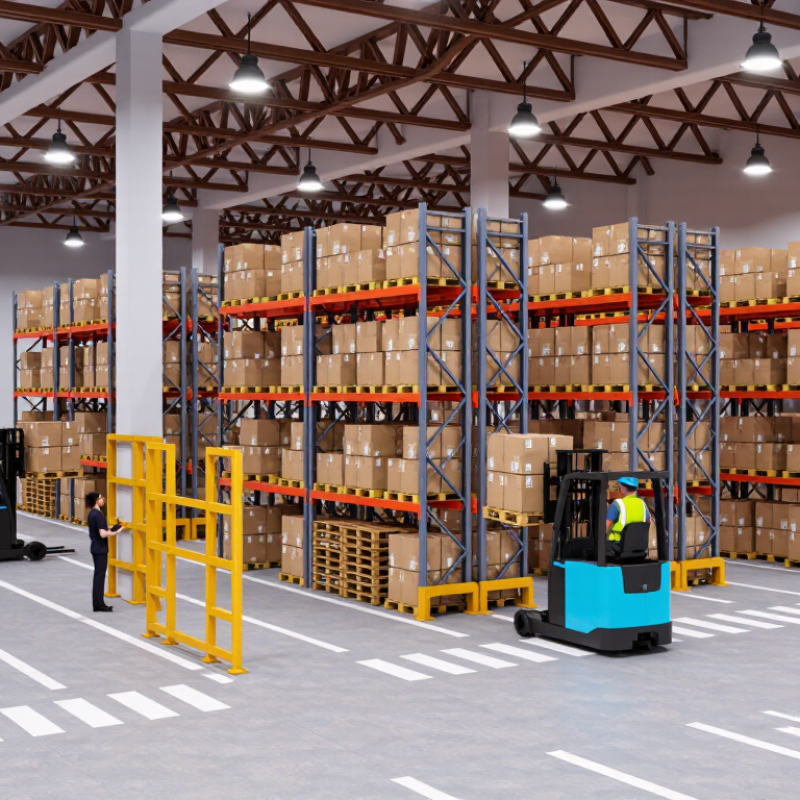
How to Choose Pallet Rack for Your Warehouse in 2026

Choosing a Pallet Rack system in 2026 starts with the work happening on your warehouse floor. A rack that looks efficient on a plan may create awkward turns for a forklift. A higher bay may add capacity, yet leave too little clearance for sprinklers or handling equipment. The right choice depends on the loads, building, equipment, and people using the space every day.

An illustrative expert perspective from warehouse-design consultant Maya Chen: “Choose the rack around the load, the workflow, and the people—not the other way around.” This is a practical principle, not a verified quotation from a real, cited expert. Before comparing systems, record pallet dimensions, loaded weights, beam heights, aisle widths, and inventory turnover. Measure the floor, too. A column or uneven slab can change a layout quickly.

This guide examines selective, drive-in, push-back, and other common rack options, then considers capacity, access, safety, and future flexibility. Small details matter. A few inches can affect clearance; a rushed assumption can become an expensive constraint. Be cautious with impressive capacity claims unless the configuration and load conditions are clear. And one point deserves reflection: the densest layout is not automatically the best layout. Your picking pattern may change, or your loads may not be as uniform as expected. A reliable Pallet Rack decision makes those uncertainties visible before installation—not after the first busy shift.

How to Choose Pallet Rack for Your Warehouse in 2026

Assess Your Inventory, Pallet Types, and Storage Goals

How to Choose Pallet Rack for Your Warehouse in 2026

Assess Your Inventory, Pallet Types, and Storage Goals

Start with a current inventory list, not just a total pallet count. Record each load’s weight, dimensions, overhang, and pallet style. Measure the tallest unit load, including wrap or uneven cartons. Small differences matter. Beam length must suit pallet width and placement clearance. A qualified rack or building professional should verify load capacities and floor conditions before installation.

Next, match the rack layout to your storage goals. Selective rack gives direct access to each pallet, but uses more aisle space. Higher-density options can store more pallets in less floor area, though access may be slower. Consider order-picking patterns, future inventory changes, forklift turning space, and sprinkler or lighting clearances. Sketching real travel paths can reveal problems a simple capacity estimate misses. I have seen layouts look efficient on paper, then feel cramped during busy shifts.

Tips: Measure several pallets, not just one. Check damaged or unusually shaped loads, too. Leave room for safe handling, and revisit your assumptions when products or equipment change.

Measure Warehouse Space, Aisles, and Material-Handling Equipment

Measure the warehouse before choosing a rack layout. Record the usable floor area, ceiling height, columns, door swings, loading docks, and fixed equipment. Look up, too. Sprinkler lines, lights, and pipes can reduce the true storage height. Measure to the lowest obstruction, not the roof. Small errors matter.

Aisle width should match the material-handling equipment you will actually use. Check the equipment specifications for its working aisle or turning requirements, then verify them with your pallet dimensions and load overhang. Aisles that look generous on paper may feel tight when a loaded truck turns near a column. Measure twice. Leave room for cross-aisle movement and safe approaches to rack bays, rather than using one aisle width everywhere.

Include the truck’s mast height, load capacity, and turning path in your plan. If equipment or pallet sizes may change, note that assumption before fixing the rack layout. It is easy to plan around today’s busiest truck and overlook a second type used during peak shifts. Walk the proposed routes with the equipment operator, checking corners, doorways, and end-of-aisle turns. A tidy drawing is useful, but it cannot reveal every awkward maneuver. Have a qualified rack professional review the final measurements and clearances before installation.

Compare Pallet Rack Types and Storage Configurations

Choosing pallet rack starts with how inventory moves, not just the number of pallet positions. Selective rack gives forklift operators direct access to each load, making it practical for many SKUs and frequent picking. Its trade-off is wider aisles and lower storage density. Space matters.

Double-deep rack stores two pallets behind one another, increasing density but requiring compatible lift equipment and careful slotting. Drive-in rack uses shared lanes and can store many pallets of the same product. It may be less suitable when operators need quick access to every pallet. A damaged pallet or an unexpected item can disrupt lane access. Measure twice.

Push-back rack supports last-in, first-out access, while pallet-flow lanes can support first-in, first-out rotation. Both reduce aisle space, but rollers, lane depth, and pallet condition affect reliable movement. Compare layouts against SKU turnover, pallet dimensions, forklift turning space, and rated loads. Walk the proposed aisles with operators before committing; a drawing can hide awkward turns near columns. I would also leave room for changing stock patterns, though extra space can feel wasteful on a busy day. Verify rack capacities and floor conditions with qualified professionals before installation.

Calculate Load Capacity and Review Safety Requirements

For a 2026 pallet-rack layout, calculate the weight of the complete unit load: pallet, product, and any container. Then compare it with the rated capacity for each beam pair and upright frame. Do not divide a bay’s total capacity evenly unless the rack design allows it. Check load placement, beam spacing, and any concentrated or uneven loads. Small margins matter. A spreadsheet can still miss a heavy pallet hidden in a mixed inventory.

Safety depends on more than the posted capacity. OSHA estimates that forklifts cause about 85 fatal and 34,900 serious injuries each year; its Powered Industrial Trucks guidance makes clear that warehouse traffic deserves careful control. Use the rack supplier’s design documents and the applicable ANSI MH16.1 requirements to confirm configuration, anchoring, and load signage. Keep aisles clear, protect vulnerable uprights, and train operators to report impacts. Inspect for bent frames, displaced beams, loose anchors, and damaged welds. A quick visual check helps, but it is not a substitute for competent assessment.

Measure the floor and verify slab conditions before installation. Reassess the design after changing pallet sizes, beam levels, or stored materials. I would not assume yesterday’s safe layout still fits today’s inventory. Cite: OSHA, Powered Industrial Trucks eTool; ANSI MH16.1.

How to Choose Pallet Rack for Your Warehouse in 2026: Load Capacity & Safety

This example assumes two pallet positions per beam level, with pallet weights of 1,000 kg, 800 kg, 600 kg and 400 kg from the lowest to the highest level. The resulting loads are calculated examples, not rack capacity ratings. Before loading a rack, check the manufacturer’s posted beam and bay capacities for the exact configuration, and confirm floor, anchoring and inspection requirements with a qualified professional.

Plan Installation, Inspections, and Future Expansion

In 2026, choose pallet rack around actual pallet dimensions, loaded weights, forklift turning space, and clear ceiling height. Before installation, map sprinkler lines, columns, dock traffic, and floor conditions. The Rack Manufacturers Institute’s ANSI MH16.1 standard covers the design, testing, and use of industrial steel storage racks; have a qualified rack professional confirm the layout and load limits. A drawing alone is not enough.

Plan inspections before the first pallet goes up. The U.S. Bureau of Labor Statistics reported 4.8 recordable injury and illness cases per 100 full-time workers in warehousing and storage in 2023, compared with 2.4 across private industry. That figure does not prove rack damage caused injuries, but it underlines the value of practical safety routines. Check for bent uprights, loose connections, missing locking pins, and impact damage. Record findings, isolate visibly damaged bays, and arrange repairs using approved components. We may overlook small dents when the aisle is busy; that is worth challenging.

Tips: Leave room for future beams, not just today’s inventory. Mark each bay’s load capacity clearly, keep a simple inspection log, and review it after layout changes. Take photos of damage. They help, but they do not replace an assessment.