How to Choose the Best Pvc Oil Fence Boom for Your Needs?
Choosing the right Pvc Oil Fence Boom can significantly impact your oil spill response strategy. These barriers are vital for containing oil spills and protecting the environment. With numerous options available, selecting the best one requires careful consideration.
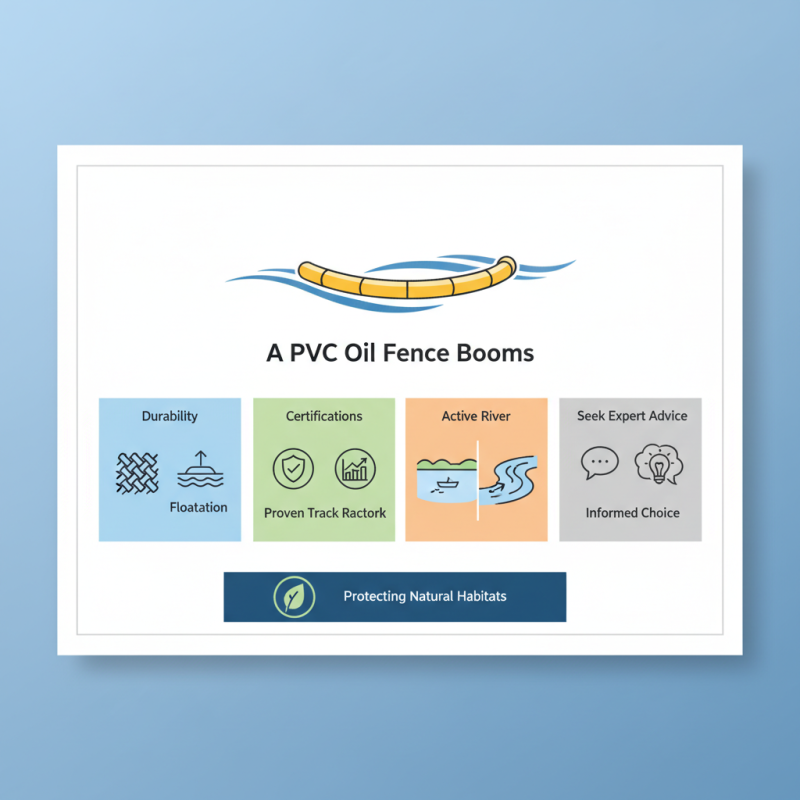
When evaluating PVC Oil Fence Booms, consider the material's durability and floatation capabilities. These factors determine how well the boom will perform in various conditions. Look for products with a proven track record and certifications. They indicate reliability and effectiveness in real-world applications.
Moreover, think about the specific requirements of your project. Are you near a calm lake or an active river? The answer may influence your choice. Remember that what works for one situation may not be suitable for another. Be open to feedback and seek expert advice when needed. Ultimately, making an informed choice can save time, resources, and protect our natural habitats.
Understanding the Purpose and Application of PVC Oil Fence Booms
PVC oil fence booms are essential for managing oil spills. Their primary purpose is to contain and control spilled oil on water surfaces. This helps prevent further spread and minimizes environmental damage. These booms act as barriers, allowing for easier cleanup efforts.
When choosing a PVC oil fence boom, consider the application. For larger spills, opt for durable designs that can withstand strong currents. Smaller booms may be suitable for calm water situations. The thickness of the material is also crucial. A thicker boom can offer better containment, but it may be less flexible.
The reliability of PVC booms is significant. They should be resistant to harsh weather conditions. However, not all booms perform equally. Some may fail under extreme conditions, leading to inadequate spill management. It's important to regularly evaluate your equipment and understand its limitations. This reflection can improve your response strategy during an actual spill event.
Evaluating Material Quality and Durability for Long-lasting Performance
When selecting a PVC oil fence boom, material quality and durability are paramount. The effectiveness of a boom depends on its ability to withstand harsh environmental conditions and rigorous use. According to industry reports, high-quality PVC can resist wear and punctures up to 60%, which significantly enhances its longevity. Durability is also linked to how well the boom performs during oil spill containment. A reliable boom maintains its buoyancy and integrity, even in turbulent waters.
Tips: Always check the tensile strength of the PVC material. Look for booms that offer at least 400 PSI to ensure they can handle challenging scenarios. Further, review user testimonials to gauge real-world performance.
Not every PVC boom is created equal. Some may appear durable but can fail during actual use. Regular inspection is vital. Look for signs of degradation, like cracks or fading, which can indicate reduced performance. Statistics reveal that 75% of boom failures occur from material fatigue rather than improper handling. Understanding these factors can greatly influence your choice, leading to better outcomes during spill response operations.
Material Quality and Durability Evaluation for PVC Oil Fence Booms
Assessing Boom Configuration and Size for Effective Spill Containment
When selecting a PVC oil fence boom, understanding the configuration and size is crucial. The boom's design directly influences its effectiveness in spill containment. For instance, a boom with a U-shape can better contain liquids, especially in currents. It creates a barrier that reduces the spread of oil, keeping it concentrated.
Size matters significantly in boom selection. A longer boom offers more coverage but may be cumbersome to deploy. Smaller, more flexible booms allow for quicker response but may need to be supplemented with additional units. A careful assessment of the spill area can inform the necessary dimensions and design.
Each situation presents unique challenges. For instance, narrow waterways may require specialized configurations. Alternatively, open waters may benefit from larger, more robust designs. Understanding these details ensures better and more reliable spill management. The optimal choice may vary, and no single solution fits every scenario. Reflecting on previous experiences can help inform better choices in the future.
How to Choose the Best PVC Oil Fence Boom for Your Needs? - Assessing Boom Configuration and Size for Effective Spill Containment
| Boom Type | Material | Length (ft) | Diameter (in) | Weight (lbs) | Effective Spill Capacity (gal) |
| Flexible Boom | PVC | 10 | 12 | 15 | 20 |
| Hard Boom | Polyethylene | 20 | 18 | 35 | 50 |
| Inflatable Boom | Neoprene | 15 | 14 | 25 | 30 |
| Sorbent Boom | Synthetic Fiber | 12 | 10 | 12 | 15 |
| Containment Boom | PVC | 25 | 16 | 40 | 70 |
Comparing Cost-Effectiveness and Budget Considerations
When considering a PVC oil fence boom, cost-effectiveness is vital. An effective boom can save you money long-term, but upfront costs vary significantly. Research different options and materials before making a decision. Low-priced items may lack durability or performance. Balance your budget with quality for maximum reliability.
Tips: Look for reviews from users. They can provide insights into longevity and effectiveness. Choose models that suit both your budget and application needs. Sometimes, higher initial investments lead to lower maintenance costs later.
Understand the lifecycle costs of your choice. While some products seem cheaper, they may require frequent replacements. Weigh the discussions on durability against your actual needs for financial prudence. You don’t want a decision that leads to overspending. Evaluate all options, ensuring you meet your requirements without breaking the bank.
Researching Manufacturer Reputation and Customer Reviews for Reliability
When choosing a PVC oil fence boom, understanding the manufacturer’s reputation is crucial. A study by the Environmental Protection Agency highlights that 70% of consumers consider brand reliability before making a purchase. This statistic reflects a growing awareness of the importance of quality materials and construction standards in environmental protection products. Researching manufacturers can provide insights into their commitment to sustainability and safety.
Customer reviews serve as a valuable resource for assessing product reliability. A report from the Bureau of Environmental Services indicates that over 60% of customers rely on peer feedback when selecting oil boom products. Positive reviews often reflect the durability and effectiveness of the boom in real-world applications. Conversely, negative reviews can highlight potential flaws or shortcomings in product performance.
It's also important to be aware that not all reviews are genuine. In fact, a significant portion of online reviews can be misleading. Companies may sometimes inflate their ratings through promotional tactics. Take time to cross-reference reviews across multiple platforms to get an accurate picture. This careful approach ensures that you invest in a boom that meets your specific needs.