
A bollard may look like a simple steel post, but its shape and installation affect how it works every day. The Tee Head Bollard has a distinctive crossbar top that can provide a clear visual cue and a practical handhold. In 2026, buyers can choose from different sizes, finishes, materials, and fixing methods. The right option depends on the site, not just its appearance.
There is no single best model for every setting. A busy entrance may need a robust, highly visible barrier, while a landscaped path may call for a more understated finish. This guide looks at the details that help distinguish a suitable product: overall height, post diameter, steel grade, corrosion protection, base design, and installation requirements. These specifications matter. A polished finish cannot compensate for unsuitable foundations or unclear product information.
We also consider how the bollard will meet real site conditions, from tight pavement space to repeated contact with service equipment. Check manufacturer documentation, confirm dimensions on site, and ask a qualified installer about anchoring where needed. Small details matter. Even the best-looking choice can disappoint if it blocks access or clashes with its surroundings. Some comparisons are imperfect because products and sites vary; that is worth keeping in mind. The aim is a practical shortlist, not a universal winner.
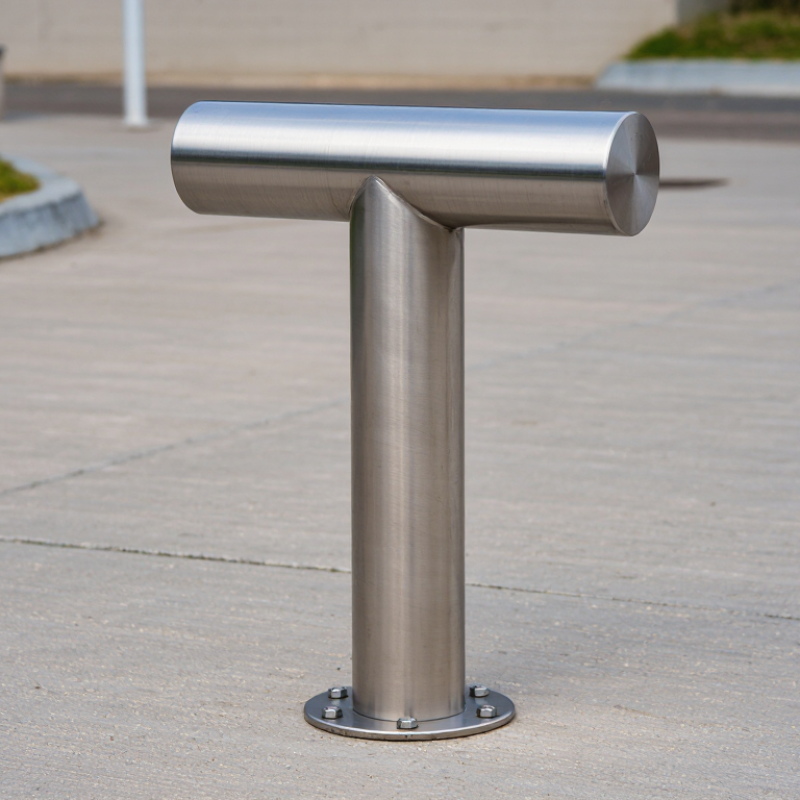
A tee-head bollard is a shipboard mooring fitting with a vertical post and a horizontal crosspiece. The crosspiece forms two projecting horns, giving crew a place to lead and secure a mooring line. Its shape helps retain a line under changing pull directions, but it does not make poor line handling safe. The fitting’s rated capacity depends on its design, material, deck support, and installation.
On deck, placement matters. A line should approach the bollard at a suitable angle and sit cleanly around the horns, without sharp bends or contact with nearby edges. Steel construction is common, but the finish and condition deserve attention: corrosion, cracked welds, or loosened foundations can weaken the assembly. The fitting can look simple; that is where assumptions creep in. There is no universal best tee-head bollard.
Tips: Check the marked safe working load against the vessel’s mooring plan. Inspect the base and surrounding deck, not only the visible head. Keep turns orderly and watch for chafing. If the rating or installation details are unclear, verify them with qualified technical personnel before use. A small detail can matter.
A tee-head bollard has a vertical post topped by a transverse head, fixed to the deck through a mounting connection. The crosshead helps retain a mooring line; it does not, by itself, determine the bollard’s safe working load.
How to read the chart: It is a schematic checklist, not a performance comparison. Select a bollard based on the vessel’s mooring loads and line arrangement, and verify the manufacturer’s rated capacity, material, deck reinforcement, and installation requirements.
What Is the Best Tee Head Bollard in 2026?
How ISO 13795:2012 Informs Bollard Design and Rated SWL
A tee-head bollard is only as dependable as its design, installation, and supporting structure. ISO 13795:2012 provides a common reference for evaluating applicable bollard requirements. Check the standard’s scope and clauses against the intended vessel and installation; never assume that citing it alone confirms a bollard’s safe working load (SWL). Details matter. Line direction, fitting geometry, material, welds, and deck reinforcement all affect real-world performance.
Tips: Confirm the specified SWL and loading direction. Review drawings, inspection records, and installation details. A strong-looking fitting can still be limited by a weak deck or poor attachment.
Treat SWL as the allowable working load under stated conditions, not the breaking load. The installed capacity depends on the complete load path, from the tee head through the base and welds into the supporting structure. Ask for traceable test or engineering documentation that identifies the rating, assumptions, and applicable standard edition. If the load direction or foundation differs from the design, request a qualified review. A neat drawing helps, but it cannot reveal every site condition.
| Comparison dimension | Verified design information | What to check when selecting a tee head bollard |
|---|---|---|
| What “best” means | There is no single best bollard for every vessel or berth. Suitability depends on the required line load, line arrangement, installation, and operating environment. | Compare documented suitability for the intended mooring arrangement, not appearance or nominal size alone. |
| Standard reference | ISO 13795:2012 is a standard for ship’s deck machinery—mooring bollards. It provides a design and specification reference for the covered equipment; it does not establish one universal safe working load for every installation. | Confirm the applicable standard edition and requirements with the project specification, classification society, or responsible engineer. |
| Tee head profile | The crosshead provides a surface around which mooring lines can be led. The profile alone does not determine the bollard’s load capacity. | Check that the head size and clearances suit the specified line diameter, number of turns, and expected lead angles. |
| Rated SWL | Safe Working Load (SWL) is a stated allowable working load for the defined equipment and conditions. It is not interchangeable with breaking load or ultimate strength. | Use the documented rating and its stated load direction and conditions. Do not infer SWL from dimensions or material descriptions. |
| Load direction and line lead | Loads applied to a bollard depend on line tension and direction. A rating for one loading arrangement should not automatically be treated as valid for every direction or combined load case. | Verify the approved load cases, line leads, and any limitations for simultaneous or off-axis loading. |
| Foundation and attachment | The installed load path includes the bollard, welds or fasteners, supporting plate, and underlying structure. The capacity of the complete installation can be limited by any part of that load path. | Check structural calculations and installation details; a bollard’s stated rating does not by itself certify the supporting deck or foundation. |
| Material and environment | Material selection and corrosion protection should reflect the service environment and the project’s design requirements. A material designation alone does not establish a load rating. | Review material certificates, coating or corrosion-protection requirements, and inspection provisions for the intended marine exposure. |
| Testing and documentation | A traceable specification should identify the product design, rated load, applicable test or verification evidence, and relevant installation limitations. | Request drawings, rating documentation, material records, and applicable inspection or test evidence before approving the equipment. |
| Practical selection conclusion | The best tee head bollard in 2026 is the one whose documented design and SWL meet the project’s mooring loads and applicable requirements, with the supporting structure and installation verified for the same load cases. Confirm the current standard text and project-specific requirements before procurement. | |
A tee head bollard should be compared by its rated safe working load, not appearance alone. SWL is usually stated in kilonewtons, but the figure only makes sense with its test conditions and permitted load direction. Check whether the rating applies to one line, a particular head position, or a defined installation. Small details matter.
Line angle changes the forces acting on the bollard. A rope pulling sideways may create a different combination of horizontal force, vertical force, and bending moment than a line pulling nearly straight. Ask for the rated load at the angles you expect to use, and inspect any diagrams or test notes. Do not assume one SWL covers every direction. A neat table can still hide a mismatch.
The load also travels through the shaft, base plate, anchors, and supporting foundation. Compare the stated base loads with the anchor layout and the capacity of the actual concrete or deck. Installation quality matters. Look for clear documentation, including load cases, safety factors, and any limits on simultaneous lines. I would be cautious when a listing gives only one impressive kN number; it leaves too much unsaid. A qualified engineer can check the full load path for the site, especially where line angles vary or foundations are uncertain.
A tee-head bollard near seawater faces salt spray, wet-dry cycles, and occasional impact. Conditions are especially demanding in splash and tidal zones. For steel, review welds, edges, drainage, and surface preparation before choosing a coating. ISO 12944-9 addresses protective paint systems for offshore and related structures in severe environments. CX indicates extreme corrosivity; it is not a guarantee that any coating will perform well. Check that the specified system and application match the project exposure.
Carbon steel with a suitably qualified CX coating system can be a practical choice, but installation damage needs prompt repair. Stainless steel may reduce coating needs, yet chloride exposure and tight crevices can still cause corrosion. Grade 316 is not immune; duplex stainless may suit some harsher settings, depending on water chemistry, fabrication, and maintenance. Small details matter. I would check the repair procedure as carefully as the original coating specification. It is easy to overlook.
Tips: Ask for coating-system test evidence, surface-preparation requirements, and target dry-film thickness. Specify extra attention on sharp edges, welds, and bolt interfaces. Inspect after installation, especially where lifting gear or tools may have chipped the coating.
Choosing the best tee head bollard in 2026 starts with evidence, not a polished product sheet. Ask for the complete test report, not only a pass statement. Check the tested model, head geometry, steel grade, foundation, embedment depth, and vehicle conditions. Small differences matter. A bollard tested with one footing may not perform the same way in another installation. Confirm the test date, independent laboratory, impact speed, vehicle mass, penetration result, and applicable standard. Then match those details to the project’s actual layout. A certificate is useful only when its scope covers the installed configuration.
Certification should be checked against the named standard and issuing body, with scope and expiry dates noted where relevant. Ask whether installation instructions and maintenance intervals match the tested design. A qualified site or structural professional can flag soil, drainage, and access issues before concrete is poured. Paper is not proof. For lifecycle cost, compare purchase and installation with inspections, coating repairs, replacement parts, and traffic disruption during maintenance. A lower initial price can become expensive if damage requires specialist work or a long shutdown. Request a realistic service schedule and clarify what wear is excluded. Keep inspection and repair records; they make future comparisons more reliable. No spreadsheet removes uncertainty. Drawings rarely capture every buried obstruction.
