2026 Best Flange Pipe Types for Global Buyers
Selecting the right Flange Pipe arrangement can prevent leaks, costly rework, and delays at the jobsite. Global buyers compare more than price. They check pressure class, material grade, dimensions, facing, and the conditions inside the line. A weld-neck flange may suit demanding service, while a slip-on design can simplify installation in less severe applications. Socket-weld, threaded, and lap-joint options each bring different trade-offs. Details matter.
For this introduction, piping engineer Mara Ellis is a fictional illustrative voice, not a verifiable industry expert. The line attributed to her is editorial, not a sourced quotation: “Choose the connection for the service conditions, then verify every dimension before purchase.” That is sensible advice, but it does not replace an applicable standard or project specification. Buyers should confirm ratings, materials, tolerances, and inspection documents with qualified engineers and suppliers. A catalog image cannot show every issue. Corrosion, temperature, vibration, and installation access can change what works in practice. Even a familiar flange may not fit an existing system if its facing or bolt pattern differs. This guide compares common flange types, their practical strengths, and the checks that help buyers make informed selections. Some choices remain context-dependent. That deserves a second look.
What Flanged Pipes Are and How Their Connections Work
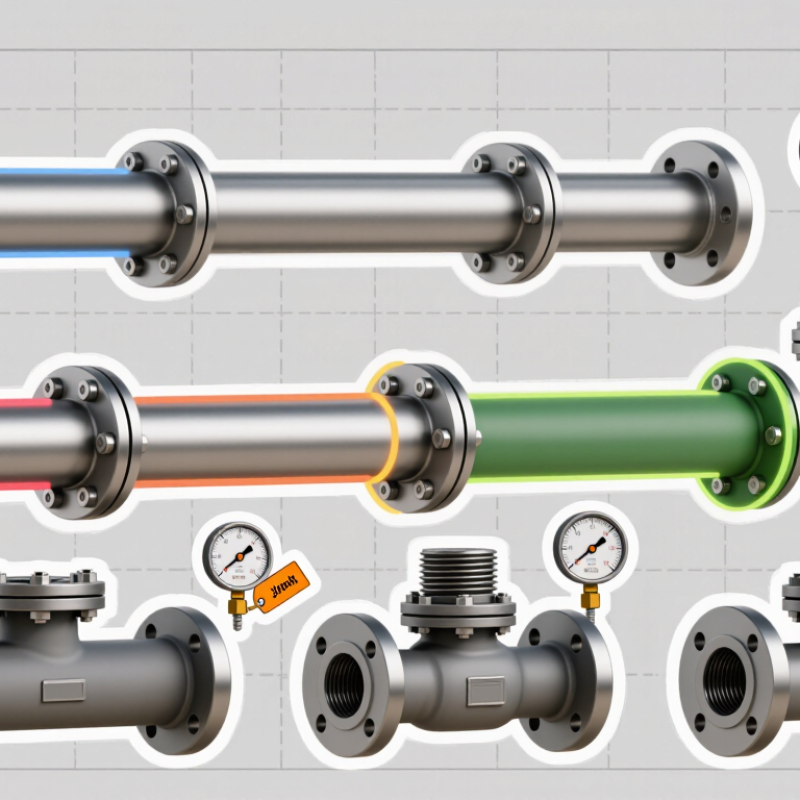
A flanged pipe has a flange at one or both ends. Bolts join it to another pipe, a valve, a pump, or process equipment. A gasket sits between the mating faces, where tightened bolts compress it to create a seal. Simple in principle. Sensitive in practice.
Connection styles vary. A weld-neck flange is butt-welded to the pipe, while a slip-on flange typically receives fillet welds. Threaded flanges screw onto compatible threaded pipe. A lap-joint flange works with a stub end and can rotate to help align bolt holes. These designs suit different installation needs; none is automatically right for every service.
Before assembly, check that flange faces are clean and aligned, and that the gasket suits the fluid, temperature, and pressure. Tighten bolts in a crosswise sequence, following the specified procedure instead of relying on guesswork. A common oversight is gasket centering: even a sturdy-looking joint can leak if the gasket shifts or bolt loading is uneven. It is easy to miss. Material compatibility and the pipe’s operating conditions deserve another look before the connection is closed.
How Flange Types Differ by Design, Facing, and Pressure Rating
2026 Best Flange Pipe Types for Global Buyers
How Flange Types Differ by Design, Facing, and Pressure Rating
Flange selection starts with the joint design. Weld-neck flanges transfer load through a tapered hub and suit demanding piping conditions. Slip-on flanges fit over the pipe and are often simpler to align, but their attachment welds need careful inspection. Blind flanges close an open line for isolation or future access. A useful distinction. The facing also matters: raised-face (RF) flanges are common, while flat-face (FF) faces are often chosen for compatible flat-faced equipment. Ring-type-joint (RTJ) faces use a metal ring gasket for a tight seal in specified services.
Pressure class is not a direct pressure value. ASME B16.5 covers NPS 1/2 through 24 and Classes 150 through 2500; ASME B16.47 covers NPS 26 through 60 and Classes 75 through 900. These standards define dimensions and pressure-temperature ratings. Actual allowable pressure depends on material and operating temperature, so two Class 300 flanges may not share the same rating. This is easy to overlook. Check the project specification and current standard tables before ordering.
Tips: Confirm pipe size, material, facing, gasket, bolt pattern, and temperature together. Check the drawing. A matching class alone does not guarantee a compatible joint.
Which Pipe and Flange Materials Suit Different Operating Conditions
Choosing pipe and flange materials begins with the fluid, temperature, pressure, and maintenance plan. Carbon steel is often suitable for dry, non-corrosive services, but wet process lines may need internal coatings or corrosion allowance. For chloride-bearing water, 316 stainless steel can still pit, especially in crevices around flange faces. Duplex stainless steel offers stronger resistance to chloride stress-corrosion cracking, though welding and heat treatment need close control. Details matter.
Temperature changes the choice. Low-alloy steel may suit elevated-temperature service, while the flange material must match the pipe’s pressure-temperature requirements. ASME B16.5 provides pressure-temperature ratings for covered flanges; verify the applicable material group and design conditions rather than relying on nominal size alone. NACE International’s 2016 IMPACT study estimated corrosion costs at US$2.5 trillion annually, or 3.4% of global GDP. That figure is not a savings forecast for any single project, but it shows why corrosion deserves attention. A small mismatch between pipe, flange, gasket, and fluid can become an expensive leak. Still, material tables cannot replace a site-specific review; that is easy to overlook.
How Flanged Pipe Types Serve Key Industrial Applications
2026 Best Flange Pipe Types for Global Buyers
Flanged pipe types support different industrial needs, from routine maintenance to demanding process conditions. Weld neck flanges suit high-pressure lines and systems exposed to temperature changes. Their tapered hubs help distribute stress, but installation requires skilled welding and inspection. Slip-on flanges are easier to align on many low- or moderate-pressure lines. Threaded types can serve smaller pipes where welding is impractical. For frequent dismantling, lap joint flanges paired with stub ends can simplify access, especially where the stub end provides the required corrosion resistance. Blind flanges close pipe ends or isolate equipment during planned work.
In water treatment plants, large-diameter flanged connections can make pump and valve replacement more manageable. Process facilities may need stronger designs for pressure, heat, vibration, or corrosive media. A flange is not selected by type alone: material, pressure rating, temperature, gasket, and facing must match the service conditions. In practice, drawings sometimes omit site details, such as limited bolt access. That can complicate assembly. Small detail. Big consequence.
Tips: Confirm the applicable pipe and flange dimensions before ordering. Check gasket compatibility and use a controlled bolt-tightening sequence. For critical lines, have qualified personnel review the design and inspect the joint after installation. A suitable flange still depends on accurate field measurements.
2026 Best Flange Pipe Types for Global Buyers — How Flanged Pipe Types Serve Key Industrial Applications
This chart compares the nominal pipe size ranges covered by two widely used ASME flange standards. ASME B16.5 covers NPS 1/2 through NPS 24; ASME B16.47 covers NPS 26 through NPS 60. NPS is a size designation, not always the pipe’s measured outside diameter. Flange style—such as weld neck, slip-on, socket-weld, threaded, lap-joint, or blind—should be selected for the service conditions and applicable project standard. Pressure ratings and material suitability depend on factors including material and temperature.
What Global Buyers Should Check When Choosing Flanged Pipes in 2026
2026 Best Flange Pipe Types for Global Buyers
Choosing flanged pipes in 2026 starts with the service conditions, not the catalogue description. Confirm the fluid, operating pressure, temperature range, and corrosion exposure. Then check the pipe material and wall thickness against the project specification. A flange that looks suitable may not match the pipe schedule or duty. Small details matter.
Verify the flange standard, facing type, dimensions, and bolt pattern against the mating equipment. Do not assume that similar-looking parts are interchangeable. Check gasket compatibility and whether the connection can be assembled with the available tools. Request material certificates, inspection records, and clear marking details so each item can be traced on arrival. In procurement reviews, a recurring gap is treating documentation as an afterthought. It is not. Still, paperwork alone cannot prove that the delivered dimensions are correct.
Tips: Compare drawings and data sheets before placing an order. Confirm quantities, end connections, coating needs, and packaging for the shipping route. Ask how dimensional checks are recorded. Keep one approved reference drawing. It may feel excessive, but a small mismatch can delay installation. Buyers should also leave time for clarification; specifications are sometimes incomplete, and guessing is rarely a good purchasing method.